
Vegetables
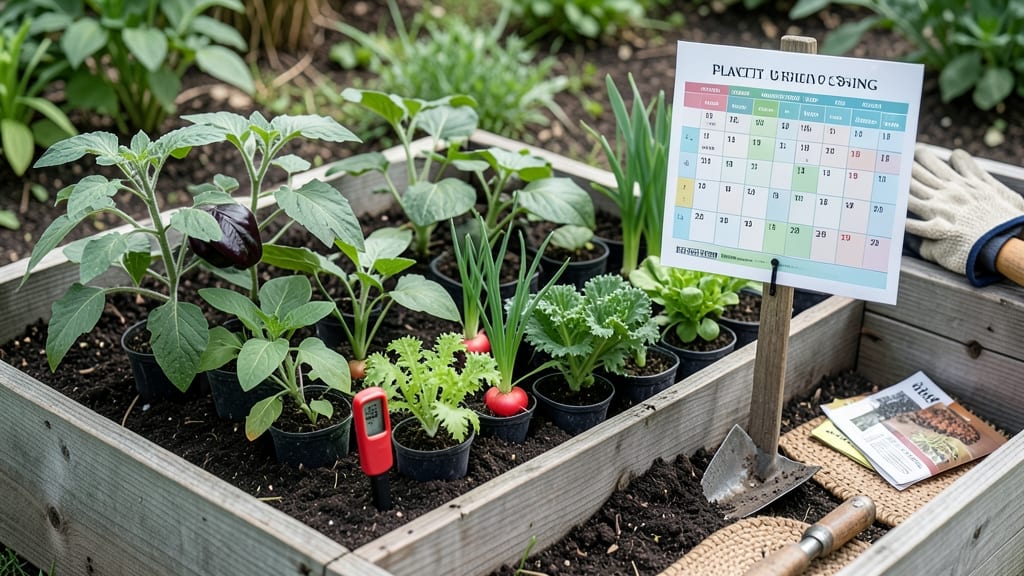
To plant vegetables in Chicago, time your crops between late April and mid-June for spring, then again in July for fall harvests—this window aligns with the city’s USDA Zone 5b frost dates.
Picture this: You’ve spent weeks prepping your soil, only to watch a late frost wipe out your seedlings overnight. Or worse, you miss the sweet spot and harvest half-sized tomatoes because you planted too late.
Chicago’s unpredictable weather makes timing everything—but with the right schedule, you can avoid these pitfalls and enjoy a garden bursting with 🥬 from June to October.
Cool-season crops like spinach and peas thrive when sown 4-6 weeks before the last frost, while warm-season favorites such as tomatoes and peppers need to wait until soil temperatures hit 60°F (usually mid-May).
Microclimates—like urban heat islands or lake-effect zones—can shift your timeline by 1-2 weeks, so I’ll show you how to adjust.
Below, you’ll find a crop-by-crop planting calendar, frost-proofing tips, and the exact dates to start seeds indoors or outdoors for a Chicago garden that outperforms the neighbors’. Let’s get those veggies in the ground at the perfect moment.
Chicago’s frost dates and best planting windows by season
Chicago’s USDA Zone 5b-6a climate means your vegetable garden faces 165 frost-free days—just enough time to grow everything from bush beans to winter kale. The average last frost date hovers between April 15–May 15, while the first frost typically arrives October 15–November 1.
But these dates are just averages—your microclimate (urban heat islands, lake-effect zones) can shift your planting window by 2–4 weeks. For example, areas near Lake Michigan stay cooler longer, while downtown sidewalks can trap heat, speeding up warm-season crops.
To maximize your harvest, divide your garden into two planting phases: cool-season crops (hardy greens, root veggies) and warm-season crops (tomatoes, peppers). Cool-season plants thrive when soil temps hit 40–50°F, while warm-season crops need 60°F+ soil to germinate.
Chicago’s spring soil warms slowly, so start cool-season crops 4–6 weeks before the last frost and warm-season crops 2–3 weeks after. For fall, aim to plant warm-season crops by July 15 to harvest before frost.
Here’s how to adjust for Chicago’s quirks: Urban gardens often warm up faster due to pavement heat, while suburban yards near wooded areas stay cooler. Use soil thermometers to confirm readiness—50°F for peas, 60°F for tomatoes.
If you’re unsure, opt for transplants over seeds; they’re less vulnerable to late frosts. For example, basil seedlings can handle a light frost if hardened off, while cucumber seeds won’t germinate until soil hits 70°F.
Pro Tip: Extend your season with row covers (for spring) or cold frames (for fall). A simple floating row cover can add 2–4°F protection, letting you plant spinach in early April or kale in late September. Just remove covers during the day in 75°F+ heat to prevent overheating.
| Planting Window | Cool-Season Crops (Hardy) | Warm-Season Crops (Tender) | Microclimate Adjustments |
|---|---|---|---|
| Early Spring (March–April) | Peas, Spinach, Lettuce, Kale Soil Temp: 40–50°F |
— (Too cold for seeds) | Urban areas: Start 2 weeks earlier Lake zones: Wait 1–2 weeks later |
| Late Spring (May) | Radishes, Carrots, Beets Direct sow after last frost |
Tomatoes, Peppers, Eggplant Transplant after May 15 |
Use row covers for early tomatoes Test soil temp with thermometer |
| Summer (June–July) | Succession plant lettuce, bush beans | Cucumbers, Zucchini, Basil Sow by July 1 for fall harvest |
Shade cloth for heat-sensitive crops Mulch to retain moisture |
| Fall (August–September) | Broccoli, Cabbage, Brussels Sprouts Plant by Aug 15 |
Green beans, Swiss chard Harvest before first frost |
Cold frames for extended harvests Avoid planting near late-frost zones |
For warm-season crops, timing is critical—tomatoes planted after June 1 may not ripen before frost. Prioritize early-maturing varieties like ‘Early Girl’ tomatoes (65 days) or ‘Bush Blue Lake’ beans (50 days).
If you’re itching to plant peppers (which need 80°F+ soil), start them indoors in March and transplant after Memorial Day. For cool-season crops, focus on successive plantings: Sow lettuce every 2 weeks from April to August for continuous harvests.
Chicago’s urban heat islands can push warm-season crops to maturity 10–14 days earlier than rural areas. If your garden is near concrete or asphalt, monitor for heat stress (wilting, yellowing leaves) and provide afternoon shade with shade cloth.
Conversely, lake-effect zones may delay soil warming by 1–2 weeks, so adjust your planting calendar accordingly. For example, cucumbers in Evanston might need a late-June start, while downtown gardens could handle early June sowing
Top 10 vegetables to plant in Chicago (with exact timing)
Chicago’s short but sweet growing season rewards gardeners who time their plantings carefully. The key is balancing cool-season crops that tolerate frost with warm-season favorites that need heat.
Below are my top 10 high-yield vegetables for Chicago, ranked by reliability, ease of growth, and harvest potential—plus their exact planting windows to maximize your garden’s productivity.
For beginner-friendly picks, focus on kale, green beans, and radishes, which forgive minor timing mistakes. Advanced gardeners can extend seasons with cold frames for spinach or row covers for tomatoes. Let’s dive into the timing that’ll give you the most bountiful harvests in Chicago’s unpredictable climate.
- 1. Kale – Direct sow March 15–April 30 (spring) and July 15–August 15 (fall). Transplant April 1–May 15 or August 1–September 15. Days to maturity: 50–60. Spacing: 12–18" apart. Harvest before first frost (October 15–November 1).
- Tomatoes – Transplant May 15–June 15 after soil reaches 60°F. Days to maturity: 70–85. Spacing: 18–24" apart. Use row covers for early starts. Harvest July–September before heavy rains.
- Green Beans – Direct sow May 1–June 15 (bush) or May 15–June 30 (pole). Days to maturity: 50–60. Spacing: 4–6" apart (bush) or 6" apart (pole, trellis needed). Harvest July–August every 2–3 days.
- Spinach – Direct sow March 15–April 30 (spring) or August 1–September 15 (fall). Days to maturity: 30–50. Spacing: 3–4" apart. Use cold frames to extend fall harvests. Harvest April–June or September–October.
- Peas – Direct sow April 1–May 15 (spring) or August 1–September 1 (fall). Days to maturity: 60–70. Spacing: 2–3" apart. Harvest May–June or September–October before pods toughen.
- Lettuce – Direct sow March 15–April 30 (spring) or July 15–August 15 (fall). Days to maturity: 30–50. Spacing: 6–12" apart. Harvest April–June or August–September by cutting outer leaves.
- Carrots – Direct sow March 15–May 15 (spring) or July 15–August 15 (fall). Days to maturity: 60–80. Spacing: 2–3" apart. Harvest June–August or September–October before roots split.
- Radishes – Direct sow April 1–May 15 (spring) or July 15–August 30 (fall). Days to maturity: 25–30. Spacing: 2" apart. Harvest May–June or August–September when roots reach 1–2".
- Zucchini – Transplant May 15–June 15 after frost. Days to maturity: 45–55. Spacing: 24–36" apart. Harvest July–September when fruits are 6–8" long.
- Swiss Chard – Direct sow April 1–May 15 (spring) or July 15–August 15 (fall). Days to maturity: 50–60. Spacing: 10–12" apart. Harvest May–June or September–October by cutting outer stalks.
Pro tip: For fall crops, start seeds indoors 8–10 weeks before your target transplant date (e