
Pests and Diseases
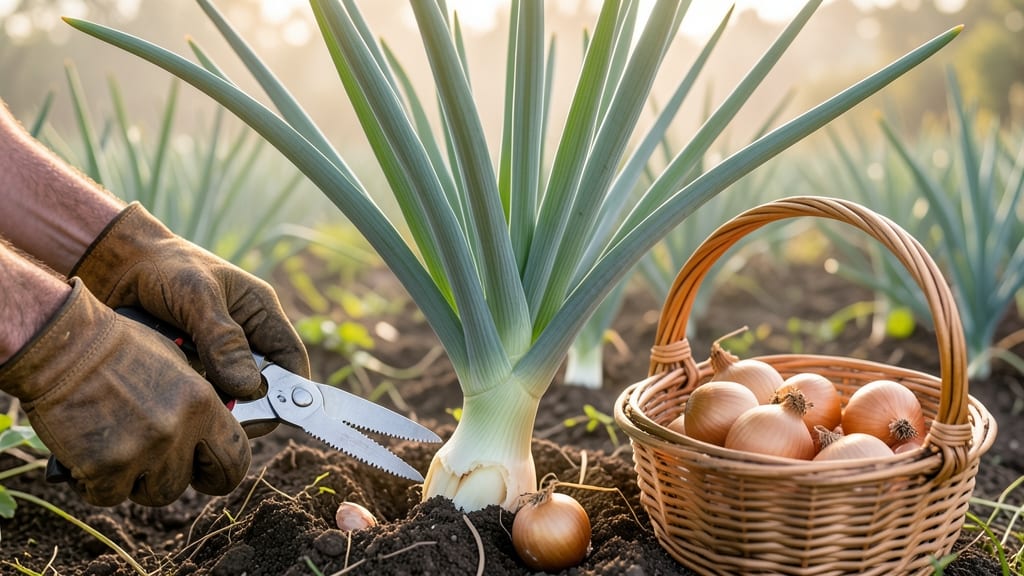
Onion harvest season arrives when your 🧅 bulbs are sweetest and most flavorful—typically late spring to early summer for spring plantings, or late summer to fall for fall varieties.
But here’s the catch: timing it wrong turns those tender onions bitter or pungent. Too early, and they’re still growing; too late, and they rot in the soil. The right moment depends on your zone, variety, and even the weather.
In this guide, I’ll walk you through the exact months for your USDA zone, how to spot perfectly ripe onions (yes, there’s a trick), and what to do once they’re in your hands to keep them fresh for months.
Skip the guesswork—learn when to pull your onions for the best flavor, storage tips to avoid waste, and the one mistake that ruins even the best harvest.


Onion harvest season by US planting zones: exact months for sweetest bulbs
Getting your onions out of the ground at the right time transforms them from bland to sweet and flavorful. But since USDA zones 3-10 have wildly different climates, harvest timing varies dramatically.
In cool northern zones (3-5), you’ll pull onions in late June to August, while warm southern zones (8-10) see harvests stretch from April to June or September to November. The key? Understanding whether you’re growing short-day (southern-friendly) or long-day (northern-adapted) varieties.
Long-day onions—like Yellow Sweet Spanish or Crystal Wax—need 14+ hours of daylight to bulb properly, making them ideal for zones 3-6. Short-day varieties such as Texas Early White thrive in zones 7-10 with shorter daylight.
Even within zones, early vs. late varieties shift harvest windows by 4-6 weeks. For example, in zone 7, early onions like Red Baron might be ready by May 15, while late varieties like 1015Y Yellow peak in July.
Regional climate quirks also play a role. In humid southern zones (8-10), onions often mature faster due to warmer soils, while dry western zones (6-9) may see delayed harvests if summer heat stresses plants. Even elevation matters: High-altitude gardens in zone 6 (like Colorado) might harvest 2 weeks later than sea-level counterparts.
| USDA Zone | Harvest Window | Best Varieties | Storage vs. Fresh |
|---|---|---|---|
| Zones 3-4 | Late June–August | Copra, Stuttgarter | Store for winter |
| Zones 5-6 | Late June–July | Crystal Wax, Red Baron | Fresh or store |
| Zones 7-8 | April–June or Sept–Nov | Texas Early White, 1015Y | Fresh preferred |
| Zones 9-10 | March–May or Sept–Oct | Southport White, Red Creole | Fresh or short-term |
For storage onions, aim to harvest when tops yellow and fall over but before they shatter or rot. In zones 3-6, this typically means pulling onions 2-3 weeks before first frost (late August–September). Cure them in a dry, shady spot for 2-3 weeks to develop papery skins.
In contrast, fresh-eating onions (like green onions or baby onions) can be harvested earlier, when bulbs are 1-2 inches wide and tops are still green.
Southern gardeners in zones 8-10 often enjoy two harvest seasons: a spring crop (March–May) and a fall crop (September–November). Fall-planted onions in warm climates bolt less and produce sweeter bulbs.
Meanwhile, northern zones (3-6) focus on one main harvest, often extending storage life with proper curing and ventilation.
Even in the same zone, microclimates matter: A frost pocket in zone 5 might need onions harvested by July 15, while a warmer valley could wait until August 1.
Watch for over-mature onions, which become woody and pungent. If tops turn brown and papery but bulbs stay small, they’re underdeveloped—likely due to poor soil nutrients or insufficient sunlight. In arid western zones, irregular watering can also stunt growth, so maintain consistent moisture until harvest.
Conversely, excess rain in zones 7-10 can cause rot or mold, so space onions 4-6 inches apart for airflow.
Pro tip: Mark your calendar based on days to maturity (check seed packets).
For example, Yellow Sweet Spanish (a long-day variety) takes 110-120 days to harvest in zone 4, so if planted March 15, it’s ready by July 10. Short-day varieties like Texas Early White mature in 90-100 days in zone 9, meaning a February 1 planting yields onions by May
How to tell when onions are ready to harvest: 5 key signs
Harvesting onions at the right time transforms your garden into a flavor powerhouse. Miss the window, though, and you’ll end up with tough, pungent bulbs—or worse, rot. The secret lies in watching for these 5 key signs that your onions are begging to be pulled.
I’ve learned the hard way that ignoring these cues leads to wasted effort, so let’s dive into what to look for.
First, pay attention to the foliage color. Healthy green tops signal growth, but when they start turning yellow-brown and flopping over, that’s your first clue. This change happens as the plant redirects energy from leaves to bulb development.
Don’t rush—wait until at least 50% of tops show this color shift before harvesting.
🌱 Numbered Highlights: 5 Signs Your Onions Are Ready
- 🟡 1. Yellowing Tops – At least 50% of foliage turns yellow-brown and falls over
- 📏 2. Bulb Size – Diameter reaches 1-2 inches (size of a golf ball)
- 🤏 3. Firm Skin – Skin resists gentle squeezing and feels dry to touch
- 🪴 4. Shrinking Neck – Stem (neck) between bulb and leaves begins to dry and shrink
- 🌧️ 5. Weather Check – Harvest before heavy rain or extreme heat stress
Next, check the bulb size by gently digging around the base. Aim for bulbs that are 1-2 inches in diameter—about the size of a golf ball. Smaller onions won’t store well, while oversized ones often split or become hollow.
Pro tip: If the bulb feels soft when pressed, it’s not ready yet. Wait another week.
One of my biggest mistakes was pulling onions too early because I thought bigger was better. Over-mature onions develop thick necks, split skins, and lose their sweetness. Instead, focus on the neck drying—the stem between the bulb and leaves should start shrinking and turning papery.
This signals the plant is pulling nutrients into the bulb for storage.
Weather plays a sneaky role in harvest timing. Heat stress or prolonged rain can trick onions into thinking they’re ready before they are. If your area is forecasted for heavy rain, harvest a few days early to avoid rot.
Conversely, in dry climates, onions might need extra time to mature—watch for the other signs before pulling.
Finally, test readiness with the root ball. Gently lift an onion and check the roots. If they’re mostly dry and the bulb pulls cleanly from the soil, it’s harvest time.
Save a few bulbs to test—if they’re still small or soft, wait. Proper timing ensures your onions cure well and store for months, not weeks.