
Plants
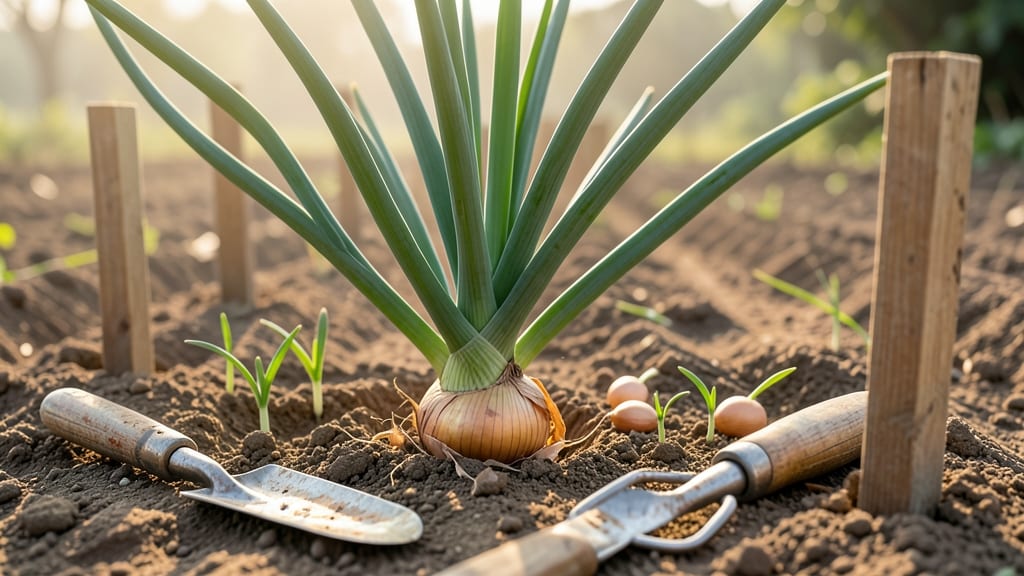
To plant onions in Missouri, aim for March–April or August–September—timing that avoids the state’s unpredictable frosts while giving bulbs enough warmth to mature.
Missouri’s 5b–6b zones mean your onion sets or seedlings can take a late frost hit if planted too early, or bolt in the heat if started too late. One wrong move and you’re left with stunted greens instead of sweet, plump 🧅 bulbs.
Whether you’re in St. Louis, Kansas City, or rural 5b, the key is working with your last frost date—March 15 on average, but earlier in the north. Below, I’ll break down the exact windows for spring and fall planting, plus how to adjust for soil, variety, and microclimates.
You’ll also learn how to space onions correctly, when to use transplants vs. seeds, and the one companion plant that keeps onion flies away—so you can go from uncertain timing to a bumper harvest in no time.
Missouri frost dates & best onion planting windows by region
Missouri’s USDA zones 5-7 create a diverse landscape for onion growers, where frost dates shift dramatically between north and south. In northern Missouri (Zone 5), gardeners face later last frosts, while southern Missouri (Zone 7) enjoys an extended growing season.
Understanding these regional variations is key to timing your onion sets or transplants for maximum yield.
Onions are cool-season crops, meaning they thrive in spring and fall when temperatures hover between 40°F and 75°F. Planting too early risks frost damage, while waiting too long can stunt bulb development.
Missouri’s average frost-free dates range from mid-March in the south to late April in the north, with first frosts arriving as early as mid-October in the mountains.
Spring planting is the most popular window, but fall planting can yield smaller bulbs if timed correctly. For long-day onions (like Yellow Granex), Missouri’s latitude means you’ll need to plant 4-6 weeks before your last frost to avoid bolting. Short-day varieties (like Texas Early White) are better suited for Missouri’s climate and can handle later plantings.
| Region | USDA Zone | Last Frost Date | First Frost Date | Spring Planting Window | Fall Planting Window |
|---|---|---|---|---|---|
| Northern Missouri (e.g., St. Joseph) | Zone 5b | April 15 | October 20 | March 20 - April 15 | August 1 - August 15 |
| Central Missouri (e.g., Columbia) | Zone 6a | March 30 | October 30 | March 1 - April 10 | August 15 - September 1 |
| St. Louis Metro Area | Zone 6b | March 25 | November 5 | February 28 - April 5 | August 10 - September 10 |
| Southern Missouri (e.g., Springfield) | Zone 7a | March 15 | November 10 | March 1 - March 31 | August 1 - August 30 |
| Kansas City Area | Zone 6a | April 1 | October 25 | March 15 - April 10 | August 5 - August 20 |
*Frost dates are averages—always monitor local forecasts for adjustments.
In northern Missouri (Zone 5b), like around St. Joseph, aim to plant onion sets between March 20 and April 15 for a June-July harvest. This timing gives your onions 90-120 days of growth before summer heat sets in.
For fall planting, August is your best bet, with harvests possible by late October if planted by August 15.
Gardeners in St. Louis (Zone 6b) have a slight advantage due to the city’s urban heat island effect, which can delay last frosts by 1-2 weeks. This means you can start indoor seed starts as early as February 28 and transplant outdoors by March 25.
For fall onions, plant by September 10 to avoid bolting before frost.
Southern Missouri’s Zone 7a, including Springfield, offers the earliest planting windows. You can safely plant onion seeds as early as March 1 or sets by March 15 for a mid-June harvest.
Fall planting here is riskier but possible if you plant by August 1 and use row covers to extend the season.
For Kansas City (Zone 6a), balance is
How to adjust onion planting for Missouri’s microclimates
Missouri’s urban heat islands and rural cool pockets create wildly different growing conditions—even just miles apart. If you’re gardening in St. Louis, where pavement traps heat, your onions may bolt faster than in rural Boone County, where cooler nights slow growth.
The key? Adjusting your planting timing and protection strategies based on your specific microclimate.
For urban gardeners, start transplants 2-3 weeks earlier than rural areas to beat the heat. In cities, soil warms up faster, so seedlings can handle earlier planting. Meanwhile, rural gardeners should wait until soil reaches 45°F to avoid frost damage.
Both groups need to prep soil differently—urban areas often need extra compost to offset compacted soil, while rural spots may require drainage improvements.
- 🌱 Test soil pH (6.0-7.0 ideal). Urban soils often test lower due to pollution; amend with lime if needed.
- 📅 Plant sets 4-6 weeks before last frost (use row covers for urban areas to extend season). Rural areas can plant 2 weeks later.
- 🛡️ Use cold frames in urban gardens for early starts—soil heats up faster, accelerating growth.
- 💧 Water deeply 2x/week in urban areas (drought stress from pavement). Rural gardens need consistent moisture but avoid waterlogging.
- ✂️ Harvest green onions early in urban gardens (heat stress reduces bulb size). Rural onions can bulb fully with proper spacing.
If you’re growing in containers, urban gardeners have an advantage—pots warm up faster, letting you start indoors 6-8 weeks before last frost. For in-ground planting, rural areas should focus on mulching to retain moisture during Missouri’s hot, dry summers.
I’ve seen urban onions bolt by July, while rural ones mature beautifully with even soil temps.
For late frosts (common in northern Missouri), use floating row covers until soil warms. In St. Louis, I’ve lost entire onion sets to April frostNational Weather Service for microclimate alerts. Rural areas can often plant seeds directly after soil thaws, while urban gardeners should start transplants indoors.
Don’t forget companion planting—urban gardens benefit from shade-loving companions like lettuce, while rural plots thrive with tomatoes or beans to improve soil. Both need well-draining soil, but urban areas may require raised beds to prevent water pooling.
I’ve had the best success with Yellow Granex onions in urban heat and Sweet Spanish in cooler rural zones.
Protect your early plants with cloches or cold frames—urban areas can see 10°F temperature swings overnight. Rural gardeners should space plants wider (6 inches apart) to prevent fungal diseases from humidity.
Whether you’re in the city or country, adjust your timing and you’ll harvest plump, sweet onions all season long. 🧅