
How To
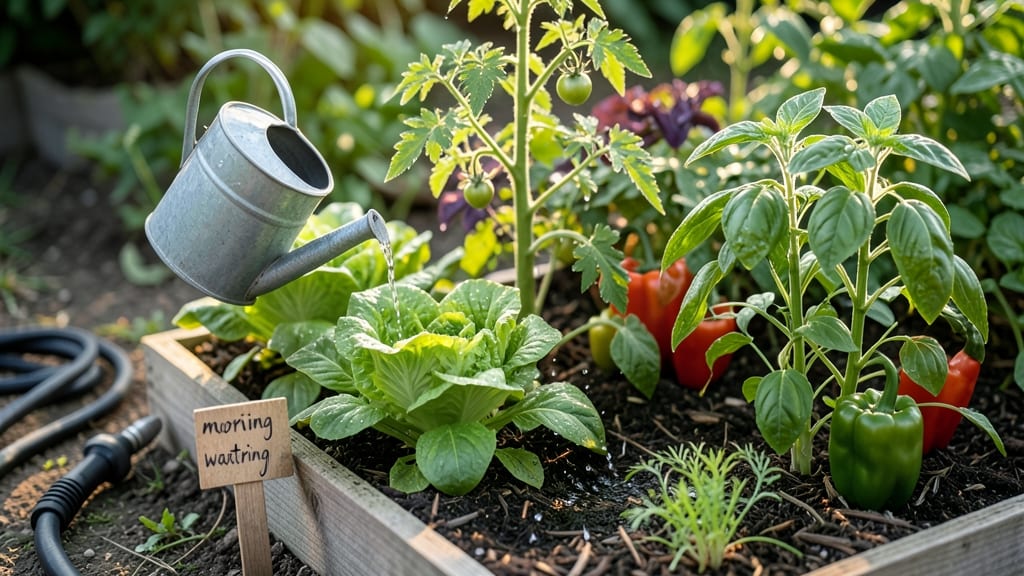
Watering your vegetable garden the right way keeps 🥬 thriving—not just about sticking to a schedule, but reading the soil and adjusting for heat, rain, and plant type.
Overwatering or underwatering your vegetable garden can mean the difference between a bumper crop and wilted disappointment—yet gardeners still struggle with the perfect watering schedule.
The answer isn’t just about days between watering; it’s about soil moisture and plant needs that change with seasons, weather, and soil type. A quick finger test can tell you more than a calendar ever will.
Below, I’ll show you how to check moisture levels, adjust for different vegetables, and avoid the most common mistakes that waste water and stunt growth.
Soil-moisture tests to determine when vegetables need watering
Mastering the art of watering your vegetable garden starts with understanding soil moisture. Unlike rigid schedules, the best approach is checking soil conditions before watering—this prevents both overwatering and underwatering, which can ruin your harvest.
Different vegetables, from leafy greens to root crops, have unique hydration needs, and soil type (clay, sandy, loamy) plays a huge role in how quickly moisture drains or retains.
I’ve tested three foolproof methods over the years: the finger test, the trowel check, and using a moisture meter. Each works best in different scenarios—whether you’re dealing with container gardens, raised beds, or in-ground plots.
The key is consistency: test the same depth and time of day (morning is ideal) to get reliable results. For example, tomatoes and peppers need deeper watering, while lettuce and spinach prefer surface moisture.
| Method | Best For | How to Do It | Ideal Depth | When to Water |
|---|---|---|---|---|
| Finger Test | Leafy Greens, Herbs | Insert finger 1 inch deep | 1 inch | If dry at tips |
| Trowel Check | Root Crops, Tomatoes | Dig 2-3 inches deep | 2-3 inches | If soil feels dry |
| Moisture Meter | All Vegetables | Insert probe 2-4 inches | 2-4 inches | Below 40% moisture |
The finger test is my go-to for quick checks, especially for shallow-rooted plants like lettuce or basil. Simply push your index finger about 1 inch into the soil. If it feels dry at the tip, it’s time to water.
For deeper-rooted vegetables like carrots or squash, use the trowel check: dig a small hole 2-3 inches deep. If the soil clings to the trowel, it’s moist enough. If it crumbles, water immediately.
A moisture meter takes the guesswork out of watering, especially in container gardens or during extreme heat. These handheld tools give precise readings, but they’re an investment—great for serious gardeners. I recommend the Xiaomi Mi Flower Care for its affordability and accuracy.
For seasonal adjustments, remember that summer heat dries soil faster, while spring rains may require less frequent watering. Always water in the early morning to reduce evaporation and fungal risks.
Seasonal changes also affect watering frequency.
In summer months, I water my vegetable garden every other day, while in fall, I reduce it to every 3-4 days. Root crops like potatoes and beets need consistent moisture but hate soggy soil, so I focus on deep, infrequent watering.
Meanwhile, leafy greens like spinach prefer slightly moister soil and benefit from a light misting between deeper waterings. Pay attention to your plants’ visual cues—wilting leaves often signal thirst, but yellowing can mean overwatering.
Mulching is a game-changer for maintaining even soil moisture. A 2-3 inch layer of straw or wood chips reduces evaporation and keeps roots cool. I apply mulch right after planting and replenish it every few months.
For sandy soil, which drains quickly, I mix in compost to improve water retention. In contrast, clay soil holds moisture too long, so I add perlite or coarse sand to improve drainage. Adjust your watering routine based on these soil amendments.
Don’t forget that weather patterns are your best teacher. After a heavy rain, skip watering entirely—soil moisture tests will confirm this. Conversely, during drought conditions, I increase watering frequency and use drip irrigation for precision.
For container-grown vegetables, I check soil moisture daily, as pots dry out much faster than in-ground plots. Pro tip: Group plants with similar water needs together to simplify your routine.
Finally, observe your plants’ growth patterns. Healthy tomatoes and peppers should have firm stems and vibrant leaves. If you notice
Watering frequency guide by vegetable type and climate Zone
Your vegetable garden’s watering needs aren’t one-size-fits-all—tomatoes in USDA Zone 9 demand daily hydration, while kale in Zone 5 thrives with every-other-day watering. Climate, soil type, and plant maturity all dictate frequency.
Let’s break down the ideal schedules to keep your crops hydrated without drowning roots or inviting fungal diseases.
Start by understanding your USDA zone and soil drainage. Sandy soils dry faster and need more frequent, shallow watering, while clay holds moisture longer, requiring deeper, less frequent watering.
In high-heat zones (8-10), water early morning to prevent evaporation and late-afternoon wilting. For cooler zones (3-6), late afternoon works better to avoid chilling roots in damp soil.
| Vegetable | USDA Zones | Watering Frequency | High-Heat Adjustment | Drought Tips |
|---|---|---|---|---|
| Tomatoes | 6-10 | Daily (1-2 inches) | Morning + mulch | Drip irrigation |
| Peppers | 8-11 | Every 2 days (1.5 inches) | Shade cloth + evening water | Succulent varieties |
| Herbs (Basil, Cilantro) | 5-9 | Every 3 days (0.5-1 inch) | Container watering | Drought-resistant rosemary |
| Leafy Greens (Lettuce, Spinach) | 3-7 | Every 2-3 days (0.75 inch) | Shade netting | Succession planting |
| Root Crops (Carrots, Radishes) | 4-8 | Every 4 days (1 inch) | Deep soaking | Loose, sandy soil |
Avoid the #1 overwatering mistake: assuming "more water = better growth." Tomatoes in Zone 9 wilt faster than you’d think—check soil 2 inches deep before watering.
For peppers, split watering into morning and evening during 90°F+ days to prevent blossom-end rot. Herbs like basil bolt quickly when overwatered; let soil dry slightly between waterings to encourage flavor.
In drought-prone zones (10-11), switch to drip irrigation or soaker hoses to deliver water slowly at root level. Mulch with straw or wood chips to retain moisture—this cuts watering needs by 30-50%.
For container gardens, water every 1-2 days in summer, as pots dry out 3x faster than in-ground soil. Always water until water drains from the bottom of containers.
Adjust your schedule weekly by checking leaf turgor (press a leaf—if it springs back, it’s hydrated). Wilting in the afternoon signals thirst, while yellowing leaves mean overwatering or poor drainage. Pro tip: Group plants with similar needs together to streamline watering.
For example, pair tomatoes and peppers for consistent daily watering, while greens and herbs can share every-other-day care. 🌱