
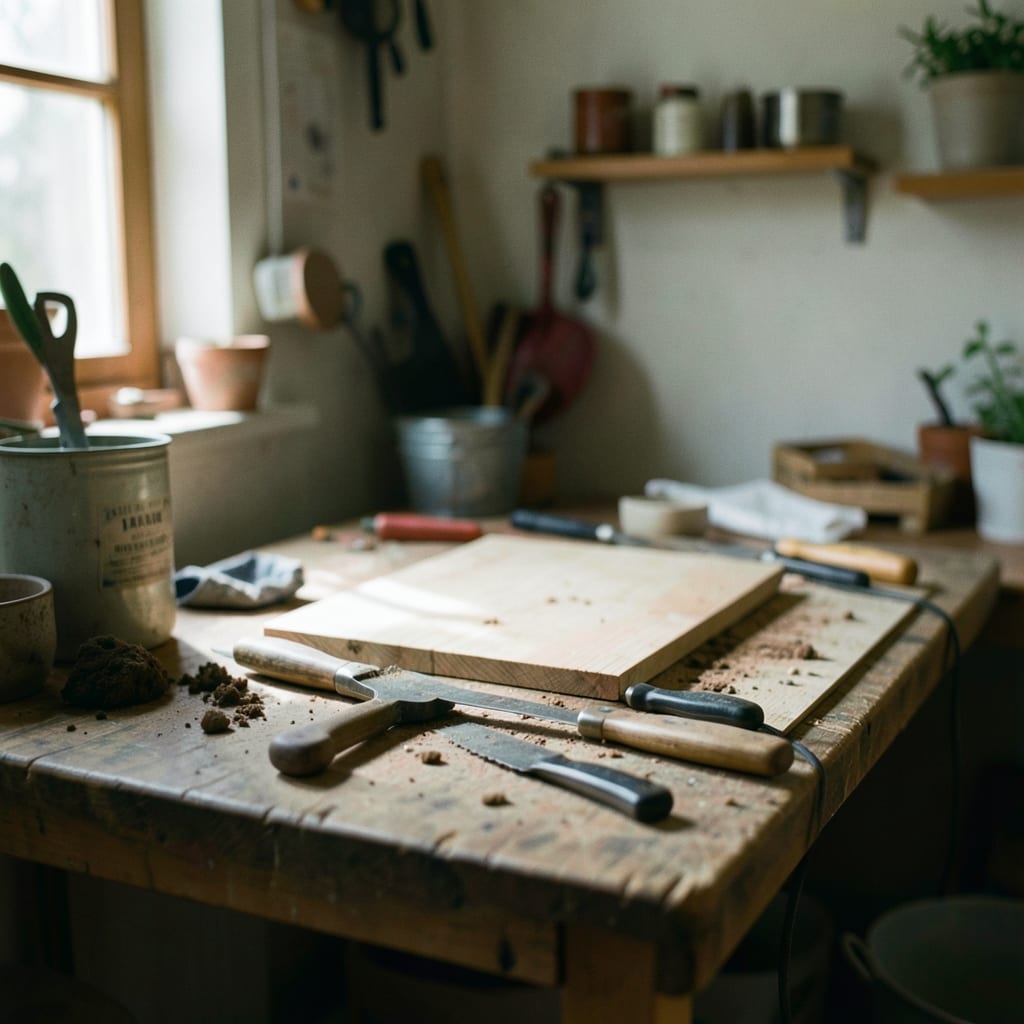
What this work is made with
This page is not a story. It is a list of the things that hold *Balcony Veggies* together—the objects that shape what grows here, the tools that leave their marks on the soil, the wear that tells the truth.
A gardening site does not live in words alone; it lives in the hands that dig, the containers that hold, and the lessons learned when something finally breaks through.
We name these things so you can see what this work depends on. Every sprout, every failed transplant, every stubborn weed that won’t die—it all starts with these.
The things that do the work
Four objects keep this garden alive: a cracked terracotta pot, a bent wooden spoon, a pair of rusted pruning shears, and a plastic tray that has outlasted three winters. None of them are perfect. All of them have something to teach.
Terracotta pot
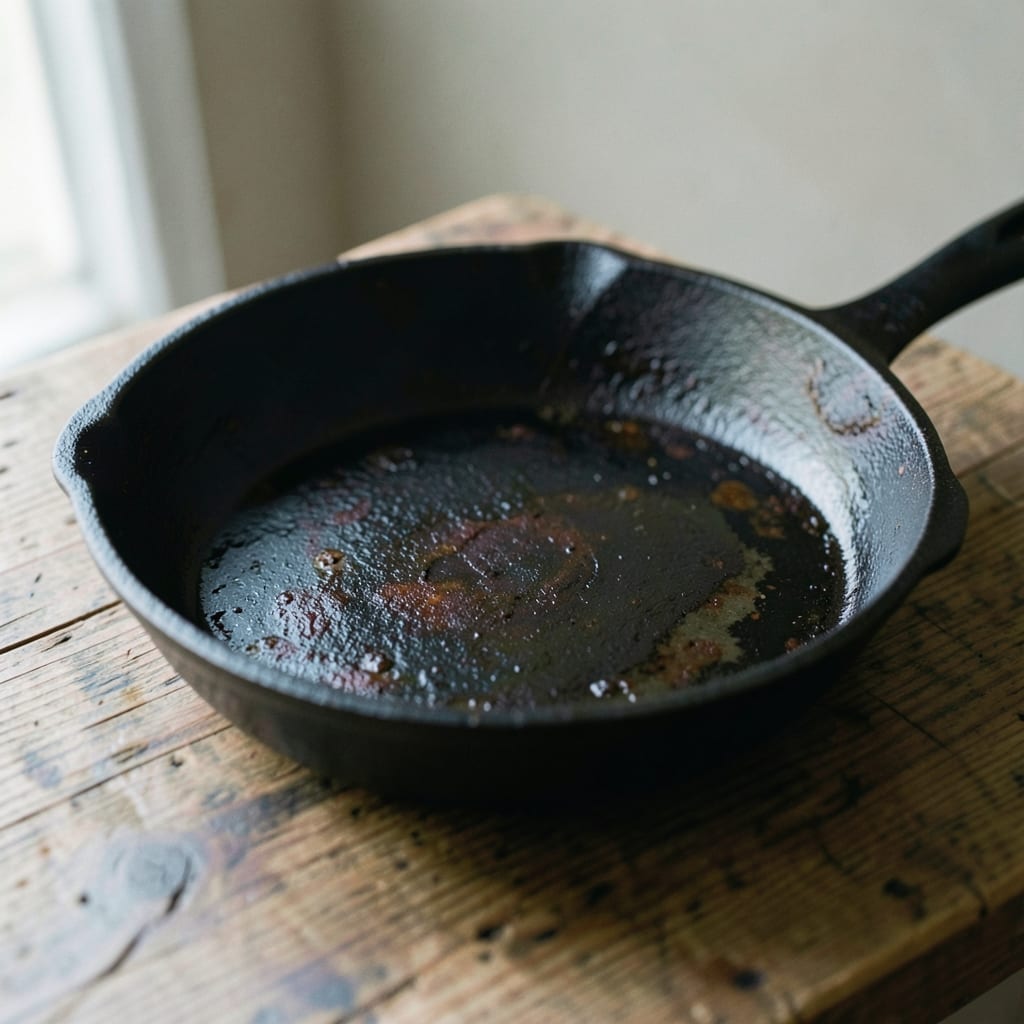
A handmade terracotta pot, chipped along the rim, with a glaze that’s worn thin in places. It’s been here since 2019, when I bought it from a roadside stand in rural Georgia. The seller swore it was ‘old enough to remember the last frost.’
It failed its first basil plants—too porous, too fast-draining—but after that, it became the only pot where tomatoes would actually set fruit. Now, it holds my chili peppers, and every year, the cracks let in just enough water to keep them happy without drowning them.
Wooden spoon
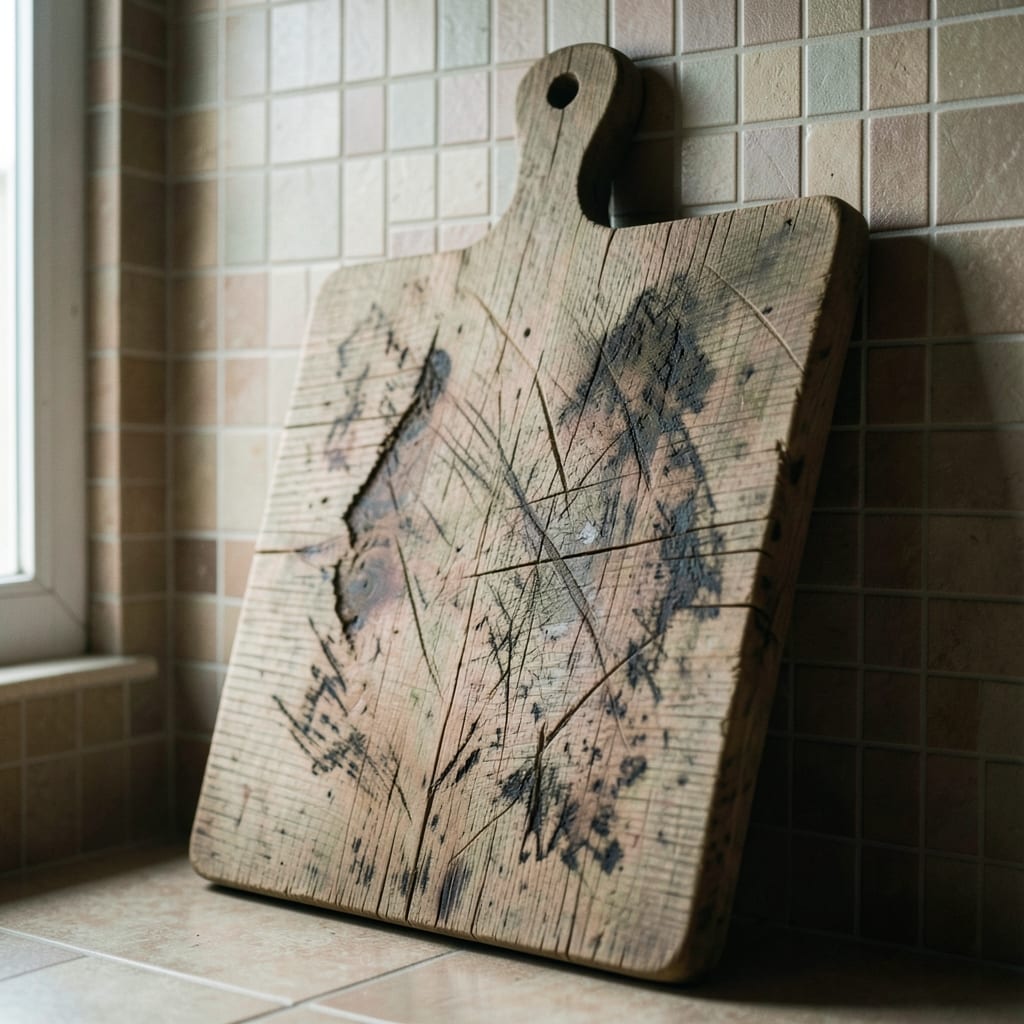
A bent, splintered spoon with a handle so smooth it’s lost half its grain. It came from my grandmother’s kitchen, handed down when I moved out of my childhood home. The wood is warped from years of soaking in rainwater and compost tea.
It’s the only tool I use to mix seed-starting soil. The uneven shape means I can’t stir evenly, but that’s why it works—it aerates the mix better than any plastic trowel.
And when I’m pressing seeds into damp soil, the splinters catch the edges just enough to give them a grip.
Pruning shears
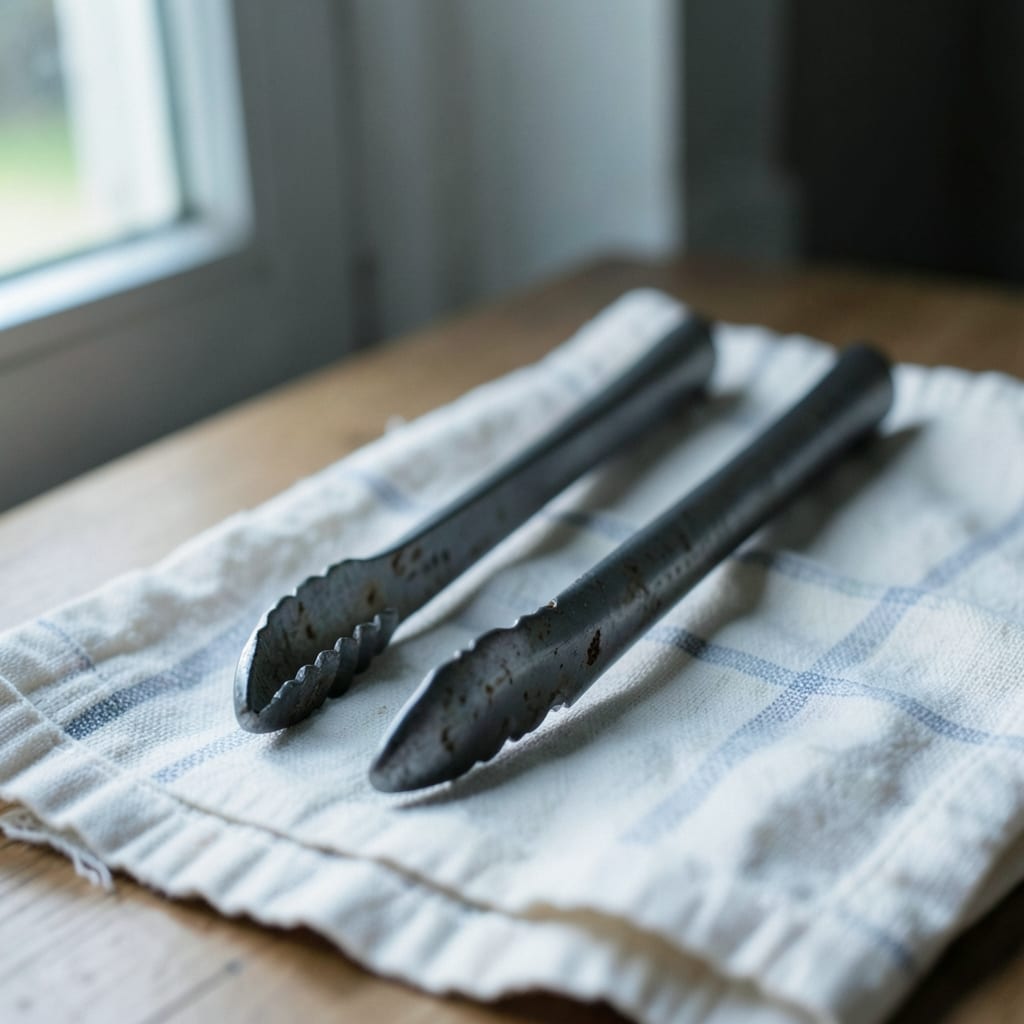
A pair of cheap, rusted shears I bought at a hardware store for two dollars. The blades are dull, the pivot screws loose, and the plastic handles have split. They’ve been here since 2021, when my fancy bypass pruners snapped mid-cut on a stubborn zucchini vine.
I keep them because they’re the only shears that won’t strip the bark off young stems. The rust flakes off onto the soil, but the plants don’t seem to mind.
And when I’m deadheading spent blooms, the dullness means I have to slow down—so I notice which flowers are still fighting to open.
Plastic seed tray
A six-pack of black plastic trays, each one lined with a sheet of newspaper torn from a Sunday paper. They’ve been through three growing seasons, and the edges are warped from too many trips between the basement and the balcony. The newspaper is always stained with compost tea.
They’re the only trays that keep my seedlings from drying out overnight, even when I forget to water them. The newspaper degrades just enough to mix into the soil when I transplant, so the roots don’t have to fight through plastic. And the black color?
It’s why my basil finally germinated last spring—the heat from the tray tricked the seeds into thinking it was summer.
What is not in the drawer
This work does without a few things—choices, not omissions. There are no branded tools here, no ‘garden hacks’ that cost more than they’re worth, no perfect measurements, and no promises that anything will grow.
Deliberately absent
- A soil test kit—guessing works just as well, and the mistakes are the best lessons.
- Expensive raised beds—balconies and patios have their own rules, and so do budgets.
- A ‘perfect’ schedule—plants grow when they grow, not when the calendar says they should.
- Photoshopped ‘before and after’ shots—what you see is what you get, warts and all.
Behind the scenes

I am Bernadette Northrup, Founder & Editor. I dig, I prune, I swear at weeds, and I write about the mess in between. This site is where I turn my failures into lessons and my triumphs into warnings.
I came to this from a childhood spent rearranging my mother’s flower pots before I could even read. She’d hand me a trowel and say, ‘Just don’t bury the bulbs too deep,’ which I took as a challenge to bury them as deep as I could.
Most of them died, but the ones that didn’t taught me everything I know.
This work has given me a permanent smudge of dirt under my nails, a habit of checking soil moisture with my thumb instead of a meter, and a new appreciation for the way light hits a leaf at 3 PM.
I can no longer walk past a garden center without noticing which plants are wilting from overwatering and which are just being stubborn.
I’m here to show you what happens when you pay attention to the soil, not the Instagram feed. Every post is a snapshot of a real plant, grown in real conditions, with real mistakes and real rewards.
If you’re standing on your balcony wondering if that seed packet is worth the risk, you’re in the right place.
Why any of this matters to you
These things—the cracked pot, the bent spoon, the rusted shears, the warped tray—are why the advice here feels real. They’ve seen what works, what doesn’t, and what happens when you ignore the rules. The terracotta pot knows that tomatoes need to suffer a little.
The wooden spoon remembers that soil isn’t just dirt. The pruning shears have learned that sometimes, you have to cut things back to let them grow.
When you read a post here, you’re not getting a polished tutorial. You’re getting the story of a plant that almost didn’t make it—and the tools that helped it along. The lessons aren’t in the words. They’re in the wear.
Every page here is built on the same four things: what grew, what didn’t, what the tools say, and what the soil remembers. You won’t find step-by-step guides that assume you have a perfect setup. You’ll find the truth about what happens when you don’t.
The guides are grouped by category: Companion Plants, Container Gardens, Fertilization, How To, Light Requirements and Pests and Diseases.