
Vegetables
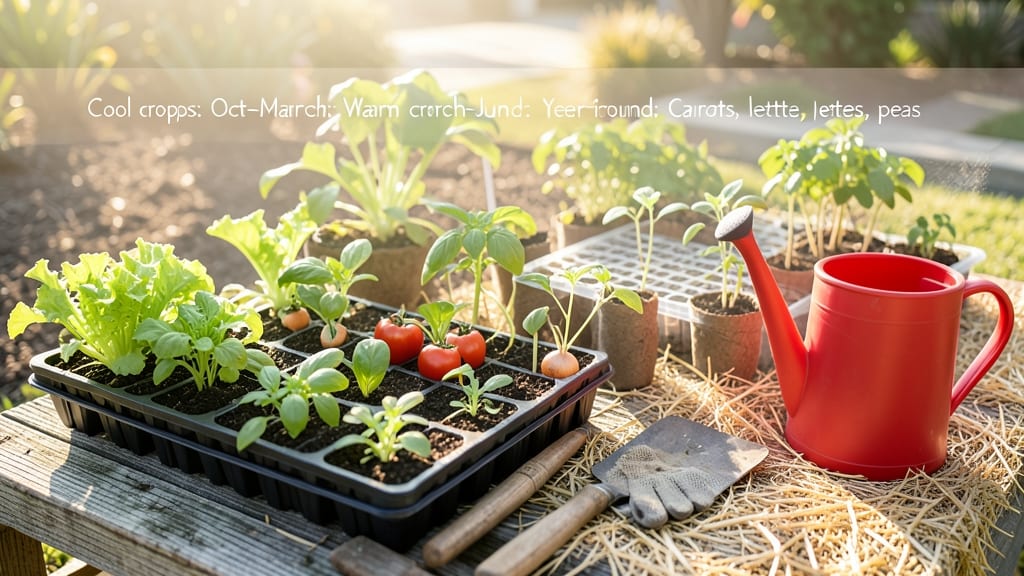
Planting vegetables in San Diego year-round is possible—but timing still makes all the difference for your 🥕 harvests.
San Diego’s warm climate extends your growing season, but heat stress or poor yields can still ruin your crops if you plant at the wrong time. Whether you’re growing tomatoes, lettuce, or peppers, knowing the best months for each vegetable keeps your garden thriving.
With no frost to worry about, the real challenge is avoiding summer heatwaves that can scorch delicate greens or stall fruit production.
Coastal areas stay cooler longer, while inland zones heat up faster—so adjusting your schedule by just a few weeks can mean the difference between a bountiful harvest and a sad, wilted disappointment.
Below, I break down the ideal planting windows by month, microclimate adjustments, and pro tips to maximize your yield—no matter where in San Diego you garden.
San Diego’s frost-free planting zones: what months work best for each vegetable?
San Diego’s USDA Zones 9b-10a mean you can grow vegetables year-round—but not all crops thrive in every season. Cool-season crops like lettuce and broccoli prefer milder temperatures, while warm-season crops like tomatoes and peppers need heat to flourish.
Understanding these differences helps you avoid heat stress or stunted growth from sudden temperature shifts.
Unlike northern climates, San Diego rarely experiences frost, but microclimates still play a huge role. Coastal areas stay cooler and foggier, while inland valleys can hit 100°F+ in summer.
This means your planting windows might shift by weeks depending on where you garden. Let’s break down the best months for each vegetable type to maximize your harvest.
For cool-season crops, focus on early spring (January–February) and fall (September–November) to avoid summer heat. Broccoli and carrots planted in late summer (August) may bolt or develop woody textures if temperatures rise too quickly. Instead, opt for heat-tolerant varieties or use shade cloth to protect seedlings.
Warm-season crops like tomatoes and peppers should go in the ground March–April or August–September to align with soil warmth. Inland areas can handle late summer plantings better than coastal zones, where fog delays soil warming. If you’re eager to plant in summer, start seeds indoors or use black plastic mulch
How to adjust planting times for San Diego’s microclimates: coastal vs. inland strategies
San Diego’s microclimates create dramatic differences between coastal areas and inland valleys. Coastal regions like La Jolla experience cooler temperatures and morning fog, while inland spots like Escondido bake under intense summer sun. These variations mean your planting schedule must adapt—or risk bolting lettuce or sunscald on peppers.
For coastal gardens, succession planting works year-round because temperatures stay mild. Inland areas require shade cloth for summer crops and earlier starts to avoid heat stress. Let’s break down how to sync your schedule with these conditions for maximum harvests with minimal risk.
In coastal areas, tomatoes and peppers thrive when planted in late winter (February–March) to avoid summer heat. Use black plastic mulch to warm soil faster. Inland gardeners should opt for heat-tolerant varieties like ‘Arkansas Traveler’ tomatoes and plant in early spring or late summer.
For leafy greens, coastal gardeners can plant year-round with minimal risk. Inland areas, however, should focus on fall plantings (September–October) to avoid bolting. Try ‘Winter Density’ lettuce, which handles cooler temps better than standard varieties.
To extend harvests, coastal gardeners can use low tunnels in winter, while inland growers benefit from drip irrigation to conserve water during dry spells. Both strategies help minimize stress and maximize yields in San Diego’s diverse climate zones.
Pro tip: Monitor your local weather station for fog patterns (coastal) or heat advisories (inland). Adjust your schedule weekly if needed—your harvest timing depends on it! 🌱☀️