
Vegetables
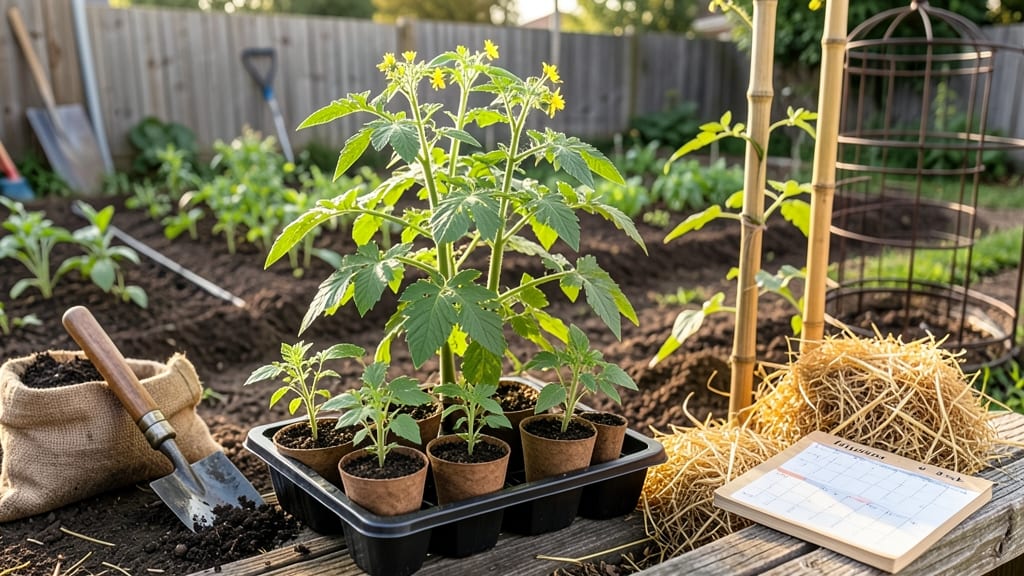
Planting tomatoes in New Jersey after the last frost — typically mid-April to early May — ensures your 🍅 plants thrive and produce a bountiful harvest.
Timing is everything when growing tomatoes in New Jersey — plant too early and frost will kill your seedlings, too late and your harvest will suffer.
But with NJ’s diverse microclimates and USDA hardiness zones (6a-7b), knowing the exact window for your county can mean the difference between a bumper crop and a disappointing season.
Coastal areas like Atlantic City have milder springs, while inland zones like Sussex County may wait until early May. Soil temperature matters just as much as air temperature — aim for 60°F or warmer before transplanting seedlings outdoors.
Below, I’ll break down the frost-date calculator by zone, when to start seeds indoors, and how to extend your growing season with row covers for peak yields all summer long.
NJ frost dates by zone: exact planting windows for tomatoes (2024 guide)
New Jersey’s diverse climate zones—from coastal Atlantic County to inland Sussex County—create wildly different tomato planting windows. While the average last frost date hovers around April 15, microclimates can shift that window by 2-3 weeks.
For example, coastal areas like Cape May often warm up 10 days earlier than northern zones like Morris or Passaic. To avoid frost damage or stalled growth, always check soil temperatures (aim for 55°F+) and nighttime lows (50°F+) before planting.
Transplanting seedling tomatoes too soon—even if frost risk seems low—can trigger cold stress, causing yellowing leaves or stunted stems. Conversely, waiting until mid-June for direct seeding may leave you with small harvests before the first frost in October.
The key? Start indoor seedlings 6-8 weeks before your local last frost date and harden them off before transplanting. For direct-seeded varieties, wait until soil temps hit 60°F consistently.
Below is your county-by-county breakdown of NJ frost dates, including USDA zone adjustments and optimal transplant windows for tomatoes. Use this as your planting roadmap—but always double-check with the NJ State Climate Office for year-to-year variations.
How to extend your NJ tomato season: cold frames, row covers & succession planting
New Jersey’s short growing season doesn’t have to limit your tomato harvest. With the right techniques, you can extend your season by 3-6 weeks on either end, ensuring ripe tomatoes from early summer through fall.
The key? Cold frames for early starts, row covers to protect late plants, and succession planting for continuous yields. These methods work especially well in NJ’s USDA zones 6a-7b, where unpredictable spring frosts and early autumn chills can cut harvests short.
I’ve tested all three methods in my own garden, and the results speak for themselves: floating row covers add 3-4 weeks to the growing season, while cold frames let me start seedlings 4-6 weeks earlier than traditional schedules.
Succession planting, meanwhile, ensures I’m harvesting tomatoes every 2-3 weeks once the first batch ripens. Below, I’ll break down the pros and cons of each approach, so you can choose what works best for your garden and timeline.
Cold Frames vs. Row Covers vs. Succession Planting
- Pros: Start seedlings 4-6 weeks early, protect from late frosts, extend fall harvests
- Cons: Requires more setup, can overheat in summer, limited space
- Pros: Easy to install, 3-4 week extension, protects from pests, works for both early and late plantings
- Cons: Needs sturdy supports, can trap too much heat, reduces airflow slightly
- Pros: Continuous harvests, no seasonal gaps, works with any method
- Cons: Requires more seeds/plants, needs organized spacing, not ideal for large varieties
- Organic (e.g., hemp or cotton): Breathable, biodegradable, better for NJ’s humid climate
- Synthetic (e.g., polypropylene): Longer-lasting, lighter, but traps more heat
For cold frames, I recommend using them to start seedlings in early March, even if you’re in USDA zone 7a.
A simple DIY frame made from wooden boards and plexiglass can raise soil temperatures by 10-15°F, letting you transplant hardened-off seedlings 2-3 weeks earlier than the average last frost date. Just be sure to ventilate on warm days to prevent overheating—tomato seedlings can bolt if stressed by heat.
When it comes to row covers, my go-to is lightweight floating fabric (like Agribon or Reemay) supported by hoop tunnels or stakes. These covers add 3-4 weeks to both the start and end of your season.
In NJ’s humid climate, I opt for organic cotton covers over synthetic ones—they allow more airflow, reducing the risk of powdery mildew and blossom-end rot. Remove covers during flowering to encourage pollination, then replace them after fruit sets to protect against late-season pests.
Finally, succession planting is my secret weapon for a steady tomato supply. I plant 3 batches of tomatoes every 2-3 weeks from late April through early June. The first batch gets the full season, while the second and third ripen just as the first starts to decline.
For determinate varieties (like Roma or Bush Early Girl), I even stagger plantings every 10 days to ensure a weekly harvest through September. Just be mindful of spacing—crowded plants lead to disease pressure and poor air circulation.
With these techniques, you can turn NJ’s 165-day growing season into a 200+ day tomato festival. Start with cold frames for early seedlings, use row covers to shield late plantings, and keep the harvest going with succession planting.
The result? Tomatoes from June through October, even in the most challenging microclimates. Happy growing!