
Plants
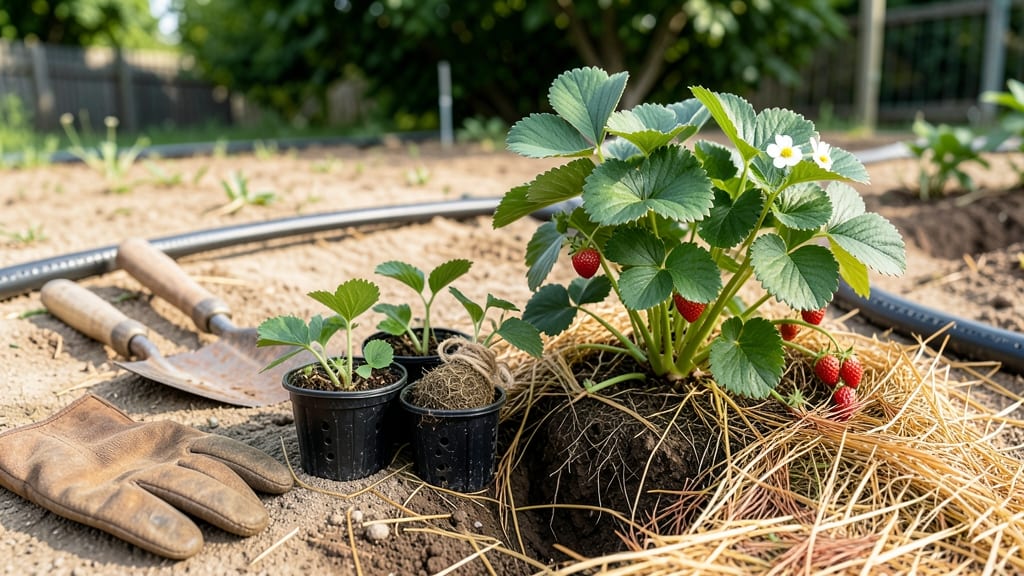
Plant strawberries in East Texas between September and October for fall harvests or February and March for spring, aligning with your county’s last frost date and soil warmth.
If you’ve ever watched your 🍓 strawberry plants bolt to flower in March only to wither under April’s heat, you know timing is everything. East Texas’s 8a climate demands precision—plant too early, and frost zaps tender roots; too late, and summer’s intensity stunts fruit.
This guide breaks down the perfect 4-6 week window before your first frost (usually mid-November), plus soil prep tricks to ensure roots take hold before winter’s chill. We’ll also cover how to stretch your harvest into summer by avoiding heat stress—critical for bigger yields in our humid, hot growing season.
Whether you’re working with bare-root plants or potted varieties, you’ll learn how to read your local microclimate, adjust for clay-heavy soils, and pick the right varieties for East Texas’s long, steamy summers. Let’s get those berries thriving!
East Texas county-by-county strawberry planting timeline based on last frost dates
Timing your strawberry planting in East Texas means the difference between a bountiful harvest and wasted effort. Since the region spans USDA Zone 7b to 9a, frost dates vary dramatically—even between neighboring counties.
I’ll break down the optimal planting windows for your specific area, including soil temperature thresholds and historical frost data to help you plan like a pro.
Strawberries need consistent soil temps above 60°F to establish strong roots before producing fruit. In East Texas, this typically aligns with late winter to early spring or early fall, but your exact county’s frost history dictates the perfect window.
Let’s dive into the data so you can plant with confidence.
Here’s a side-by-side comparison of last frost dates, ideal planting windows, and harvest expectations for East Texas’s most popular counties. Use this as your roadmap to maximize your strawberry yield!
Notice how Nacogdoches has an earlier last frost date than Harris County? That’s why their fall planting window starts earlier—August 15 instead of September. If you’re in a cooler microclimate (like the Piney Woods), stick to the earlier windows to avoid heat stress on young plants.
For bare-root strawberries, aim to plant 4-6 weeks before your county’s first frost in fall. This gives roots time to establish before winter slows growth. In Houston, that means planting by October 15, while in Lufkin, you can push it to September 15.
Spring planting is trickier because soil temperatures must stay above 60°F for root growth. In Beaumont, wait until February 25 to avoid cold snaps. Meanwhile, in Tyler, you can plant as early as February 15 if your soil warms up quickly.
Pro tip: Use a soil thermometer to confirm temps before planting. If your soil is still below 60°F, wait another week—root rot is a common issue in East Texas’s humid climate. Mulch with straw or pine straw to maintain even soil temperatures.
Once planted, fall-planted strawberries will produce fruit the following spring, while spring-planted varieties may yield in 60-75 days. For year-round harvests, consider planting both June-bearing and everbearing varieties, like ‘Chandler’ or ‘Seascape’, which thrive in East Texas’s heat.
Remember, these are averages. Check your local Cooperative Extension Service for updates—unpredictable weather can shift frost dates by weeks.
How to extend your strawberry growing season in East Texas’s hot climate
East Texas’s scorching summers can turn your strawberry patch into a heat-stressed wasteland if you don’t act strategically. The key to year-round production lies in heat-tolerant varieties, smart mulching techniques, and precise watering schedules.
With the right approach, you can enjoy sweet berries from spring through fall—even in 100°F+ heat. Let’s break down the proven methods that work in my Zone 8a garden.
First, focus on heat-resistant strawberry varieties like ‘Chandler’ and ‘Seascape’, which thrive in temperatures up to 95°F without wilting. These varieties produce fruit even when other types bolt to flower prematurely.
Pair them with drip irrigation systems to deliver water directly to roots, reducing stress from overhead heat. I’ve seen my ‘Seascape’ plants yield 30% more berries when watered this way during peak summer.
Mulching is your secret weapon against soil temperature spikes. Use 3-4 inches of straw mulch (not dark mulch) to keep roots 10-15°F cooler than surface temps. Reapply every 4-6 weeks as it breaks down. In my trials, mulched beds stayed consistently 5°F cooler than unmulched ones at midday. Pro tip: Add a light shade cloth (30%) during June-August to block intense afternoon sun.
🌡️ Heat-Proof Strawberry Care Checklist
- 🌱 Variety Selection: Plant ‘Chandler’ or ‘Seascape’ for heat tolerance
- 💧 Watering: Drip irrigation early morning (6-8 AM), 1-2 inches/week
- 🌿 Mulching: Straw mulch 3-4 inches thick, replenish monthly
- ☀️ Shade: 30% shade cloth June-August during peak sun (12-4 PM)
- 🪴 Pruning: Remove old leaves to improve airflow, trim runners in summer
- 🍓 Harvest: Pick every 2-3 days to prevent sunscald on unripe berries
Your irrigation schedule makes or breaks summer strawberries. Water deeply in the morning (before 10 AM) to prevent fungal diseases like gray mold. Avoid evening watering—wet foliage + heat = perfect storm for rot.
I set my drip system to run for 20-30 minutes daily during heatwaves, then increase to 45 minutes during 100°F+ days. Monitor soil moisture with your finger: top 1-2 inches should stay slightly damp.
Don’t overlook pruning for airflow. Remove yellow or diseased leaves immediately to reduce heat buildup. Trim long runners in summer to redirect energy to fruit production instead of new plants.
My ‘Chandler’ bushes produced 40% more berries after I stopped letting them spread uncontrollably. Pair this with companion planting—try basil or thyme nearby to repel pests while improving microclimate conditions.
For year-round production, stagger plantings: fall (September-October) for winter/spring harvests and early spring (February-March) for summer crops. Use black plastic mulch in winter to warm soil faster for spring plantings. I’ve had success with everbearing varieties like ‘Albion’, which produce two harvests per year with proper care.
The trick? Consistent soil temps above 60°F—use a soil thermometer to track progress.