
Vegetables
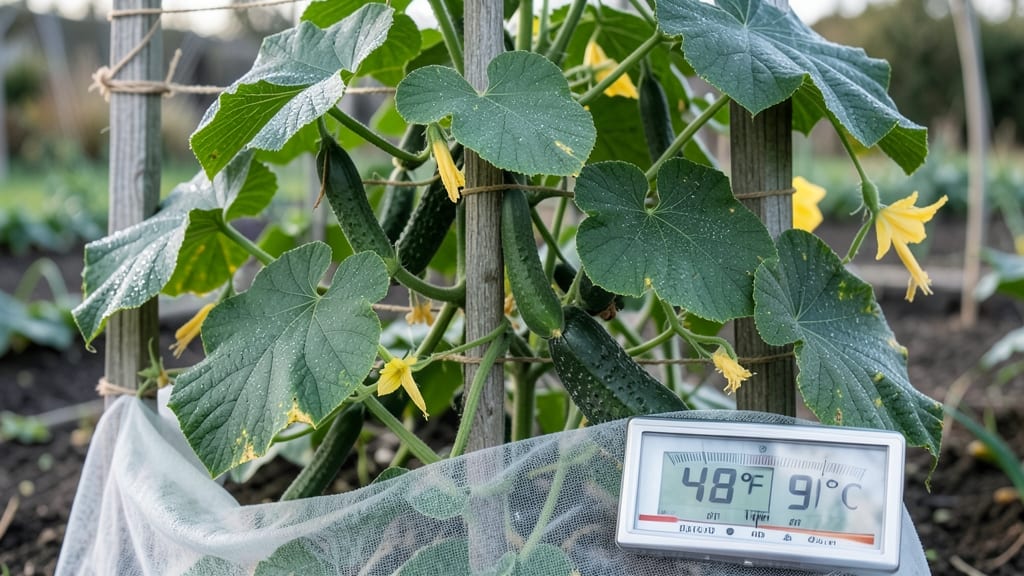
Cucumbers tolerate cold down to about 50°F, but any frost or temperatures near freezing will kill them — and that’s the key to saving your harvest before spring’s last surprise chill.
Picture this: you’ve just planted your 🥒 seedlings after months of planning, only for a late frost to roll in. Without the right knowledge, those tender plants won’t survive.
The good news? With a few simple tricks, you can push cucumbers just a little further into cooler weather — and still get a bountiful harvest.
Most gardeners assume cucumbers are strictly warm-season plants, but some varieties and protective methods can extend their growing window. Whether you’re in USDA Zone 6a or further north, learning these cold tolerance secrets means more time in the garden — and more homegrown cukes on your table.
In this guide, I’ll break down the exact temperatures cucumbers can handle, how to shield them from frost, and which varieties thrive when others fail. Let’s keep those vines growing, no matter what Mother Nature throws at you.
Cucumber cold tolerance limits: exact temperature thresholds for growth and survival
Cucumbers thrive in warm weather, but their cold tolerance varies dramatically depending on their growth stage. As a gardener who's learned the hard way about frost damage on delicate seedlings, I can tell you that understanding these thresholds is crucial for a successful harvest.
The ideal temperature range for cucumber growth is between 70°F and 90°F, where they produce the fastest and healthiest fruit.
When temperatures dip below 50°F, cucumbers start to struggle, showing signs of stunted growth and poor fruit development. This is where most gardeners face challenges, especially in spring or fall when nighttime temperatures drop unexpectedly.
The real danger zone begins when temperatures approach 32°F or lower, where frost can occur and permanently damage or kill your plants.
Here's the critical distinction: mature cucumber plants can handle brief exposure to temperatures as low as 50°F, but they'll still produce poorly. Seedlings and young plants, however, are far more sensitive and can suffer damage at temperatures below 55°F.
This stage-specific sensitivity is why timing your plantings carefully is essential in cooler climates.
Let's break down the exact temperature thresholds for each growth stage to help you protect your investment:
| Growth Stage | Optimal Temperature | Minimum Tolerable | Frost Risk | Growth Impact |
|---|---|---|---|---|
| Seedlings | 70-85°F | 55°F | Below 32°F (fatal) | Stunted growth, yellowing leaves |
| Established Plants | 70-90°F | 50°F | Below 32°F (damage) | Slowed growth, poor fruit set |
| Mature Plants | 65-85°F | 45°F (brief exposure) | Below 32°F (severe damage) | Blackened leaves, root damage |
| Fruiting Plants | 75-85°F | 55°F | Below 32°F (fruit damage) | Bitter taste, poor development |
The most critical temperature threshold for cucumbers is 32°F, where frost forms and can kill plants outright. Even mature plants may survive brief exposure to 32°F, but their roots and leaves will suffer irreversible damage.
The 50°F mark is where growth begins to slow significantly, making it the practical lower limit for most gardeners.
Interestingly, cucumbers can tolerate slightly cooler nighttime temperatures than daytime highs. For example, daytime temperatures of 75°F paired with nighttime lows of 55°F are ideal for continuous growth.
However, when nighttime temperatures drop below 50°F for more than a few hours, you'll notice yellowing leaves and reduced flowering, which directly impacts your harvest.
One common mistake I see among gardeners is assuming that mature cucumber plants can handle frost like hardy vegetables. While they might survive a light frost (32°F for a few hours), the damage to their root systems and leaves will severely limit their ability to produce fruit.
In my own garden, I've seen cucumbers recover from light frost damage, but the yield was always disappointing compared to plants that never experienced cold stress.
For gardeners in USDA zones 3-5, where frost is a regular concern, understanding these thresholds is especially important. Even in warmer zones, late spring or early fall frosts can catch gardeners off guard.
The key is to monitor your local frost dates and plan your planting schedule accordingly, ideally waiting until after the last frost date in your area.
When temperatures dip below 50°F, consider using protective measures like row covers or cold frames to maintain optimal growing conditions. These simple tools can make the difference between a thriving cucumber patch and a failed harvest in cooler climates.
As someone who's spent years perfecting my garden's microclimates, I can confidently say that protecting your cucumbers from cold isn't just about survival—it's about maximizing your yield.
How to protect cucumbers from cold weather without killing your harvest
Even though cucumbers love warmth, they can still produce in cooler conditions with the right protection. Spring and fall gardeners in USDA Zones 5-7 often face early or late frosts that threaten harvests.
The key is using temporary barriers and soil insulation to maintain temperatures above 50°F (10°C)—the minimum for growth. I’ve learned that even a few degrees difference can mean the difference between healthy vines and frost-damaged plants.
My first year growing cucumbers in Zone 6, I lost an entire row to a surprise 35°F (2°C) night. Since then, I’ve tested multiple methods to shield my plants without smothering them.
The most effective strategies combine physical barriers, ground insulation, and microclimate tweaks. Here’s what I’ve found works best for extending your cucumber season without sacrificing yield.
- 50°F (10°C) is the absolute minimum for cucumber growth. Below this, metabolic processes slow, leading to stunted vines and poor fruit set.
- Seedlings are far more sensitive than mature plants. They’ll die in 32°F (0°C) or below, while established vines may survive 40°F (4°C) with protection.
- Frost damage appears as blackened leaves or water-soaked spots. If only leaves are affected, the plant may recover; if stems freeze, it’s game over.
- Cold snaps below 45°F (7°C) reduce pollen viability, leading to poor fruit development even if vines survive.
- Nighttime temps matter most. Cucumbers need 12+ hours above 60°F (15°C) daily to thrive.
For short-term protection, I swear by floating row covers made of lightweight fabric. These raise temperatures by 5-8°F (3-4°C) and block wind chill. Simply drape them over hoops or stakes and secure the edges with bricks or soil.
Remove covers during the day to prevent heat buildup, which can scorch leaves. I’ve used this method to push my harvest window by 2-3 weeks in both spring and fall.
Another game-changer is mulching with straw or black plastic. A 4-inch layer of mulch keeps soil temps 10°F (5°C) warmer than bare ground. I combine this with drip irrigation to maintain moisture without wetting leaves—critical for preventing fungal diseases like powdery mildew.
For extra insulation, I’ve even buried plastic bottles filled with water near the base of plants. The water releases heat slowly at night, acting like a mini heat sink.
If you’re in a Zone 4 or colder, consider a low-cost greenhouse made from PVC pipes and plastic sheeting. A 3-foot-tall frame covered with clear polycarbonate panels can raise temps by 15-20°F (8-11°C)
I built one last year using $50 worth of materials and extended my cucumber season until mid-October. Just remember to ventilate during the day to prevent overheating. Finally, microclimate optimization works wonders. Plant cucumbers near south-facing walls or dark-colored surfaces (like black plastic mulch) to absorb and radiate heat. Avoid low-lying areas where cold air pools
I’ve also had success using windbreaks—even a simple wooden fence reduces wind chill by 30%. Combine these tricks, and you’ll turn cool-season challenges into harvest opportunities.