
Planting
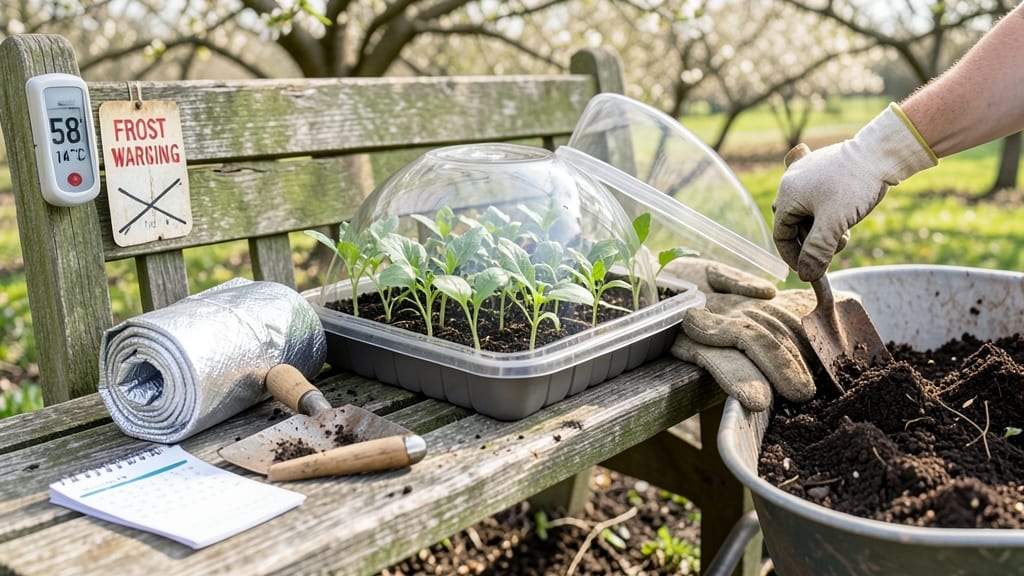
It’s safe to plant vegetables outside after your last frost date—but getting that date wrong means wasted seeds or stunted growth, and no one wants that.
Timing is everything in gardening—plant your 🥕 too early and risk frost damage, too late and miss peak harvest season. Knowing your frost-free date by hardiness zone is the key to a thriving garden.
In USDA Zone 6a, where many gardeners live, the average last frost falls around mid-April, but your exact date depends on local weather patterns and elevation. A quick check of historical frost charts (or even your neighbor’s garden!) can save you from costly mistakes.
Below, I’ll break down how to pinpoint your planting window, which vegetables need extra warmth, and how to extend the season for late crops — so you can finally grow that bumper harvest you’ve been dreaming of.
How to find your local frost-free date by USDA hardiness Zone
Timing your vegetable planting by the frost-free date prevents frost damage and maximizes yields. The USDA Hardiness Zone Map is your first tool—it divides the U.S. into 13 zones based on average minimum winter temperatures. But frost-free dates vary even within zones, so let’s break it down step by step.
Start by locating your USDA zone using the interactive map on the USDA Agricultural Research Service website.
For example, Zone 7a (0°F to 5°F) typically has a frost-free date between March 15 and April 15, while Zone 9b (25°F to 30°F) may see frost-free conditions as early as January 15.
| USDA Zone | Avg. Last Frost Date | Safe Planting Window | Example Crops |
|---|---|---|---|
| Zone 3a (-40°F to -35°F) | May 15–June 1 | After June 1 | Peas, kale, cabbage |
| Zone 5b (0°F to -5°F) | April 15–May 1 | After May 1 | Lettuce, spinach, tomatoes |
| Zone 7a (0°F to 5°F) | March 15–April 15 | After April 15 | Peppers, cucumbers, beans |
| Zone 9a (20°F to 25°F) | January 15–February 15 | After February 15 | Okra, sweet potatoes, melons |
| Zone 10a (30°F to 35°F) | December 15–January 15 | After January 15 | Tomatoes, eggplants, peppers |
Next, check your local historical frost data from sources like the National Oceanic and Atmospheric Administration (NOAA) or your local cooperative extension office. These provide 30-year averages for the last spring frost, which can differ by 10–20 days from the USDA zone average.
For example, a Zone 6b garden in Denver, CO, might have a frost-free date of May 5, while one in Atlanta, GA, could be March 20.
Adjust for microclimates—areas near bodies of water, urban heat islands, or slopes may experience frost 1–2 weeks earlier or later than the average. For instance, a south-facing slope warms faster and may be frost-free 5–7 days earlier than a nearby valley.
Use a minimum-maximum thermometer for 2–3 weeks to track local patterns.
Elevation also shifts frost dates. For every 1,000 feet (300 meters) gain, temperatures drop about 3.5°F (2°C), delaying the frost-free date by 5–10 days. If you’re gardening at 5,000 feet, subtract 17 days from your zone’s average frost-free date.
For example, Zone 7a at sea level might be frost-free by April 15, but at 5,000 feet, aim for May 2.
For warm-season crops like tomatoes and peppers, wait until the soil temperature reaches 60°F (15°C)—use a soil thermometer to check. Cool soils slow germination and stunt growth. If your frost-free date is April 15 but the soil isn’t warm enough until May 1, delay planting until then.
Extend your growing season with row covers or cold frames to plant 2–3 weeks earlier than your frost-free date. These protect cool-season crops like broccoli and carrots from late frosts. Conversely, use black plastic mulch to warm soil faster for warm-season crops, shaving 7–10 days off your planting timeline.
Keep a gardening journal to record your frost dates over 3–5 years. Note anomalies like unseasonable late frosts (e.g., a May frost in Zone 8) or early warm spells. This helps you fine-tune your planting schedule year after year.
For example, if your Zone 6b garden gets frost on May 10 every other year, wait until May 15 to plant heat-loving crops like eggplants.
When in doubt, use the "wait until Mother Nature says it’s safe" rule. Watch for leaf-out on native trees like maples or oaks—buds opening signal warming trends. Combine this with your frost-free date and soil temperature to pinpoint the perfect planting window for your vegetables.
Best planting times for vegetables by frost-free date range
Understanding your frost-free date range transforms gardening from guesswork to precision. Whether you're in Zone 5 (like Chicago) or Zone 9 (like Los Angeles), the number of days between your last spring frost and first fall frost determines when to plant cool-season vs. warm-season crops.
For example, a 60-day frost-free window in Zone 3 means you’ll need to focus on fast-maturing varieties, while a 120-day window in Zone 8 allows for longer-season plants like tomatoes.
Cool-season vegetables like spinach and kale thrive when planted 4–6 weeks before your last frost date, while warm-season crops such as tomatoes and peppers need to wait until 2–3 weeks after that date. The key is matching your crop’s days to maturity with your frost-free window.
For instance, if your frost-free period is 90 days, prioritize vegetables that mature in 60 days or less to avoid fall frost damage.
- 📅 30-day frost-free window: Plant fast-maturing crops (e.g., radishes, lettuce) 2–3 weeks before last frost and succession plant every 2 weeks.
- 🌡️ 60-day frost-free window: Start cool-season crops (e.g., spinach, peas) 4–6 weeks before last frost; delay warm-season crops (e.g., tomatoes, peppers) until 2 weeks after last frost.
- ⏳ 90-day frost-free window: Plant long-season crops (e.g., cabbage, broccoli) 6–8 weeks before last frost; warm-season crops like eggplants need 3–4 weeks after last frost for safe growth.
- ❄️ 120+ day frost-free window: Ideal for all vegetables, including squash, corn, and indeterminate tomatoes. Start cool-season crops early and warm-season crops by mid-spring.
- 🌿 Zone 3–5 (short season): Focus on early-maturing varieties (e.g., bush beans, quick-maturing lettuce) and use row covers to extend the season.
- ☀️ Zone 6–8 (moderate season): Balance cool-season starters (e.g., kale, carrots) with warm-season plants (e.g., peppers, cucumbers) for year-round harvests.
- 🌎 Zone 9–11 (long season): Plant warm-season crops in fall for winter harvests (e.g., spinach, radishes) and cool-season crops in early spring.
Your frost-free date range also dictates whether you can double-crop or succession plant. In shorter seasons (e.g., Zone 4), you might grow bush beans in early summer and replace them with spinach in late summer for a fall harvest.
Meanwhile, in longer seasons (e.g., Zone 9), you can plant tomatoes in spring and again in early fall for a second harvest before winter sets in.
Don’t overlook soil temperature—even if the air is warm, cold soil can stunt growth. Use a soil thermometer to confirm it’s at least 50°F (10°C) for cool-season crops and 60°F (15°C) for warm-season crops before planting.
For example, in Zone 6, where the frost-free date is typically April 15, you might plant peas in early April (when soil is ~45°F) but wait until May 1 for tomatoes (soil ~65°F).
Pro tip: Use local agricultural extension services or apps like Old Farmer’s Almanac to pinpoint your exact frost dates. These tools account for microclimates (like urban heat islands or valley frost pockets) that can shift your planting window by 1–2 weeks.
For instance, a south-facing slope in Zone 5 might warm up 10 days earlier than a north-facing garden, allowing you to plant warm-season crops like cucumbers a week ahead of schedule.
By aligning your planting schedule with your frost-free date range, you’ll maximize yields, minimize losses, and enjoy a continuous harvest from spring to fall.
Start with your zone’s average frost dates, then adjust based on soil temperature and local conditions—your garden will thank you with vibrant, productive plants all season long! 🌱