
Vegetables
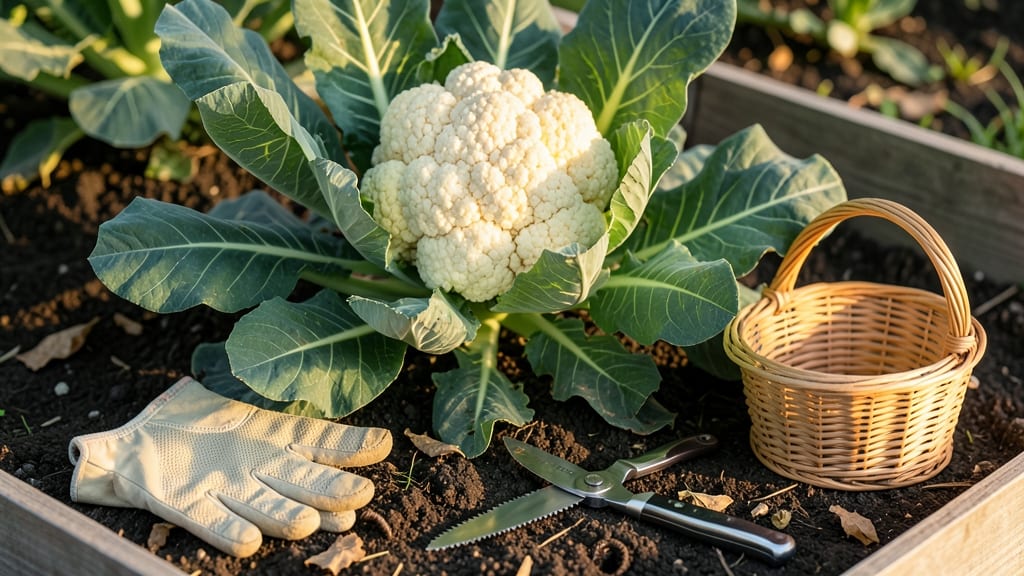
Cauliflower is ready to be picked when the head reaches 6-8 inches and turns a creamy white or pale yellow 🥬, with tightly packed curds and yellowing outer leaves.
Picking cauliflower at the wrong time means tough, bitter heads—or worse, watching your hard work bolt into seed before you get a single harvest. But knowing exactly when to harvest cauliflower can turn your garden into a steady source of crisp, flavorful heads all season long.
Most varieties take 70-100 days to mature, but the key is checking the head’s firmness and color. A ready head should feel solid when gently squeezed, with outer leaves starting to brown at the base.
Miss this window, and you’ll end up with an open, woody curd that’s past its prime.
Below, I’ll walk you through 4 foolproof signs to spot a perfectly ripe cauliflower, plus how to harvest it without damaging the plant for future yields. No more guesswork—just perfect, restaurant-quality heads every time.


4 Visual signs your cauliflower is perfectly ready to harvest
Harvesting cauliflower at the right moment transforms your garden labor into a culinary masterpiece. The key lies in observing four distinct visual cues that signal peak readiness.
These signs—head size, color, leaf condition, and curd texture—work together to guarantee a head that's crisp, flavorful, and free from bitterness. Ignoring these indicators often leads to tough, fibrous curds or premature bolting.
First-time growers often wonder why their cauliflower heads turn yellow or split open. The answer lies in understanding these harvest readiness signals before they become irreversible. When you recognize these signs, you'll know exactly when to grab your harvesting knife and cut that perfect head.
Let's explore each visual clue in detail so you can confidently pick your cauliflower at its prime.
📋 Summary Table: When Is Cauliflower Ready to Be Picked?
| Sign | Description | Action Required |
|---|---|---|
| Head Size | 6-8 inches in diameter | Measure with ruler or compare to reference object |
| Curds Color | Solid white, cream, or purple (varies by variety) | Check inner florets for uniform color |
| Leaf Condition | Outer leaves yellowing at base | Observe lower leaves for color change |
| Curds Texture | Firm to touch, no soft spots | Gently squeeze head to test firmness |
| Stem Test | Stem snaps cleanly when bent | Perform stem snap test for maturity |
The first sign to watch for is the head size, which should reach 6-8 inches in diameter. This is your primary indicator because cauliflower heads continue growing until they reach this size.
Use a ruler or compare it to a standard object like a baseball or softball—if your head matches or exceeds these sizes, it's time to check the other signs. Remember, larger isn't always better; overgrown heads often become tough and stringy.
Next, examine the curd color, which should be solid white, cream, or the variety's specific hue. Purple varieties will maintain their color, while white and cream types should show no green tinges.
The inner florets should all be the same color—if you see green spots, the head needs more time. This color change happens as the head matures and stops photosynthesizing, signaling it's ready for harvest.
Pay close attention to the outer leaves, which should begin yellowing at the base. Healthy green leaves are a sign the plant is still actively growing, while yellowing indicates the plant is shifting energy to the head.
If the leaves start dying back completely, you've missed the optimal harvest window. This is nature's way of telling you it's time to pick before the head opens and becomes woody.
Finally, test the curd texture by gently squeezing the head. Ready-to-harvest cauliflower should feel firm but not hard, with no soft or mushy spots. If the curds give slightly when pressed, they're still developing.
The texture test is crucial because it confirms the head has reached its ideal moisture content—too firm means it's underdeveloped, while too soft indicates overmaturity and potential spoilage.
Don't overlook the stem snap test, a quick way to verify maturity. Gently bend the stem near the base—if it snaps cleanly, your cauliflower is ready. This test works because mature heads have developed enough to separate cleanly from the stem.
If the stem bends without snapping, the head needs more time. This simple test saves you from harvesting prematurely or waiting too long.
For purple varieties, watch for the color to deepen rather than lighten. These types often maintain their vibrant hue until fully mature, making color a more reliable indicator. The same size and texture rules apply, but the color shift from light to deep purple is your additional cue.
Harvest when the head reaches 6-8 inches and the purple color is fully developed throughout.
One common mistake is waiting until the head starts opening. By this point, the curds have begun converting to seed, resulting in a bitter, tough harvest. The head should remain tightly closed like a compact ball of florets.
If you notice any gaps or loose florets, it's already past its prime. Always harvest before the head shows any signs of separating or flowering.
Remember that weather conditions can affect these signs. Cool, cloudy days slow maturity, while hot weather speeds it up. If you're growing in a warm climate, check your cauliflower more frequently as it may reach harvest readiness faster.
Keep a garden journal to track your plants' progress and adjust your harvesting schedule based on seasonal variations.
When you've confirmed all four signs—proper size, correct color, yellowing leaves, and firm texture—it's time to harvest. Use a sharp knife to cut the stem about 1-2 inches below the head.
This clean cut prevents damage to the plant and encourages any side shoots to develop for future harvests. With these visual cues mastered, you'll enjoy perfectly timed cauliflower harvests all season long. 🌱
How to prevent over-mature cauliflower and common harvest mistakes
Over-mature cauliflower turns tough, bitter, and woody—ruining your harvest before you even get to enjoy it. The key to success lies in recognizing early warning signs and harvesting at the perfect moment. Many gardeners accidentally let their plants bolt prematurely, especially when temperatures rise unexpectedly.
Let’s break down how to avoid these common mistakes and keep your cauliflower crisp, flavorful, and ready to eat.
First, watch for heat stress signs like yellowing leaves or stretched stems. These indicate your plant is struggling to form a proper head. Cauliflower thrives in cool weather (50-75°F), so if summer arrives early, consider shading your plants with lightweight fabric to buy extra time.
Over-maturity often starts with loose, pale curds—a clear sign you’ve missed the ideal harvest window.
⚠️ CALL OUT WARNING ⚠️
Your cauliflower is ready to harvest when:
- Head size: 6–8 inches in diameter
- Curds: Tight, firm, and white/cream-colored (not green or loose)
- Leaves: Outer leaves yellowing at the base but still covering the head
- Stem test: Snaps cleanly when bent slightly
Wait too long, and your curds will open up and turn bitter. Harvest before the head fully opens to preserve sweetness.
To prevent over-maturity, harvest promptly once you spot these signs. Use a sharp knife or pruners to cut the head about 1 inch below the curd, leaving the stem intact. This encourages side shoots to form, giving you a second harvest in 2–3 weeks.
If your plant bolts (sends up a tall flower stalk), it’s too late—save those seeds for next season instead.
Another common mistake is watering inconsistently. Cauliflower needs consistent moisture (1–2 inches per week) to form tight heads. Drought stress or overwatering can both trigger early bolting. Mulch around the base with straw or grass clippings to retain moisture and keep roots cool.
Avoid fertilizing late in the season, as excess nitrogen can also speed up bolting.
If you’re growing purple or orange cauliflower varieties, their color changes as they mature. Wait until the outer leaves start yellowing before harvesting—these varieties often take slightly longer to reach peak readiness.
For white cauliflower, act faster: once the head is firm and fully formed, it’s time to harvest within 1–2 days to avoid bitterness.
Finally, store harvested cauliflower properly to extend its shelf life. Wrap the head in a damp paper towel and store it in the crisper drawer of your fridge for up to a week.
For long-term storage, blanch and freeze the florets. By mastering these techniques, you’ll avoid over-mature cauliflower and enjoy a steady harvest all season long. 🌱