
Vegetables
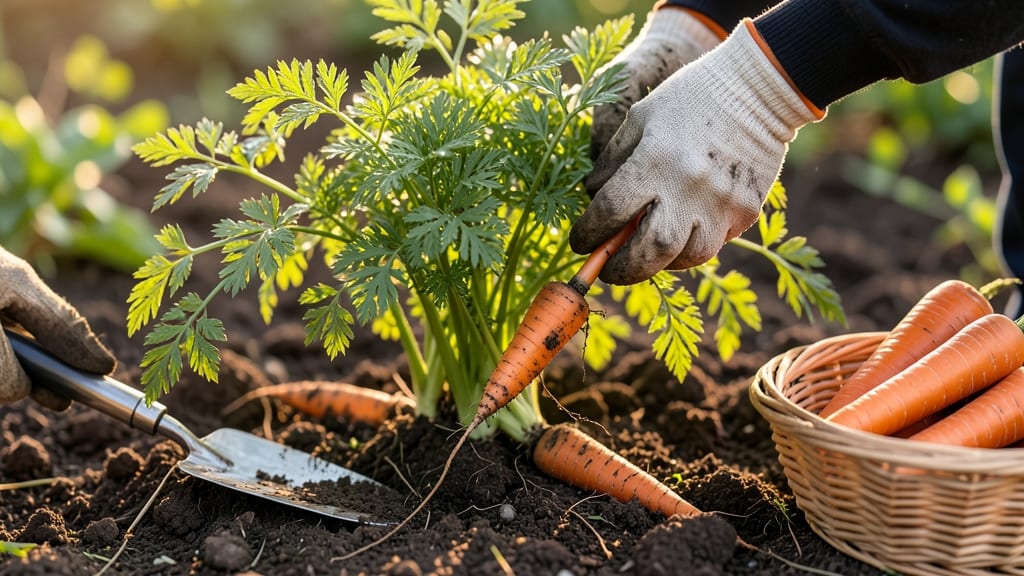
Carrots are ready to harvest when they’ve reached their full size and flavor 🥕—but timing them just right means the difference between sweet, crisp roots and tough, bitter ones.
Picture this: you’ve been patiently waiting, checking your garden every few days, only to wonder, Are they finally ready? The truth is, there are clear signs that tell you exactly when to pull them—without guessing.
From vibrant color and leaf health to soil conditions and variety-specific cues, knowing these 3 key indicators ensures you harvest at peak perfection. Miss the window, and you risk woody texture or a flavor that’s less than stellar.
Below, I’ll walk you through how to test ripeness, the best time of day to harvest, and even how to adjust for your climate—so you never pull a carrot too soon (or too late) again.


3 Visual signs your carrots are ready for harvesting
Knowing exactly when to harvest your carrots can feel like guessing—until you learn these three foolproof visual cues. Unlike other vegetables, carrots don’t ripen after picking, so timing is everything. The right moment delivers sweet, crisp roots packed with flavor, while waiting too long turns them woody and tough.
I’ve grown carrots for over a decade, and these signs have never failed me.
First, let’s address the biggest mistake gardeners make: harvesting based on days after planting instead of visual maturity. While most varieties take 70 days to reach full size, soil conditions, temperature, and variety differences mean this timeline isn’t set in stone.
Instead, focus on what’s happening above and below ground—your carrots will tell you when they’re ready.
🌱 3 Visual Signs Your Carrots Are Perfectly Ready
- 📏 Root Size: Baby carrots should be 3-4 inches long with a 1-inch diameter shoulder. Full-sized varieties need 6-8 inches in length and a 2-inch diameter at the top.
- 🟠 Vibrant Color: The skin should be deep and consistent—no pale or green patches. Orange varieties turn rich amber, purple types deepen to eggplant hues, and yellow carrots brighten to buttery tones.
- 🌿 Lush Foliage: Healthy green, upright leaves (4-6 inches tall) indicate the root below is thriving. Yellowing or wilting tops mean it’s past prime—time to harvest before the flavor declines.
Let’s break down each sign with real-world examples. For instance, my ‘Nantes’ variety (a classic heirloom) always signals readiness when the tops hit 5 inches tall and the roots feel firm when gently squeezed through the soil.
I’ve learned to trust this more than a calendar because cool spring weather can slow growth, while hot summers might speed it up.
For baby carrots, the rules are slightly different. You’ll harvest these when they reach 2-3 inches in length—about the size of your thumb. Their shoulders should be plump, not skinny, and the color should be even and bright.
I often harvest baby carrots in two batches: first when they’re tender (60 days) and again when they’ve bulked up more (70 days). This gives me a continuous supply without overcrowding the bed.
Don’t overlook the soil condition as your third clue. When the soil feels loose and dry on top (about 1-2 inches down), it’s often a sign the roots have stopped growing.
I test this by gently scraping away soil with my fingers—if the carrot’s shape is fully formed and the skin isn’t clinging to the dirt, it’s ready. Rock-hard soil or clumpy dirt can stunt growth, so keep your beds well-aerated with compost.
One trick I swear by is the “finger test” for firmness. Slide your index finger 1 inch into the soil beside the carrot. If you feel resistance (like pressing into a firm apple), the root is likely mature.
If it feels spongy, wait another week. This works best in loose, sandy loam—the ideal soil for carrots. Heavy clay can make the test unreliable because it stays compacted even when roots are ready.
What about color inconsistencies? If your carrots have green shoulders or uneven patches, they’re either not ready or struggling. Green shoulders happen when the carrot is exposed to light, causing bitter, woody flavors.
To prevent this, always mound soil around the base as the plants grow. For uneven color, check your phosphorus levels—low phosphorus can lead to pale roots. A balanced 5-10-10 fertilizer applied at planting time solves this.
Timing your harvest right also means avoiding bolting, which happens when carrots flower prematurely due to heat or age. Bolted carrots develop hard, stringy roots and bitter greens. If your plants send up flower stalks, harvest what you can immediately—even if the roots aren’t full-sized.
This is especially critical in hot climates or late-summer plantings. I’ve had to harvest under-sized but edible carrots just to save the crop from bolting entirely.
Finally, remember that variety matters. Short-season varieties like ‘Paris Market’ mature in 50-60 days and stay sweet even when small, while long-season types like ‘Chantenay’ need 80+ days to reach their full 2-inch diameter.
Always check the seed packet for days to maturity and adjust your expectations. My ‘Purple Haze’ carrots, for example, take 75 days to develop their signature deep purple hue—patience is key!
How to test carrot ripeness without digging (and when to wait)
Testing carrot ripeness without digging is a game-changer for gardeners who want to avoid disturbing the soil too early. The key is to focus on leaf health and foliage development, since these often reveal what’s happening below ground.
I’ve learned that the tops can tell you more than you might think—especially when you combine visual cues with gentle soil checks.
Start by examining the carrot tops. Healthy, vibrant green leaves with a bushy appearance usually mean the roots are growing well. If the foliage looks leggy or yellowing, it may signal stress—either from overcrowding or uneven watering.
Pay attention to the leaf size too; mature leaves that are 3–4 inches wide often correspond to roots that are ready for harvest.
Another trick I use is the finger test. Gently press the soil around the base of the plant. If the soil feels loose and the leaves don’t wilt under pressure, the roots likely have space to grow.
However, if the soil is hard or the leaves pull back quickly, the carrots may still need time. This method helps avoid digging up underdeveloped roots.
⚠️ Warning: Common Mistakes That Ruin Your Harvest
Don’t assume size alone means readiness—some varieties grow slowly but develop sweetness over time. Also, avoid waiting too long; carrots left in the ground past their prime can become woody and tough. Finally, never harvest in hot afternoons—this stresses the plant and can lead to bitterness.
For flavor testing, I recommend a simple sniff check. Mature carrots often release a faint, sweet aroma when gently brushed against. If the scent is mild or nonexistent, they may need more time.
This works best with orange varieties, but purple or yellow carrots will have a slightly different but still detectable sweetness.
If you’re growing baby carrots, aim for a 3–4 inch length and a diameter of about 1 inch. For full-sized varieties, wait until they reach 6–8 inches in length.
Remember, soil type matters—sandy soil may speed up growth, while clay-heavy soil can slow it down. Adjust your expectations based on your garden’s conditions.
When in doubt, I suggest waiting 1–2 extra weeks rather than harvesting too soon. Carrots continue to sweeten as they mature, and a little patience often pays off with crisp, flavorful roots. Keep an eye on the weather forecast too—cool temperatures slow growth, while warm days speed it up.
Finally, avoid the temptation to dig just because the leaves start yellowing. This could signal bolting (a rush to flower) or disease, not ripeness. Instead, focus on the root’s potential and the soil’s consistency—these are your best guides to a perfect harvest. 🥕