
How To
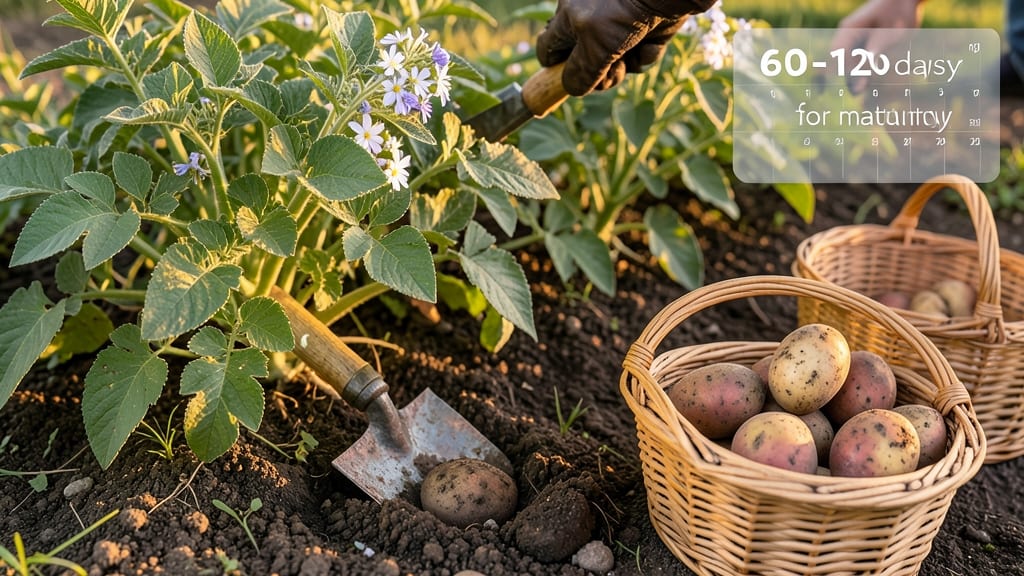
Growing potatoes takes anywhere from 60 to 120 days to harvest, depending on the variety and your growing conditions—but timing it right means the difference between a bountiful crop and a missed opportunity.
Picture this: you plant your seed potatoes in early spring, eager for that first harvest, only to watch the days stretch on without a single tuber ready to dig. The good news? With the right variety and a little planning, you can predict your harvest window with surprising accuracy.
Early varieties like Yukon Gold or Red Pontiac mature in as little as 70 days, while late-season types like Russet or Kennebec may need 100 to 120 days to reach full size. Sunlight, soil temperature, and even rainfall play a role in speeding up or slowing down growth.
In this guide, I’ll break down the exact timeline for each type, how to spot when your potatoes are ready, and the one trick that can shave weeks off your harvest time—no guesswork required.


Potato growth timeline by variety: fastest to slowest harvesting times
If you're eager to harvest homegrown potatoes, timing is everything—and it all starts with choosing the right variety. Some potatoes mature in just 60 days, while others take nearly 120 days to reach peak flavor and size.
Understanding these timelines helps you plan your garden layout, succession plantings, and even storage strategies. Let’s break down the fastest and slowest potato varieties so you can pick the perfect fit for your growing season.
Fast-growing varieties like Yukon Gold or Red Norland are ideal for early harvests, while Russet Burbank or Sweet Potatoes require more time to develop their signature textures and flavors. Your climate zone also plays a role—cool regions may need earlier-maturing varieties to avoid frost damage.
Below, we’ve organized the most popular potato types by their days to harvest, along with their ideal planting windows and key growth stages.
For gardeners in cooler climates (like USDA zones 3-5), prioritize early-maturing varieties like Red Pontiac or Yukon Gold to avoid frost damage. In warmer zones (like zones 7-10), you can extend your growing season with late plantings of slower varieties, such as Russet Burbank or Sweet Potatoes.
Pro tip: Plant new potatoes like Red Norland in succession every 2 weeks for a continuous harvest throughout summer.
Soil temperature also impacts growth speed
How climate zones affect potato growth speed: cold vs. warm regions
Your USDA climate zone plays a huge role in how quickly potatoes mature. In cold regions (zones 3-5), potatoes often grow slower due to cooler soils, while warmer zones (6-10) can speed up the process—but only if you time your planting right.
Let’s break down how to optimize your harvest based on where you live.
In cool climates (zones 3-5), potatoes need 90-120 days to reach maturity, but early varieties can be ready in as few as 60 days if planted early.
Meanwhile, warmer zones (6-10) can push potatoes to harvest in 70-90 days, but heat stress or drought can slow growth if conditions aren’t ideal.
| Climate Zone | Growth Speed | Best Planting Time | Harvest Window |
|---|---|---|---|
| Zones 3-5 (Cold) | Slow (90-120 days) | Early spring (4-6 weeks before last frost) | Late June - August |
| Zones 6-7 (Moderate) | Moderate (70-90 days) | Late March - April | May - July |
| Zones 8-10 (Warm) | Fast (60-80 days) | Fall or early spring (avoid summer heat) | April - June |
For cold regions (zones 3-5), focus on early-maturing varieties like Yukon Gold or Red Norland, which can tolerate cooler soils. Plant 4-6 weeks before your last frost date to give tubers time to establish before summer heat arrives.
In warmer zones (6-10), avoid planting in peak summer—opt for fall planting (August-September) or early spring to escape extreme heat. Varieties like New Potatoes or Fingerlings thrive in these conditions and mature faster when temperatures stay moderate.
Regardless of your zone, consistent moisture and well-draining soil are critical. In cold climates, mulch heavily to insulate tubers, while warm-zone gardeners should prioritize shade cloth during scorching afternoons to prevent stress.
With the right variety and timing, you can harvest potatoes in as little as 60 days—or stretch the season for a fall crop in cooler zones. Experiment with planting schedules to find what works best for your microclimate! 🌱