
How To
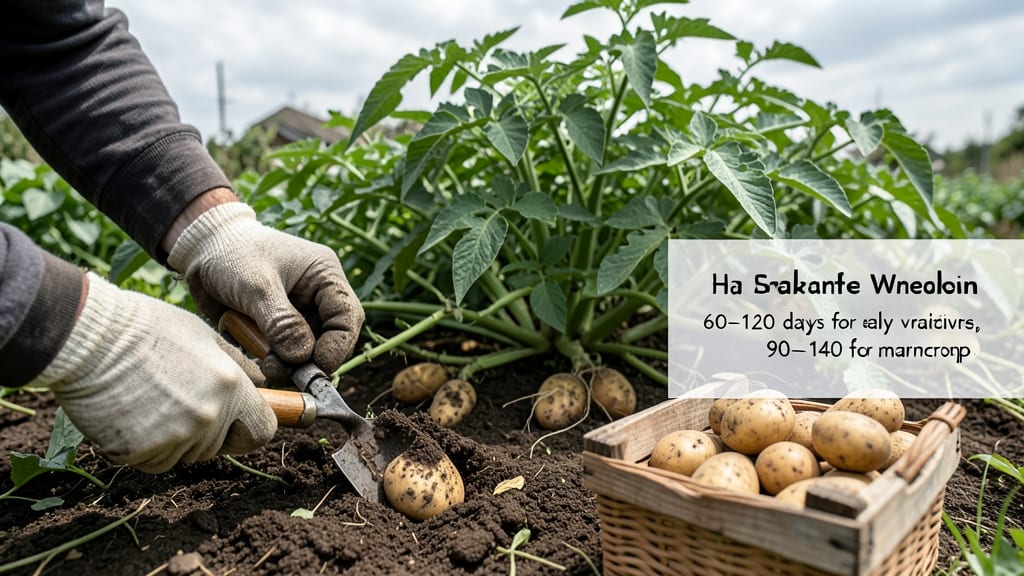
Harvesting potatoes takes anywhere from 60 to 120 days after planting, depending on the variety and growing conditions you’re working with.
Wondering when you’ll finally dig into your first homegrown 🥔? The wait time varies wildly—from as little as 60 days for early varieties to over 120 days for late-season types. If you’ve ever planted a garden only to wonder, "Why is this taking so long?", you’re not alone.
Your local climate, soil quality, and even the type of potato you choose play a huge role in how quickly you’ll see results. Early varieties like ‘Red Pontiac’ can be ready in 70-80 days, while Russets might need closer to 100-120 days to reach full maturity.
In this guide, I’ll break down the exact timeline for each variety, share the key signs your potatoes are ready to harvest, and give you pro tips to speed up the process—so you can go from planting to harvest with confidence.

Potato harvest times by variety: fastest to longest growing seasons
Not all potatoes grow on the same timeline—some varieties mature in just 60 days, while others take nearly 120 days to reach harvest. The difference comes down to genetics and starch development.
Early varieties prioritize quick tuber formation, while late varieties focus on building thick skins and high starch content for storage. Knowing your variety’s timeline helps you plan planting dates to avoid frost or heat stress.
For example, ‘Red Norland’ (a mid-season favorite) takes about 90 days to harvest, while ‘Kennebec’ (a late-season staple) needs 110–120 days. The key is matching your variety to your last frost date and growing season length.
Plant early varieties first (like ‘Early Girl’ at 60–70 days) for a jump-start, then follow with mid- and late-season types to stretch your harvest window.
🌱 Pro Tip: Skin set (when the potato’s skin hardens) happens 2–3 weeks before harvest. For early varieties, this occurs closer to maturity, while late varieties need more time to develop thick skins. If you harvest too early, you’ll end up with thin-skinned, green-tinged potatoes that bruise easily.
If you’re in a short-season climate (like Zone 3–4), focus on early and mid-season varieties to avoid losing your crop to frost. For example, ‘Red Pontiac’ (85–95 days) is a reliable mid-season choice for cooler regions.
Meanwhile, longer-season varieties like ‘Katahdin’ (100–110 days) thrive in Zone 5+ with warmer summers.
The science behind starch content explains why late varieties take longer: they prioritize converting sugars into complex carbohydrates for storage. Early varieties, like ‘New Potato’ types, focus on rapid tuber growth with less starch, making them ideal for new potatoes (harvested small, under 50 days).
To test readiness, dig up a few tubers—if they’re firm with thick skins, it’s harvest time.
For container growing, opt for compact varieties like ‘Rocket’ (60 days) or ‘La Ratte’ (75 days), which mature faster in limited soil. These varieties also tolerate warmer soils better, reducing stress. Just ensure your containers are at least 12 inches deep to accommodate tuber growth.
🌿 Climate Hack: In hot climates (like Zone 9–10), plant late-season varieties in fall for a winter harvest. For example, ‘Russet’ potatoes planted in September may harvest in January–February, avoiding summer heat stress.
Finally, hilling soil around the stems (adding soil or straw) speeds up harvest by encouraging more tuber formation near the surface. This works best for mid-to-late season varieties, giving you a 1–2 week earlier harvest by promoting faster skin set. Just avoid over-hilling, which can stress the plant.
✂️ Action Step: Mark your calendar 2–3 weeks before your variety’s expected harvest date to start checking for skin set and leaf yellowing. Use a garden fork to gently probe the soil—if you find firm, golf-ball-sized tubers, it’s time to dig!
How climate and soil affect your potato harvest timeline (and how to adjust)
Your potato harvest timeline isn't set in stone—it's a moving target shaped by your local climate and soil conditions.
In Zone 5, for example, early varieties might take 70-80 days to mature, while in Zone 9, the same potatoes could take 10-15 days longer due to warmer winters and longer growing seasons.
Even within the same region, soil temperature and moisture levels can push your harvest window earlier or later.
The key factors controlling your timeline are frost dates, day-length sensitivity, and soil warmth. Potatoes planted in cool northern climates (like Minnesota) often need 10-14 days longer to mature than those in southern states (like Florida), where frost-free seasons stretch into winter.
Meanwhile, sandy soils warm up faster in spring, giving you a head start, while clay-heavy soils stay cold longer, delaying germination and growth.
To speed up your harvest, focus on soil preparation first. Amend your garden beds with compost or aged manure to improve drainage and warmth—this can shave 5-7 days off your timeline. In cool climates, plant seed potatoes in raised beds, which warm up 3-5°F faster than in-ground soil.
For southern growers, succession plant every 2-3 weeks to stagger harvests and avoid glut.
Don't overlook watering strategies either. Consistent moisture keeps tubers growing at a steady pace, but overwatering can lead to disease and delayed maturation. Aim for 1-2 inches of water per week, tapering off 2-3 weeks before harvest to toughen skins.
In dry climates, mulch with straw to retain moisture and prevent stress on the plants.
Finally, choose varieties that match your local growing season. In short-season areas, prioritize early maturing types like 'Early Girl' (60 days) or 'Finnish Yellow' (65 days). For longer seasons, late varieties like 'Kennebec' (100 days) thrive.
Always check your last frost date and count backward to ensure your chosen variety has enough time to mature before winter sets in.