
Planting
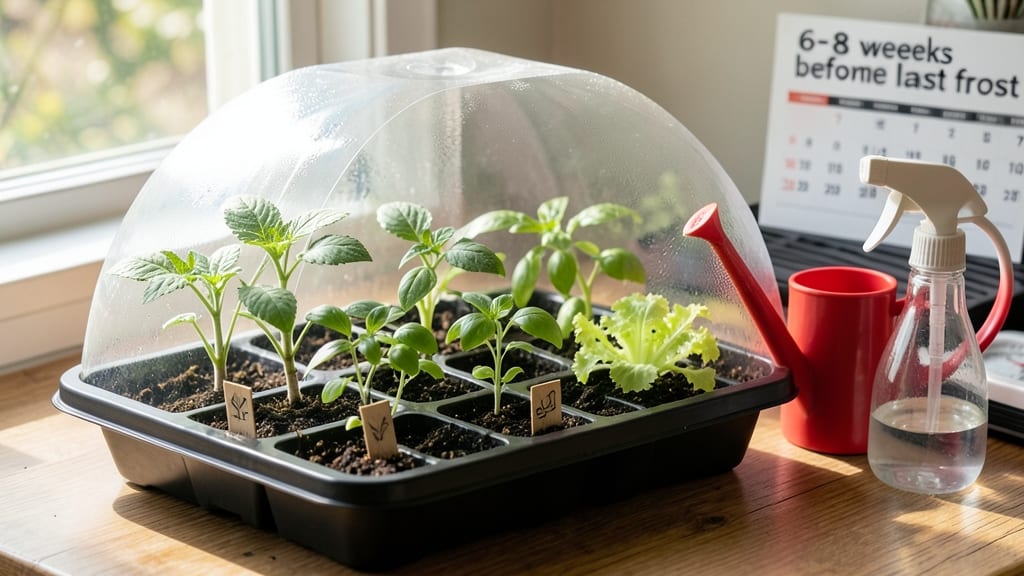
Planting vegetable seeds indoors 4-8 weeks before your last frost is the secret to a bountiful harvest—miss that window, and you’ll either have leggy seedlings or a garden that never gets started.
I’ve watched 🌱 vegetable seeds bolt into flower too early, only to realize I’d planted them in January instead of February. Or worse, waited until April and missed the outdoor transplant window entirely. The right timing isn’t just about dates—it’s about matching your plants’ growth cycle to your climate.
This guide breaks down the exact weeks to start seeds indoors for your frost zone, plus how to adjust for early springs, late summers, or those tricky microclimates. No more guessing—just a timeline that works for your garden.
You’ll learn which vegetables need the head start (tomatoes, peppers), which can wait (lettuce, radishes), and how to rescue a schedule gone wrong. Ready to set your seeds up for success?
Indoor seed starting dates by frost zone and vegetable type
Getting your vegetable seeds indoors at the right time ensures strong, healthy seedlings ready for transplanting when the weather warms up.
But timing varies dramatically by frost zone and plant type—start too early, and you’ll end up with overcrowded seedlings; too late, and you’ll miss your outdoor planting window.
Below, I’ve broken down the exact weeks-before-last-frost calculations for popular vegetables across USDA Zones 3-10, so you can plan with confidence.
For example, tomatoes and peppers need a long indoor head start (8-10 weeks), while lettuce and herbs can be sown just 4-6 weeks before your last frost.
Your local frost date is the foundation—check your USDA zone and average last frost date (e.g., Zone 5a: April 15; Zone 8a: March 1). Then, work backward using the table below to determine your indoor start window.
Pro tip: Use a seedling heat mat for slow-to-germinate seeds like peppers (they need soil temps of 80°F+), and always harden off seedlings for 7-10 days before transplanting. This prevents shock and boosts survival rates.
If you’re in Zone 3 or 4, your indoor start window for tomatoes and peppers might feel early—think late January to early February—but trust the timeline. These plants need time to mature indoors before outdoor temperatures stabilize.
For Zones 9-10, you’ll have more flexibility, but even in warm climates, cool-season crops like lettuce benefit from an indoor head start to avoid bolting.
For herbs like basil and cilantro, I recommend starting seeds indoors 4-6 weeks before your last frost in cooler zones, but wait until soil temperatures reach 50°F+ for direct sowing.
Herbs like parsley and dill can be sown directly outdoors in early spring, but starting them indoors gives you an edge for earlier harvests.
Don’t forget to account for seedling growth stages
How to adjust start dates for your local climate variations
Your local microclimate can shift indoor seed starting dates by 2-4 weeks—even if you’re in the same USDA zone as your neighbor. High-altitude gardens often need earlier starts, while urban heat islands may delay planting. Let’s adjust those frost-free days to match your unique conditions.
Start by identifying your microclimate zones—areas in your yard with different sun exposure, wind patterns, or soil drainage. A south-facing slope warms faster than a north-facing basement window, so adjust your heat-loving crops (like peppers) to start 1-2 weeks earlier in warmer microclimates.
- 1 High-Altitude Gardens (5,000+ ft): Add 10-14 days to start dates. Cooler nights slow germination—use heat mats for faster sprouting.
- 2 Urban Heat Islands: Delay cool-season crops (like lettuce) by 7-10 days. Monitor soil temps—above 80°F stresses seedlings.
- 3 Coastal Climates: Start heat-lovers (tomatoes/peppers) 2 weeks later. Humidity increases fungal risk—use sterilized soil and spacers for airflow.
- 4 Early/Late Frost Years: Shift dates by 2-3 weeks based on 10-year averages, not just last year’s frost. Check local weather records for trends.
For high-altitude gardens, where nights stay cool, prioritize fast-maturing varieties (e.g., cherry tomatoes over beefsteak). Use grow lights to extend daylight to 14-16 hours and maintain soil temps at 70-75°F with heat mats. In coastal areas, increase airflow with small fans to prevent damping-off disease.
Unpredictable weather? Use a two-stage approach: Start 50% of seeds on the early date and 50% on the late date. This insurance planting ensures you’ll have seedlings ready, whether frost comes early or late. Track your garden’s actual frost dates for 3 years to refine your schedule.
Finally, cool-season crops (like kale or spinach) thrive in shorter days—start them 6-8 weeks before your average last frost, even if your microclimate is warm. Heat-lovers (peppers, eggplants) need longer indoor time—add 2-3 extra weeks if your summers are short.
Adjusting for your local variations turns guesswork into a predictable harvest. Start with these tweaks, then fine-tune each year based on what your garden tells you. Happy planting! 🌱🌡️