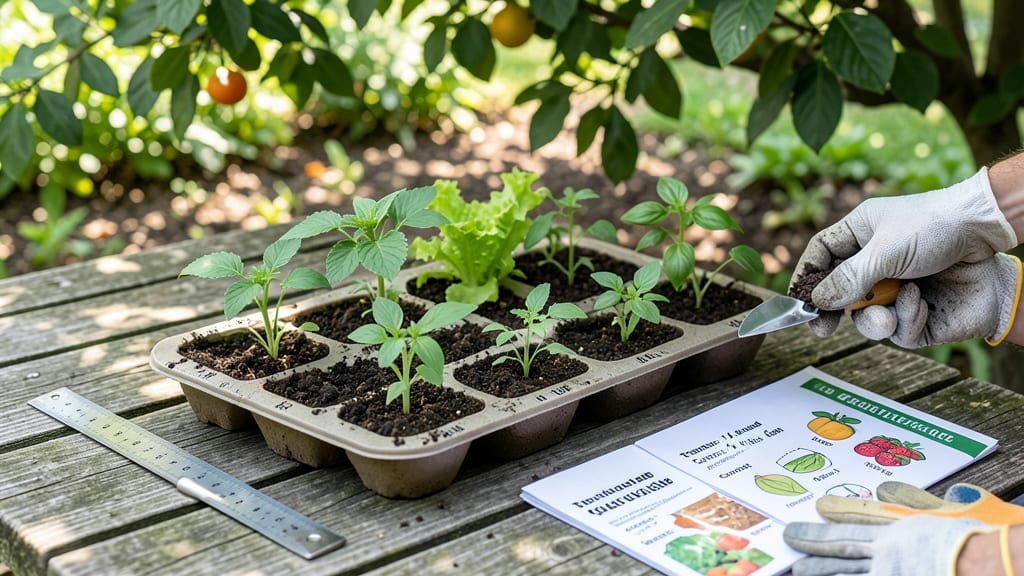
Planting vegetable seeds at the right depth is the secret to strong starts and fewer wasted seeds—bury them too shallow, and they’ll dry out; too deep, and they’ll struggle to break through.
Most gardeners guess, but getting the depth wrong can mean the difference between a thriving garden and a sad row of empty soil. Whether you’re growing tiny lettuce seeds or large beans, the rule isn’t one-size-fits-all.
In this guide, you’ll find exact planting depths for 20+ common vegetables, plus the science behind why seed size and soil moisture matter. No more second-guessing—just a foolproof method to boost germination rates and grow healthier plants.
From leafy greens to root crops, we’ll cover everything you need to know to plant with confidence, including troubleshooting tips for common mistakes that keep seeds from sprouting.
🌱
When to Plant Deep
Jan
❄️
Feb
❄️
Mar
🌱
Apr
🌱
May
🌱
Jun
🌱
Jul
☀️
Aug
☀️
Sep
🍂
Oct
🍂
Nov
🍂
Dec
❄️
Exact seed planting depths by vegetable type for optimal germination
Getting the seed planting depth right is one of the most overlooked factors in gardening success. Too shallow, and seeds dry out before sprouting; too deep, and they struggle to reach light. The good news? Most vegetable seeds follow simple depth guidelines based on their size and type.
For example, tiny lettuce seeds need only a light dusting of soil, while large bean seeds should be buried almost an inch deep.
Why does depth matter so much? Seeds need moisture and warmth to germinate, but they also require light to grow properly. The seed coat contains nutrients, and burying seeds too deep can exhaust these reserves before the plant breaks through the soil.
Meanwhile, shallow planting exposes delicate seeds to drying winds and temperature swings. Let's dive into the science-backed depths for 22+ common vegetables to ensure your garden starts strong.
Below is your quick-reference table for planting depths, organized by vegetable family. I've included notes on soil moisture needs and special considerations for each type. Pro tip: Always use a moisture meter or your finger to check soil dampness—aim for consistency, not sogginess.
Most seeds prefer soil that's moist but not waterlogged at planting time.
| Vegetable |
Planting Depth |
Soil Moisture |
Special Notes |
| Leafy Greens (Lettuce, Spinach, Kale) |
1/4 inch |
Keep moist |
Light cover only; needs sunlight to germinate |
| Root Crops (Carrots, Radishes, Beets) |
1/2 inch |
Even moisture |
Loosen soil to prevent forking; thin seedlings |
| Brassicas (Broccoli, Cabbage, Cauliflower) |
1/2 inch |
Moist but not soggy |
Start indoors 4-6 weeks before last frost |
| Nightshades (Tomatoes, Peppers, Eggplant) |
1/4 inch |
Warm and moist |
Plant after soil reaches 60°F; use starter pots |
| Legumes (Beans, Peas, Lentils) |
1 inch |
Consistently moist |
Large seeds need deeper burial for stability |
| Onions & Garlic |
1/2 inch |
Well-drained |
Plant sets or cloves in early spring |
| Corn |
1 inch |
Warm and moist |
Plant in blocks, not rows, for pollination |
| Cucumbers & Squash |
1 inch |
Consistently moist |
Use black plastic mulch to warm soil |
| Herbs (Basil, Parsley, Cilantro) |
1/8 inch |
Light moisture |
Many herbs self-seed; thin as needed |
| Potatoes |
Seed pieces 4 inches deep |
How seed size and soil conditions affect planting depth
I’ve learned the hard way that planting seeds at the wrong depth is like burying a treasure map without digging—you’ll never find what you’re looking for. Seed size and soil conditions determine whether your seeds sprout or stay dormant.
Tiny seeds like lettuce need sunlight to germinate, while large seeds like beans thrive when buried deeper for moisture protection. The right depth ensures roots grow strong and reach nutrients efficiently.
Soil moisture plays a critical role too. Dry soil requires deeper planting to protect seeds from drying out, while wet soil demands shallower depths to prevent rot. Temperature matters—cool soils slow germination, so adjust depth based on your climate.
For example, in hot regions, bury seeds slightly deeper to retain moisture, while cooler climates benefit from shallower, warmer soil exposure.
Planting Depth Guidelines by Seed Type
Small Seeds (e.g., Lettuce, Carrots)
Pros:
- Faster germination with light exposure
- Less risk of rot in moist soil
- Easier to thin if overcrowded
Cons:
- Dries out quickly in hot conditions
- Needs frequent watering to stay moist
Depth: 1/4 inch max
Large Seeds (e.g., Beans, Peas)
Pros:
- Moisture retention protects seed
- Stronger root development early on
- Less susceptible to birds when buried
Cons:
- Slower germination if too deep
- Risk of rot in compacted soil
Depth: 1-2 inches
Medium Seeds (e.g., Tomatoes, Cucumbers)
Pros:
- Balanced moisture for steady growth
- Adaptable to soil types
Cons:
- Requires precision to avoid over/under-planting
Depth: 1/2 inch
Soil Condition Tips
- Loamy soil: Follow seed packet guidelines
- Sandy soil: Plant 10% deeper for moisture
- Clay soil: Plant shallower to avoid compaction
Common planting mistakes often stem from ignoring soil texture. Compacted soil can suffocate seeds if buried too deep, while light, sandy soil may require extra depth to hold moisture.
Always loosen soil before planting—this improves root penetration and air circulation. I’ve seen seeds fail to sprout simply because the soil was too hard for roots to break through.
Another key factor is seed coating. Pelleted seeds (like some flower or vegetable seeds) often need shallower planting—just 1/8 inch deep
Troubleshooting poor germination starts with checking your depth. If seeds aren’t sprouting, they might be buried too deep (cut off oxygen) or too shallow (dried out). Test your soil’s moisture by squeezing a handful—it should hold together but not be soggy.
Adjust your planting depth based on these conditions, and don’t forget to keep the soil consistently moist until seeds sprout.
For container gardening, remember that smaller spaces mean shallower planting. Root crops like radishes need just 1/2 inch of soil above them to develop properly, while leafy greens can handle slightly deeper beds if the container is deep enough.
Always leave room for roots to expand—crowded seeds lead to weak, leggy plants.
★★★★★4.7(7 reviews)
|