
Plants
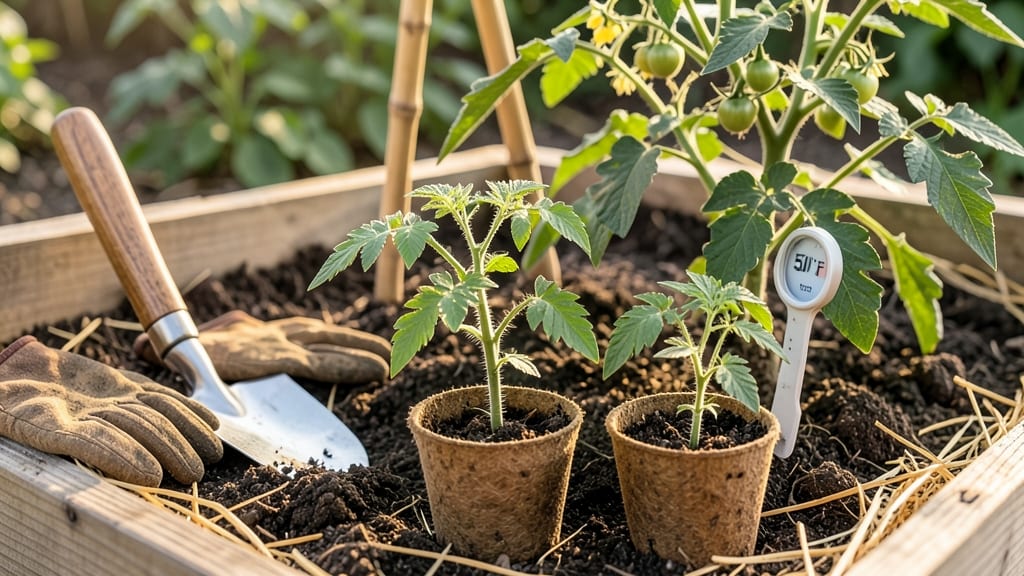
Planting tomatoes in Wisconsin after the last frost date—typically mid-April to early May—sets the stage for a juicy, bountiful harvest 🍅.
But here’s the catch: Wisconsin’s climate throws curveballs. One year, you’ll be racing to plant before a late frost; the next, you’re scrambling to beat the heat before the season ends. The key? Knowing your exact frost-free window, soil temperature, and whether you’re growing early or late varieties.
This guide cuts through the guesswork with region-specific planting dates, soil-warming tips, and tricks to stretch your harvest into fall—no matter if you’re in the chilly North or milder South of the state.
You’ll walk away with a clear schedule, the best Wisconsin-adapted varieties, and how to protect your plants from frost, heat, and everything in between.
Wisconsin last-frost dates by region: your exact tomato planting window
Wisconsin’s last-frost dates vary dramatically from south to north, making timing critical for tomato success. In southern Wisconsin (USDA Zones 5a-6a), like Dane County, you can plant outdoor tomatoes as early as late April to early May.
But in northern Wisconsin (Zones 3b-4b), such as around Green Bay, wait until mid-May to early June—or risk frost damage. Even within regions, microclimates near lakes or hills can shift your window by 1-2 weeks.
To simplify, I’ve broken down Wisconsin into three key regions with average last-frost dates and planting windows. But remember: weather is unpredictable. Always have row covers or a frost watch plan for late-season surprises.
For example, Milwaukee’s last frost typically lands around May 10, but 2020 saw a late frost on May 25—delaying plantings by weeks.
Pro Tip: Use your local cooperative extension office (like UW-Madison’s) for hyper-local data. They track frost patterns and can tell you if your specific county leans early or late. For instance, La Crosse often warms up faster than Eau Claire, even though they’re close in distance.
Now, let’s get to the nuts and bolts. Below is your Wisconsin tomato planting calculator, showing when to plant transplants vs. direct-sow seeds—plus how to adjust for early or late years.
| Region | USDA Zone | Avg Last Frost | Transplant Window | Direct Sow Window | Notes |
|---|---|---|---|---|---|
| Southern WI | 5a-6a | Mid-April | Late April - Early May | Early May - Mid-May | Fastest warming; use black plastic mulch |
| Central WI | 4a-5a | Early May | Mid-May - Early June | Late May - Early June | Wait for soil to reach 60°F+ |
| Northern WI | 3b-4b | Early June | Early June - Mid-June | Late June | Short season; choose early varieties |
Here’s how to use this table for your garden: First, find your region (or nearest city). Then, note the transplant window—this is when to move 6-week-old seedlings from indoors or a greenhouse.
If you’re direct-sowing seeds, wait until the later window listed, as seedlings are more vulnerable to cold.
For example, if you’re in Madison (Central WI), aim to transplant tomato seedlings between May 15-30. But if you’re in Minocqua (Northern WI), hold off until June 1-15. Pro Tip: Start seeds indoors 6-8 weeks before your transplant date to avoid rushing.
Use a seedling heat mat if your home is chilly.
What if you’re unsure about your exact last-frost date? A simple frost calculator can help. Subtract 120 days from your average first-frost date (usually October 15 for most of WI).
For instance, if your first frost is October 15, your last frost is roughly June 15—but this is a backward estimate. For precision, check local weather records or use the National Weather Service’s frost probability maps.
One common mistake is planting too early based on air temperature alone. Soil temperature matters more! Tomatoes need soil temps of 60°F+ to thrive. In northern Wisconsin, soil may still be cold in early May, even if daytime temps feel warm.
Use a soil thermometer to check—if it’s below 60°F, wait a few more days. Black plastic mulch can warm soil by 5-10°F, giving you an earlier start.
Finally, don’t forget about succession planting. If you’re in Southern Wisconsin, you can squeeze in a second planting of fast-maturing varieties (like ‘Early Girl’) in early July for a late-summer harvest.
Just be ready to protect seedlings with floating row covers if a late frost sneaks in. In Northern Wisconsin, focus on one strong planting of cold-tolerant varieties like ‘Stupice’ or ‘Mountain Merit’
Soil temperature & seedling hardiness: when Wisconsin tomatoes Really Need to Go In
Wisconsin’s last-frost dates give you a starting point, but soil temperature is the real game-changer for tomato success. Seedlings need consistent warmth—below 60°F, their roots struggle to absorb nutrients, leading to stunted growth or even death.
Even if air temps feel spring-like, cold soil can delay germination by weeks. In my Zone 5b garden, I’ve seen seedlings planted in 50°F soil wilt within days, while those in 65°F+ soil thrive from day one.
Don’t rely solely on calendar dates—use a soil thermometer to confirm readiness. Most Wisconsin gardeners in USDA Zones 4-5 should wait until soil hits 60°F for 3 consecutive days.
In warmer southern regions (Zone 6), you can plant slightly earlier, but never before May 1 unless you’re using row covers or a cold frame.
Planting tomatoes in below-60°F soil causes:
- Stunted roots (can’t absorb water/nutrients)
- Blackened stems (fungal rot from damp cold)
- Delayed germination (seeds may never sprout)
For early planting, choose cold-tolerant varieties—they’re your secret weapon against Wisconsin’s late frosts. ‘Mountain Merit’ (a Wisconsin favorite) handles 55°F soil and 28°F air temps briefly, while ‘Stupice’ (a Czech heirloom) thrives in 50°F soil.
Even these tough varieties need protection if nighttime temps dip below 50°F after planting. I’ve used floating row covers to shield seedlings for 3-4 weeks post-planting, buying time for roots to establish.
If you’re direct-sowing seeds (not transplanting), wait until soil is 70°F+—seeds germinate poorly below 65°F. For transplants, harden off seedlings first: move them outdoors for 2-3 hours/day over 5-7 days to toughen them up.
Skipping this step means seedlings shock easily when planted in chilly Wisconsin soil, leading to yellow leaves or wilting.
Troubleshooting stunted growth? It’s often a soil temp or transplant shock issue. Check for:
- Purple stems = phosphorus deficiency (common in cold soil)
- Curled leaves = transplant shock from sudden cold
- Mushy stems = fungal rot from damp, cold soil
Pro tip: In northern Wisconsin (Zones 3-4), plant only transplants—they outpace seeds in cold soil. Start seeds indoors by March 1, then transplant after May 15 (or when soil hits 60°F).
For southern Wisconsin (Zones 5-6), you can direct-sow after May 10, but use row covers until soil warms fully. My 2023 harvest proved it—plants in 65°F+ soil yielded 30% more tomatoes than those in cooler beds.