
Plants
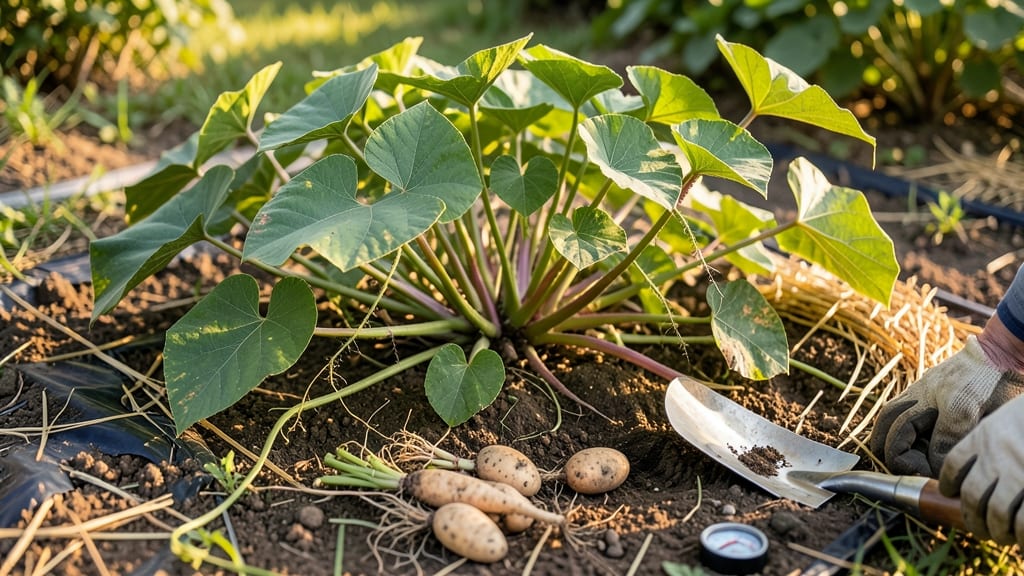
Plant sweet potatoes in Maryland after your last frost date, typically by mid-May, when soil temperatures hit 65°F and stay warm.
Miss this window, and you risk stunted vines or tubers that never fully develop—especially in Maryland’s 7a-7b zones where early frosts can sneak back. But get it right, and you’ll enjoy homegrown 🍠 with deeper flavor and smoother texture than anything at the grocery store.
Here’s the secret to timing it perfectly: soil warmth is more critical than calendar dates, and slips (young plants) need at least 90 days of frost-free growing time.
I’ll walk you through how to track soil temps, adjust for your specific Maryland region, and even push your harvest a few weeks later if needed.
Ready to grow sweet potatoes that outshine store-bought? You’ll learn when to start slips, how to protect young plants from late frosts, and which varieties thrive best in Maryland’s humid summers.
Maryland’s sweet potato planting timeline: frost-free dates & heat requirements
Sweet potatoes thrive in Maryland’s warm climate, but timing is everything—plant too early and frost will kill your slips, too late and you’ll miss the 90-day growing window before first frost.
Maryland spans USDA zones 7a-8a, with Baltimore (7b) and Western MD (8a) having slightly different frost-free averages. The key? Wait until soil hits 60°F+ and all frost risk has passed.
Most of Maryland’s last frost typically occurs between April 15 (Western MD) and May 1 (Baltimore), but microclimates matter. For example, Frederick County (8a) often warms faster than Annapolis (7b).
Always check your local Almanac frost dates and monitor soil temps with a thermometer—sweet potatoes won’t germinate below 60°F, even if air temps are warm.
Here’s your city-specific planting timeline, including soil temperature thresholds and frost-free windows to maximize your harvest before Maryland’s first frost (usually mid-November):
For Baltimore gardeners, aim to plant slips (young plants) between May 15–June 15—this gives you a 120-day growing window before frost.
In Western MD (USDA 8a), you can start as early as late April if soil temps are consistent above 60°F. Pro tip: Use a soil thermometer to confirm readiness; air temps can be misleading.
Sweet potatoes need warmth to develop tubers, so don’t rush planting. If you start too early, your slips will wilt from cold soil stress. Instead, use the time to prepare beds with loose, well-draining soil and a 3-inch layer of compost.
Raised beds warm up faster and are ideal for extending your planting window by 1–2 weeks.
Heat is just as critical as frost dates. Sweet potatoes thrive in 75–90°F soil temps, which Maryland typically hits by late May. If you plant in cool, wet springs (like 2023’s late frost), consider using black plastic mulch to raise soil temps by 5–10°F.
Lay the mulch 2–3 weeks before planting to give the soil time to warm.
Harvest before Maryland’s first frost, which usually arrives mid-November. Late varieties like Beauregard can handle light frosts, but tubers won’t sweeten properly if vines are killed by hard freezes.
For a second crop, try short-season varieties like Georgia Jet (90 days) planted in early July—they’ll mature before frost.
Remember: Maryland’s humidity and summer heat can stress sweet potatoes if they’re not planted at the right time. Stick to this timeline, and you’ll avoid blossom-end rot and poor tuber formation—common issues when plants are stressed by early or late planting. 🍠
Pro tips to extend Maryland’s growing season for sweet potatoes
Maryland’s unpredictable frost dates and short growing season can challenge sweet potato lovers—but with the right strategies, you can push your harvest window well into late fall.
I’ve learned that soil warming, protective covers, and smart companion planting can add critical weeks to your season, even in USDA zones 7a-7b.
One of my biggest successes came last year when I used black plastic mulch combined with row covers to extend my harvest by 3 full weeks. The difference between a mid-October harvest and a late-November one?
Game-changing for preserving tubers through winter. Let’s dive into the practical tactics that work best in Maryland’s climate.
- 1. Lay black plastic mulch 2-3 weeks before planting to warm soil to 70°F+ faster.
- 2. Use row covers in late September to protect from early frosts while allowing sunlight.
- 3. Plant marigolds alongside sweet potatoes to repel pests and improve soil health.
- 4. Basil companion planting boosts growth and deters nematodes—perfect for Maryland’s humid summers.
- 5. Harvest before first frost (target mid-October) and cure tubers indoors at 80°F for 10 days.
For early starts, I always begin by warming the soil with clear plastic sheeting placed 2-3 weeks before planting. This simple trick raises soil temperatures by 10-15°F, helping slips establish roots faster.
In Western Maryland, where nights get chilly earlier, I’ve found that straw mulch over row covers adds an extra layer of insulation.
Companion planting with marigolds and basil has been a game-changer in my garden. The marigolds repel pests like sweet potato weevils, while basil improves flavor and deters nematodes.
I plant them in a 3:1 ratio—three sweet potatoes to one basil or marigold—for optimal results. Plus, the fragrant herbs make harvesting more enjoyable!
Handling late-season heatwaves requires careful watering. I’ve learned to water deeply in the morning and avoid overhead sprinkling to prevent fungal diseases. During extreme heat, I’ll even shade young plants with lightweight fabric for a few hours to protect them from wilting.
This balance keeps your sweet potatoes thriving even when temperatures soar.
Don’t forget to harvest before the first frost—typically around mid-October in Maryland. Cure your tubers indoors at 80°F and 80% humidity for 10 days to develop their sweet flavor. With these season-extending tips, you’ll enjoy homegrown sweet potatoes well into winter storage!