
Plants
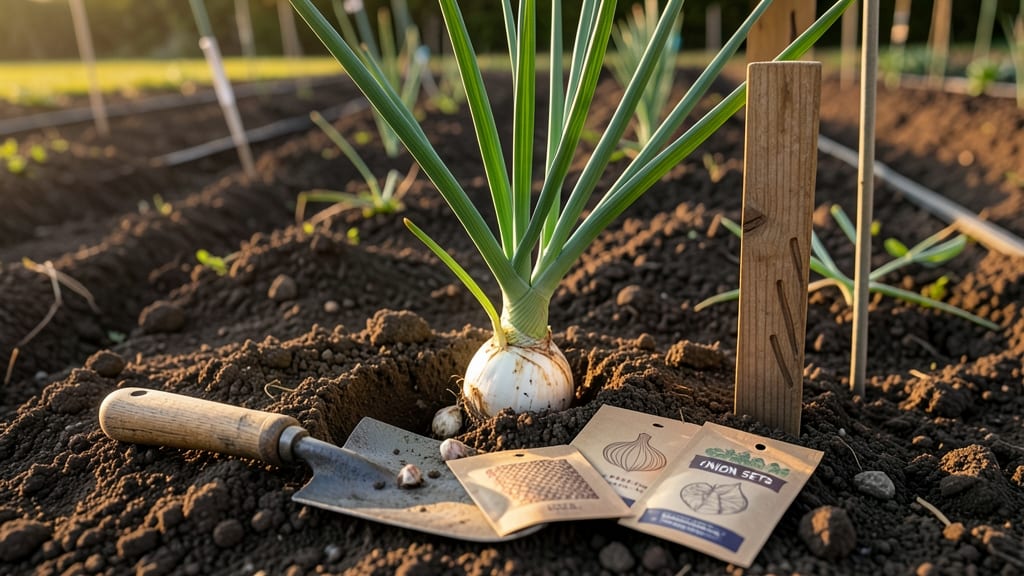
Planting onions in Washington State at the right time means the difference between a bountiful harvest and wasted effort — aim for March to April in spring or August to September for fall planting to align with your local frost dates.
Timing is everything in gardening, especially when growing 🧅 onions in Washington State’s unpredictable climate—plant too early and risk frost damage, too late and miss peak harvest season.
Whether you’re in the milder 8a-9a zones of Western WA or the colder 7b areas of Eastern WA, getting this right is the key to success.
Most gardeners in Washington focus on spring planting, but fall onions can also thrive if you start them early enough to mature before winter sets in. The secret lies in understanding your last frost date—April 15 in Eastern WA and May 1 in Western WA—and adjusting your schedule accordingly.
In this guide, I’ll walk you through the best planting windows by region, how to prepare your soil, and what to watch for as your onions grow. By the end, you’ll know exactly when to plant for the best harvest in your part of the state.
Optimal planting months for onions in Washington State by region
Washington State’s diverse climate means your onion planting schedule should depend on whether you're in Western WA (mild winters), Eastern WA (colder winters), or the Puget Sound region. Each area has unique frost-free dates and soil temperature requirements that determine the best time to plant.
Get it wrong, and you might lose your crop to frost or miss the harvest window entirely.
Onions thrive when planted in cool soil (45-65°F) and moderate air temperatures (50-75°F). In Washington, this typically means spring planting (March-April) or fall planting (August-September). However, the exact timing varies by region due to differences in last frost dates and first frost dates.
The Puget Sound area (including Seattle) has the mildest winters, with a last frost date around May 1 and first frost near November 1. Meanwhile, Eastern WA (like Spokane) experiences earlier frosts, with the last frost around April 15 and first frost by October 15.
These differences create distinct planting windows for each region.
Here’s the key: Plant onion sets (small dried bulbs) or transplant seedlings 4-6 weeks before your area’s last frost date. For fall planting, aim to get seeds in the ground 8-10 weeks before the first frost.
Timing is critical—too early, and frost will damage young plants; too late, and you’ll miss the harvest window.
For Western WA, including the Puget Sound area, plant onion sets in March or early April to ensure they establish roots before the last frost. If you prefer fall planting, aim for late August or early September.
The milder climate here allows for a longer growing season, so you can even experiment with late summer plantings for a fall harvest.
In Eastern WA, where winters are colder, start onion sets indoors in February and transplant outdoors by late March. For fall planting, focus on July to give onions enough time to mature before the first frost.
The high desert areas like Yakima have even earlier frost dates, so plant sets in March and seeds in July for the best results.
Pro tip: Use row covers or cold frames in colder regions to extend your planting window. This can push your last frost date back by 2-3 weeks, giving your onions more time to grow. Just remember to remove covers during the day to avoid overheating the soil.
Soil temperature is just as critical as air temperature. Onions prefer cool soil (45-65°F) to germinate and grow. In Western WA, soil warms up faster, so you can plant earlier. In Eastern WA, wait until the soil reaches at least 40°F to avoid stunted growth.
Use a soil thermometer to check—it’s a small investment that pays off with a better harvest.
Finally, don’t forget about succession planting. In regions with longer frost-free seasons like Puget Sound, you can plant onion sets every 2-3 weeks from March through May for a continuous harvest. This ensures you always have fresh onions without overcrowding your garden.
With these regional guidelines, you’ll avoid the common mistakes of planting too early or too late. Follow the schedule for your area, and you’ll enjoy a bountiful onion harvest from June through October—just in time for grilling, soups, or fresh salads! 🧅
How to adjust onion planting for Washington’s microclimates
Washington State’s diverse microclimates mean your onion planting schedule should vary dramatically between the Yakima Valley’s high desert, Olympia’s coastal fog, and Seattle’s urban heat islands. Each region demands unique timing, varieties, and strategies to thrive. Let’s break down how to adapt your approach for maximum success.
In high-desert areas like Yakima, where nights drop below 30°F and days reach 90°F, cold-hardy varieties like ‘Red Baron’ or ‘Sweet Sandwich’ excel. These regions benefit from early spring planting (February-March) or fall planting (late August) to avoid bolting in summer heat.
Coastal regions such as Olympia enjoy milder winters, allowing for later spring starts (March-April) and even fall planting (September) for overwintering onions. Varieties like ‘Candy’ or ‘Texas Early White’ handle the damp, cooler conditions well.
Seattle’s urban microclimates create pockets of warmth, especially near buildings or pavement. Here, succession planting works best—start with sets in early March, then transplant seedlings every 3-4 weeks until May. Use short-day varieties like ‘1015Y Yellow’ to prevent bolting.
Key Adjustments by Microclimate
- 🌡️ High Desert (Yakima): Plant February-March or late August; use cold-hardy varieties like ‘Red Baron’.
- 🌊 Coastal (Olympia): Start March-April or September for overwintering; choose disease-resistant types like ‘Candy’.
- 🏙️ Urban (Seattle): Succession plant every 3-4 weeks; opt for short-day onions like ‘1015Y Yellow’.
- 🌱 All Regions: Test soil pH (6.0-7.0); mulch heavily in high-desert areas to retain moisture.
- ⏰ Frost Watch: Coastal areas can plant 2 weeks later than high desert; use row covers if frost threatens.
For high-desert gardens, focus on soil moisture retention—mulch with straw to protect roots from temperature swings. In coastal areas, improve drainage to prevent rot, especially during rainy winters. Urban gardeners should leverage container growing for heat islands, using pots with 12+ inches of depth.
Regardless of location, succession planting is your best friend. By staggering plantings every 2-3 weeks, you’ll ensure a continuous harvest from June through September. For fall-planted onions, aim to harvest before the first hard frost—typically October 15 in Eastern WA and November 1 in Western WA.
Experiment with local varieties from seed exchanges or nurseries like Washington State University’s recommendations. Their trial data often reveals hidden gems suited to specific microclimates. Happy planting—your onion harvest will thank you! 🧅