
Vegetables
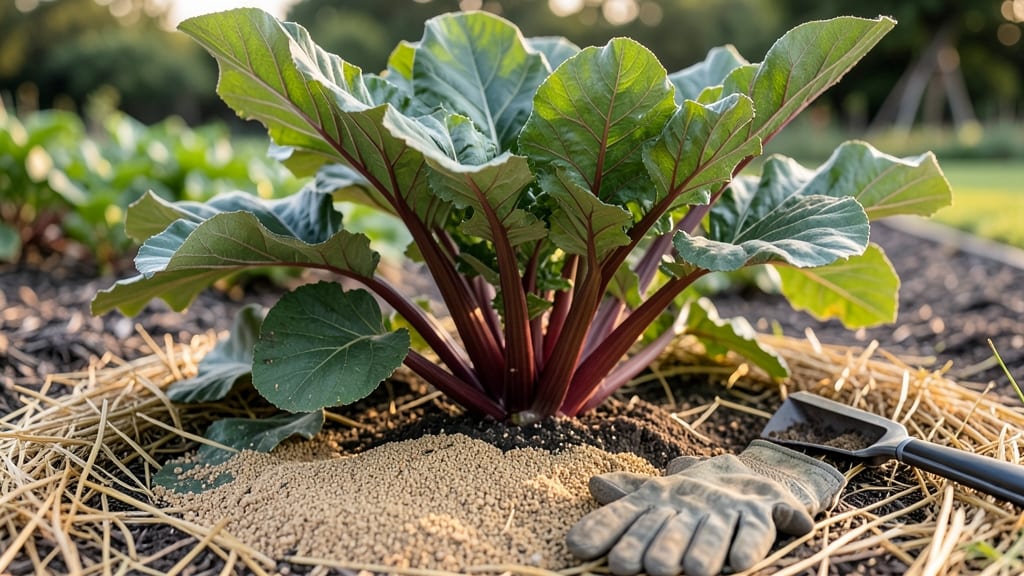
To fertilize rhubarb at the right time means feeding it just as the 🍃 spring leaves unfurl—but not a moment too soon.
Picture this: your rhubarb crown sits dormant all winter, then bursts into growth the second the soil warms. That’s your cue to act. Too early, and you’ll waste nutrients; too late, and you’ll stunt those prized stalks.
The trick is timing it with the first flush of new leaves, when the plant is hungry but not yet overburdened.
Here’s what you’ll learn: the exact spring feeding schedule for bold leaf growth, how to spot when your rhubarb is begging for nutrients (or begging for mercy), and why synthetic fertilizers can backfire in the long run.
We’ll also cover regional tweaks for cooler or warmer climates—because a 6a zone plant has different needs than one in the deep South.
By the end, you’ll know not just when to fertilize, but how—with organic options that build soil health and synthetic shortcuts for a quick boost. Let’s get those stalks growing like they’ve never grown before.
Best times to fertilize rhubarb for maximum leaf growth
Rhubarb thrives when fed at the right moments, not just any time. Its shallow root system absorbs nutrients quickly, so timing matters more than quantity. Feed too early, and you’ll encourage weak growth.
Feed too late, and you’ll waste fertilizer on a plant preparing for dormancy. The key? Spring and early summer when leaves are actively growing.
Before grabbing that fertilizer bag, test your soil pH—rhubarb prefers 6.0 to 6.8. If your soil is too acidic or alkaline, nutrients won’t absorb properly. A simple home soil test kit (or lab test) will save you from guessing.
Once you’ve confirmed the pH, focus on feeding during the plant’s active growth phases.
⚠️ CRITICAL: Never fertilize after mid-summer. Late-season feeding tricks rhubarb into producing leafy growth instead of storing energy for next year’s harvest. This leads to weak stalks and poor winter survival. Think of it like training for a marathon—you wouldn’t eat a heavy meal the night before the race!
| Season | Best Fertilization Time | Fertilizer Type | Amount | Notes |
|---|---|---|---|---|
| Early Spring (March) | After last frost | Balanced (10-10-10) or compost tea | 1 tbsp per plant | Light feed to wake roots |
| Late Spring (April-May) | Every 4-6 weeks | High phosphorus (5-10-10) | 1/4 cup per plant | Boosts stalk production |
| Early Summer (June) | Optional light feed | Compost or worm castings | 1/2 cup around base | Avoid synthetic fertilizers |
| Summer-Fall (July-Oct) | None | N/A | N/A | Plant enters dormancy |
| Winter (Nov-Feb) | None | N/A | N/A | Soil rests with plant |
For organic gardeners, compost tea or worm castings are ideal in spring. They release nutrients slowly, matching rhubarb’s gradual growth. Synthetic fertilizers like 10-10-10 work too, but apply them sparingly—rhubarb’s roots are sensitive to salt buildup. Always water deeply after fertilizing to move nutrients into the soil.
If your rhubarb is younger than 2 years old, cut back on fertilizer. Young plants focus energy on root and crown development, not stalk production. A light feeding in spring with compost is enough.
Overfeeding can lead to leafy growth at the expense of stalks, which is the part we harvest!
Regional adjustments matter too. In cooler climates (USDA Zones 3-5), fertilize slightly later—wait until soil warms to 50°F (10°C). In warmer zones (6-8), you can start as early as February, but monitor for leaf scorch from heat stress.
Always follow the 3-3-3 rule: 3 inches of compost, 3 inches of mulch, and 3 feet of space around the plant.
Pro tip: Pair fertilization with mulching to retain moisture and regulate soil temperature. Use straw or shredded leaves—they break down slowly, feeding the soil naturally. Avoid fresh manure; it can burn rhubarb’s shallow roots with its high ammonia content.
Patience pays off: a well-fed rhubarb plant can produce stalks for decades!
Watch for yellowing leaves after fertilizing—this could signal overfeeding. If it happens, flush the soil with water to dilute excess salts. On the flip side, purple stems or slow growth mean it’s time to feed. Rhubarb sends clear signals; learn to read them!
Signs your rhubarb needs fertilizer (and what to use)
Your rhubarb plants may be silently begging for nutrients without you realizing it. One minute, your stalks are plump and vibrant; the next, they’re stunted or pale. These subtle changes signal it’s time to feed your rhubarb.
Unlike annuals, rhubarb’s perennial roots store nutrients, but they still need occasional boosts to produce those prized tart stalks.
Start by checking the leaf color. Healthy rhubarb leaves are deep green, but yellowing—especially between veins—means nitrogen deficiency. Meanwhile, purple-tinged leaves or slow stalk growth often point to phosphorus or potassium shortages.
These visual cues are your first warning that your rhubarb’s root system isn’t getting what it needs to thrive.
⚠️ When to Fertilize Rhubarb: Critical Timing
Fertilize rhubarb only in early spring (March-April) when you see new shoots emerging. Avoid feeding after June—late-season fertilizer encourages leafy growth over stalks, ruining your harvest. For established plants, a light feed every 4-6 weeks in spring is ideal.
If your rhubarb’s stalks are thin or growing slowly despite ample sun, it’s time to act. A balanced fertilizer like 10-10-10 (equal parts nitrogen, phosphorus, potassium) works well for general growth.
For organic options, try compost tea or a low-nitrogen granular fertilizer (like 5-10-10) to avoid overstimulating leaves. Spread 1/4 cup around the base, then water deeply to activate nutrients.
For potted rhubarb, use half the dose—container plants are more sensitive to fertilizer burn. Mix a slow-release organic fertilizer into the soil in early spring, then top-dress with well-aged compost in late spring.
This two-step approach mimics natural nutrient release, giving your rhubarb a steady food supply without overwhelming its roots.
After fertilizing, watch for improved stalk thickness within 3-4 weeks. If leaves turn brown at the edges, you’ve overdone it—flush the soil with water and reduce future doses. Rhubarb hates excess salts, so always follow package instructions and avoid synthetic fertilizers high in salt content.
Remember, rhubarb’s perennial nature means it builds reserves over time. Once established (after Year 2), it often needs less frequent feeding. Focus on soil health—amend beds with compost annually—and your rhubarb will reward you with bold, tangy stalks for decades. 🍃