
Tools
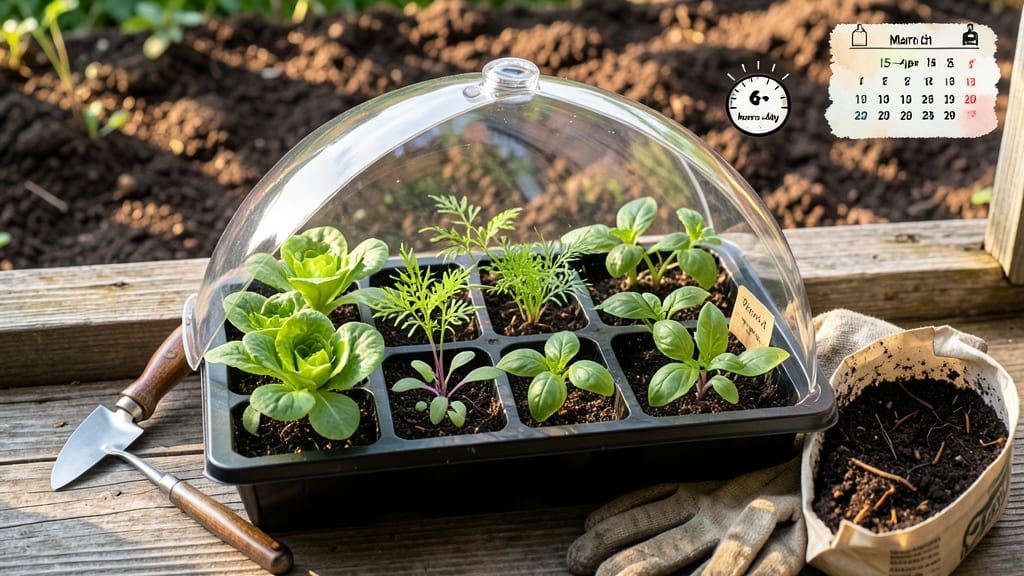
Starting a vegetable garden at the right time means the difference between a bountiful harvest and a sad pile of wilted seedlings—so timing matters more than most gardeners realize.
Timing your vegetable garden start can mean the difference between lush harvests and wilted disappointment—yet most gardeners still guess wrong about their local climate zone. Whether you’re in USDA Zone 6a or a warmer region, the last frost date is your secret weapon.
Cool-season crops like spinach and kale thrive when planted 4-6 weeks before your last frost, while warm-season favorites like tomatoes need to wait until after April 15 in most areas. Miss the window, and you’ll end up with leggy, weak plants or no harvest at all.
Below, I’ll break down the exact planting windows for your region—plus how to prep your soil, choose the right seeds, and stretch your growing season for bigger yields all year.
Climate-Zone planting windows: when to start vegetables by region
Timing your vegetable garden start is everything—plant too early and frost will nip your seedlings, too late and summer heat will stress heat-sensitive crops like tomatoes and peppers. Your USDA climate zone dictates the perfect window, but even within zones, local microclimates can shift planting by 2-4 weeks.
Let’s break down the exact frost-free dates and planting strategies for each zone, so you can start cold-hardy greens (like kale and spinach) and warm-season favorites (like beans and squash) at the ideal moment.
Most gardeners focus only on the last frost date, but the first frost and soil temperature are just as critical.
For example, in Zone 5, you can start peas and lettuce as early as March 15, but tomatoes won’t thrive until after May 15, when soil warms to 60°F.
Use this guide to align your planting with your zone’s unique rhythm—and avoid the heartbreak of wilted seedlings or bolting greens.
Pro Tip: Bookmark the USDA Plant Hardiness Zone Map and check your local Cooperative Extension Service for hyper-local adjustments. Even a 10-mile elevation change can shift frost dates by 1-2 weeks. For instance, a Zone 7 garden in the mountains might mirror Zone 6 timing.
Notice how Zone 10-11 gardeners can plant year-round? That’s because their frost-free windows span 12 months, but even here, summer heat (above 90°F) can stress <
Moon phase secrets: the optimal planting calendar for bigger harvests
Did you know the moon's phases can boost your vegetable garden's growth by up to 40%? Ancient farmers swore by lunar planting cycles, and modern science confirms it: aligning your planting with the moon's energy maximizes yields for root crops, leafy greens, and fruiting plants.
The key lies in understanding how the moon's gravitational pull affects water absorption and plant development.
Root crops like carrots and potatoes thrive when planted during the waxing moon (when the moon grows brighter), while leafy greens prefer the waning moon (when it shrinks). Fruiting plants—think tomatoes and peppers—respond best to planting just before or after the full moon, when energy is at its peak.
Let's break down the science and give you a 12-month planting calendar tailored to each vegetable type.
| Moon Phase | Best For | Avoid Planting | Example Crops | Planting Time (Relative to Full Moon) |
|---|---|---|---|---|
| Waxing Moon | Root crops, bulbs | Leafy greens, fruiting plants | Carrots, potatoes, onions | 3-7 days before full moon |
| Full Moon | Fruiting plants | Root crops, seeds | Tomatoes, peppers, beans | Day of full moon |
| Waning Moon | Leafy greens, herbs | Root crops, bulbs | Lettuce, spinach, basil | 7-14 days after full moon |
| New Moon | Seed starting, transplanting | Heavy pruning | All vegetables | Day of new moon |
For a 12-month planting calendar, start by marking your local full moon dates (use a lunar calendar app for precision). In January and February, focus on cool-season crops like broccoli and peas during the waxing moon.
By March and April, shift to planting tomatoes and cucumbers just before the full moon for maximum fruiting energy.
Summer months require extra attention: avoid planting root crops during the waning moon in July and August, as they’ll struggle to establish. Instead, prioritize leafy greens like kale and Swiss chard during the waning phase.
In September and October, extend your harvest by planting garlic and onions during the waxing moon—these bulbs need time to mature before winter.
Pro tip: Keep a gardening journal to track which moon phases yield the best results in your climate. Over time, you’ll refine your schedule to match your local conditions. The moon’s influence isn’t magic—it’s physics, and harnessing it means bigger harvests with less effort.