
How To
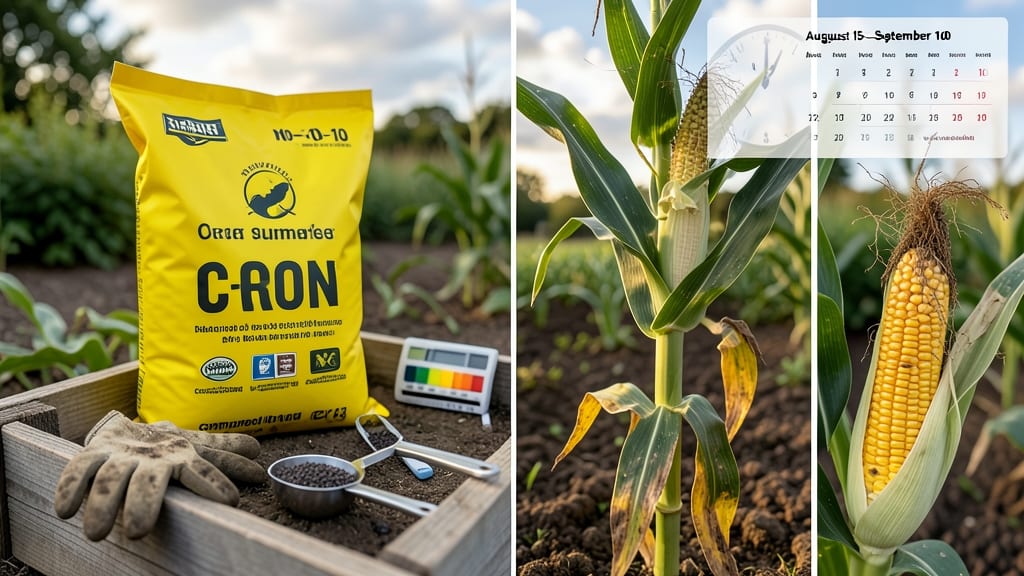
Fertilizing corn too late can actually hurt your yield instead of helping it, and the cutoff depends on your region and variety 🌽.
Corn growers often wonder if late-season fertilization can still boost yields—or if it’s a wasted effort. Timing matters more than you think, and missing these critical windows could mean leaving money (and bushels) on the table.
For most varieties, the last safe window for nitrogen—corn’s most critical nutrient—is around tasseling, typically 6-8 weeks after planting. After that, the plant’s energy shifts from leaf growth to ear development, and extra nitrogen just fuels weak stalks or late-season diseases.
Below, I’ll break down the exact growth stages where fertilization still pays off, how to spot when it’s too late, and what to do instead to salvage your crop before harvest.
Critical corn growth stages where fertilization still works (and when it doesn’t)
Corn is a heavy feeder, and getting fertilization right can mean the difference between a bountiful harvest and a disappointing one. But timing is everything—apply nutrients too late, and you risk burning plants or wasting money on fertilizer that won’t be used.
Understanding corn’s growth stages helps you decide when to fertilize and when to stop.
Corn grows in three main phases: vegetative, tasseling, and grain fill. Each stage has a specific window for fertilization, and missing these can stunt growth or reduce yields. Let’s break down when fertilization still works—and when it’s too late.
Vegetative stage (0-6 weeks) is the best time for nitrogen-heavy fertilizers. During this phase, corn focuses on leaf and stalk growth, and nitrogen fuels that development. Side-dressing with nitrogen-rich fertilizer around 3-4 weeks after planting can give your plants a major boost.
Here’s a quick reference for when fertilization still works—or when it’s too late:
During the tasseling stage (6-8 weeks), corn shifts focus to ear development. This is your last chance to fertilize, but only with phosphorus and potassium. These nutrients help strengthen roots and improve ear fill. Avoid nitrogen here—it can delay tasseling and reduce yields.
Once corn enters the grain fill stage (8-12 weeks), fertilization is a gamble. Any added nutrients at this point can trigger late-season growth, making plants more vulnerable to frost or lodging. The kernels have already set their size, and extra fertilizer won’t improve quality or quantity.
If your corn is past the tasseling stage, switch to foliar sprays or compost teas instead of soil fertilization. These methods deliver nutrients directly to the plant without risking late growth. Just be sure to stop at least 4 weeks before frost to avoid stressing the plant.
Climate plays a role too. In warmer regions, corn may mature faster, shortening the fertilization window. In cooler climates, you might have a few extra weeks, but don’t push it—over-fertilizing late can backfire. Always monitor your plants for signs of stress or nutrient deficiency.
Pro tip: Use a soil test before planting to adjust your fertilizer plan. If your soil is already rich in nutrients, you might not need as much extra fertilizer. And if your corn looks healthy but isn’t yielding, the issue might be pollination problems, not nutrients.
Timing fertilization right is about reading your corn’s growth cues. Pay attention to leaf color, stalk strength, and ear development—these tell you whether your plants are ready for more nutrients or if it’s time to let them focus on filling those kernels. 🌽
Signs your corn is past the fertilization window (and what to do instead)
If your corn plants are tall but the ears aren’t filling out, or the leaves are yellowing from the bottom up, you’ve likely missed the best fertilization window. Corn is most responsive to nutrients during the vegetative stage (first 6-8 weeks) and tasseling phase (when pollen appears).
Once silks emerge, late fertilization can even delay maturity or attract pests.
One of the biggest mistakes I see is fertilizing after the silking stage—when those delicate white strands appear. At this point, the plant’s energy is focused on ear development, not new leaf or root growth.
Late nitrogen can cause excessive top growth while leaving ears underdeveloped, a problem called "blind stalks."
🌽
You’ve passed the ideal window if:
- Silks are dry and brown (ear development is complete)
- Leaves turn yellow/brown from bottom up (nutrient uptake is failing)
- Ears feel heavy but kernels are hard (grain fill is nearly done)
Instead of traditional fertilization, try side-dressing with compost or a low-nitrogen foliar spray (like fish emulsion) if your plants show signs of stress but haven’t yet silked.
For example, if your corn is knee-high with tassels forming, a light application of 5-5-5 fertilizer near the base can still help—just avoid heavy doses that might burn roots.
Another trick I use is adjusting harvest timing. If your corn is past the fertilization window but ears are developing, focus on water management and pest control instead. Stress from late-season fertilizer can actually reduce shelf life and increase disease risk, like corn earworm infestations.
For over-mature corn (where ears are fully formed but stalks are weak), prioritize staking or trellising to prevent lodging. If you’re growing sweet corn, harvest as soon as kernels are plump—even if ears aren’t perfectly filled. The goal shifts from yield to quality and flavor at this stage.
🌾