
Vegetables
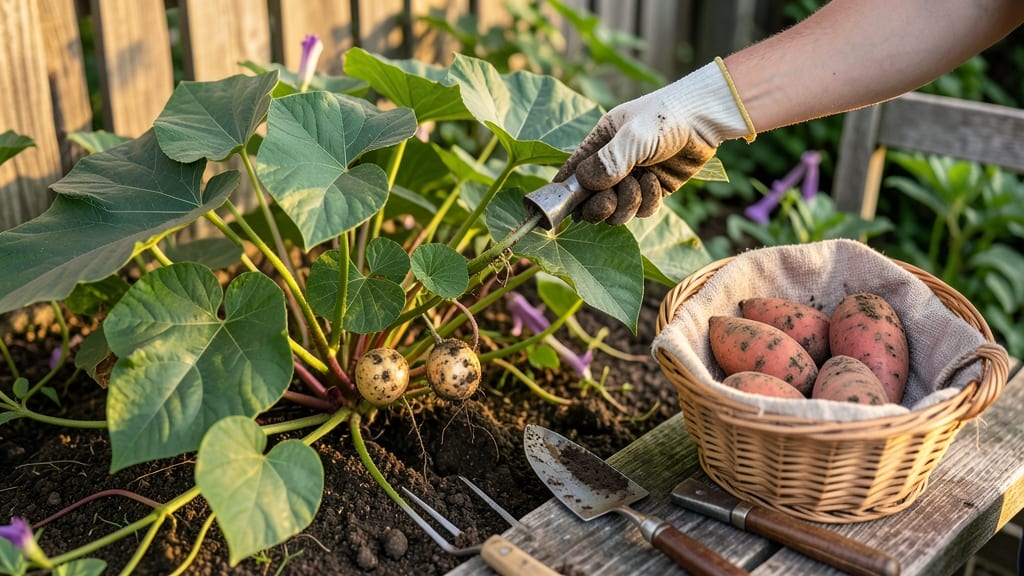
Sweet potatoes are ready to pick when their foliage yellows and the roots reach 2–3 inches in diameter—usually between 90 and 140 days after planting, depending on your variety and climate.
Picture this: your 🍠 vines are sprawling, but instead of lush green, the leaves start turning yellow and crisping at the edges. That’s your plant’s way of saying, "It’s time!"—and digging too soon means small, starchy tubers, while waiting too long risks frost damage or shrunken roots.
But how do you know for sure? The key is checking the skin’s firmness: press a root gently—if it doesn’t dent, it’s ready. Ignore this, and you might harvest bitter, underdeveloped sweet potatoes that won’t store well. Worse, you could miss the perfect window entirely.
In this guide, I’ll walk you through the visual cues, soil tests, and regional timing tweaks so you never guess again. Whether you’re in Zone 6a or further south, you’ll learn how to harvest like a pro—no more wasted crops or mealy disappointments.


Key visual and physical signs sweet potatoes are ready to harvest
Sweet potatoes don’t announce their readiness with a fanfare—they whisper it through subtle changes in their foliage and root development. Unlike potatoes, which signal readiness by flowering, sweet potatoes rely on leaf color shifts and vine health to tell you it’s time to harvest.
Ignoring these cues can mean small, fibrous roots or overripe tubers that spoil quickly.
Start by observing the top growth. Healthy sweet potato vines are lush and green, but when they begin to yellow and die back, it’s your first clue. This natural decline happens as the plant redirects energy from leaves to tuber development.
In cooler climates, a light frost can also trigger this process, making harvest timing critical.
Don’t wait until the vines are completely brown—this can mean the tubers have started to shrink or spoil. Instead, look for 50-70% yellowing of the foliage, combined with dry, crispy leaf edges. This balance ensures you harvest at peak sweetness and texture.
The stem end of the sweet potato is another key indicator. When ready, the stem (where the leaf meets the tuber) will dry out and shrink, pulling away from the root.
Press it gently—if it feels soft or spongy, the tuber is still growing. A firm, slightly woody stem means it’s time to dig.
Root size matters too. Mature sweet potatoes should be 2-3 inches in diameter and feel heavy for their size. Small tubers (<1.5 inches) are often woody or underdeveloped, while oversized ones may have tough skin or cracked flesh. Use your fingers to gently squeeze the soil near the vines—you’ll feel the largest roots.
To test without damaging the plant, use a soil probe or fork to gently lift a few inches of soil near the base of the vines. Look for firm, smooth-skinned tubers with a deep orange or reddish hue.
Avoid harvesting if the roots are still small or green—this means they’re not fully developed.
Regional differences can affect timing. In warmer climates (Zones 8-10), sweet potatoes may mature earlier, while cooler zones (6-7) often need an extra 2-3 weeks. Pay attention to your local frost dates—if frost is imminent, harvest before it arrives to prevent tuber damage.
Once you’ve confirmed readiness, harvest on a dry, sunny day to allow tubers to cure properly. Use a fork to loosen the soil, then gently pull the vines to expose the roots. Handle them carefully—bruised sweet potatoes spoil faster and develop bitter flavors.
After harvesting, let the sweet potatoes cure in warm, humid conditions (80-85°F) for 5-10 days. This process enhances flavor and thickens the skin. Store them in a cool, dark place with good airflow to extend shelf life.
How long until sweet potatoes reach harvest readiness (days to maturity guide)
Sweet potatoes don’t follow a one-size-fits-all timeline—they mature based on variety, climate zone, and growing conditions. While most varieties take 90-140 days to reach harvest, cooler climates can extend this to 150+ days if frost delays maturity. Understanding these variations helps you plan for the perfect harvest window.
Popular varieties like Beauregard and Jewel are fast growers, often ready in 90-110 days, while heirloom types like Georgia Jet may take 120-140 days. Southern gardeners typically harvest in late summer, but northern growers might extend into early fall to avoid frost damage.
Climate plays a huge role. In USDA Zones 9-11, sweet potatoes mature faster due to longer growing seasons, while Zones 6-8 may need to start slips earlier or use row covers to protect plants.
Even within the same zone, soil temperature and water availability can shift maturity by 10-20 days.
Even within the same variety, growing conditions can shift maturity. For example, well-draining soil with consistent moisture speeds up growth, while poor soil or drought stress can delay harvest by 2-3 weeks.
If your plants struggle, focus on mulching to retain moisture and fertilizing with a balanced 10-10-10 mix every 4-6 weeks.
Pro tip: If frost threatens before your sweet potatoes mature, use black plastic mulch or row covers to extend the season. This can add 2-4 extra weeks of growth in cooler climates.
Always prioritize leaf health—wilting or yellowing leaves signal stress, not readiness, so address water or nutrient issues first.
Once you’ve confirmed maturity with the right visual cues (yellowing vines, firm skin, and 2-3 inch tubers), harvest promptly to avoid woodiness or sprouting. Store in a cool, dark place with 60-65°F temperatures for optimal flavor and shelf life.