
Vegetables
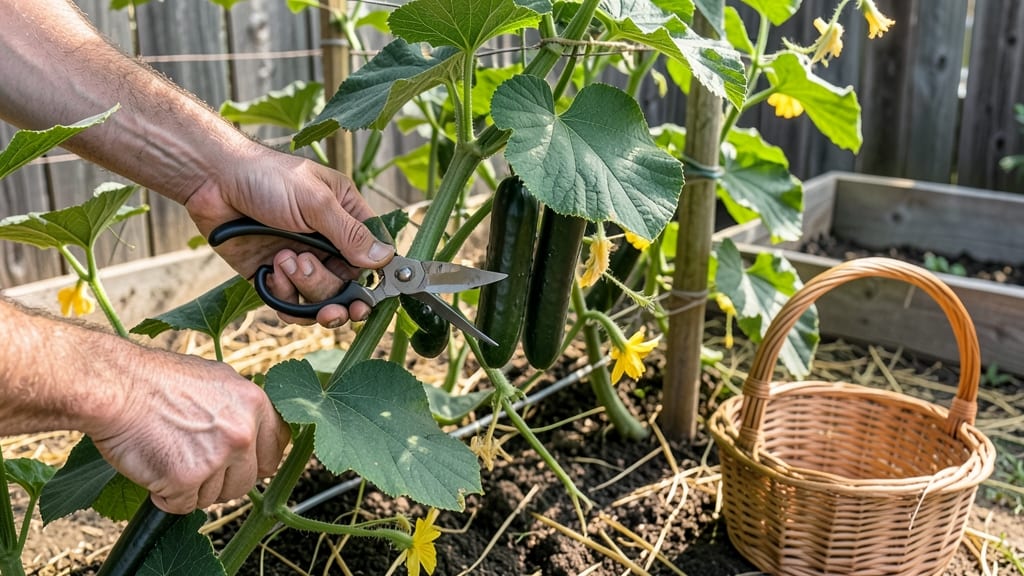
Growing Sumter cucumbers for market success starts with knowing their ideal size — too small, and you lose profits; too large, and quality drops.
If you're growing Sumter cucumbers for market, size matters more than you think—harvest too early or too late, and you could lose profits or quality. Here’s the exact guidance you need to maximize yield and meet buyer expectations.
These 🥒 cucumbers typically reach 6–8 inches in length and weigh between 1–2 pounds at peak market readiness, but size isn’t just about measurements. The right timing ensures crisp texture, vibrant color, and that perfect balance of sweetness and tang.
Below, I’ll break down the official size standards, how to measure for harvest, and the simple tricks—like pruning and spacing—that keep your cucumbers consistently market-ready.


Official Sumter cucumber size standards for market-grade harvests
When selling Sumter cucumbers at market, precise sizing isn’t just about quality—it directly impacts your pricing and buyer satisfaction. The USDA’s commercial grade standards for cucumbers categorize them into distinct classes based on length, diameter, and weight, with Sumter varieties falling primarily into pickling and slicing categories.
Understanding these standards helps you maximize profits by harvesting at the right time and avoiding rejects.
For market-grade Sumter cucumbers, the most valuable classifications are Extra No. 1 and No. 1. These grades command higher prices because they meet strict size and quality benchmarks.
For example, an Extra No. 1 Sumter should measure between 4 to 6 inches in length and 1.5 to 2 inches in diameter, with a weight of 8 to 12 ounces.
Meanwhile, No. 1 cucumbers can stretch up to 7 inches long but must still meet firmness and color standards.
| Grade Classification | Length (inches) | Diameter (inches) | Weight (ounces) | Market Value Impact |
|---|---|---|---|---|
| Extra No. 1 | 4–6 | 1.5–2 | 8–12 | Premium pricing; ideal for slicing |
| No. 1 | 6–7 | 1.75–2.25 | 12–16 | Standard market grade; good for pickling |
| No. 2 | 7–8 | 2–2.5 | 16–20 | Lower price; may have minor blemishes |
| No. 3 | 8+ | 2.5+ | 20+ | Bulk pricing; often used for processing |
The diameter of a Sumter cucumber is just as critical as its length. For Extra No. 1 and No. 1 grades, a consistent diameter of 1.5 to 2.25 inches ensures uniformity, which buyers prefer.
Cucumbers that exceed 2.5 inches in diameter often fall into No. 2 or No. 3 grades, reducing your profit per pound. Use a calibrating tool or ruler to measure diameter at the widest point, typically near the middle of the cucumber.
Weight plays a subtle but important role in pricing. A Sumter cucumber in the 8–12 ounce range is ideal for Extra No. 1 grading, while anything over 16 ounces may not meet buyer expectations for fresh-market sales.
To achieve this, harvest frequently—every 2 to 3 days—to prevent cucumbers from overmaturing. Overripe cucumbers not only lose value but also develop seeds that turn bitter, affecting flavor and marketability.
Buyers often associate size consistency with quality control. If your Sumter cucumbers vary wildly in size—some 4 inches long and others 8 inches—you risk being grouped into lower-grade lots.
To maintain consistency, prune your vines to encourage even fruit development and space plants 3–4 feet apart to reduce competition. Proper pollination, either through bees or hand-pollination, also helps produce uniform-sized cucumbers.
Pricing varies significantly by grade. For example, Extra No. 1 Sumter cucumbers can sell for 20–30% more than No. 2 grades at farmers' markets. To maximize earnings, focus on harvesting during the peak morning hours when cucumbers are cool and firm.
Store them in shaded, humid conditions until sale to maintain freshness. If you’re selling to wholesalers, they may require pre-sorted batches by size, so plan your harvests accordingly.
One common mistake is assuming that bigger cucumbers always mean better profits. While larger cucumbers may weigh more, they often fall into lower grades due to uneven shapes or softer textures.
Instead, prioritize harvesting at the optimal size for your target market. For pickling, slightly smaller 5–6 inch cucumbers
How to measure and select Sumter cucumbers for optimal harvest timing
Selecting the perfect Sumter cucumbers for harvest requires a mix of visual cues and precise measurements. These cucumbers thrive when picked at the right size and maturity, balancing market readiness with peak flavor.
I’ve learned that timing is everything—harvest too early, and you’ll sacrifice sweetness; too late, and they become bitter or seedy.
Start by understanding the ideal size range for Sumter cucumbers, which typically falls between 6 to 8 inches in length. For market-grade quality, aim for cucumbers that are straight, firm, and free of blemishes.
Use a measuring tape or ruler to check length, and gently press the skin to test firmness—it should yield slightly but not feel soft.
⚠️ WARNING: Overlooking Size Standards Can Cost You!
For peak flavor, I recommend harvesting Sumter cucumbers when they’re deep green and glossy, with a yellowing stem end. This signals they’ve reached maturity without overripening. If the stem end remains green, the cucumber is still growing—wait a few days.
Conversely, if the skin turns dull or the stem end browns excessively, the cucumber may be past its prime.
In the field, I use a handheld laser measure for quick checks, especially when harvesting large batches. For smaller gardens, a ruler or even a pencil can work—just mark the 6-inch point on the cucumber’s side.
Always harvest in the morning when cucumbers are coolest and firmest, which helps preserve quality during transport or storage.
Pro tip: Prune excess leaves near the fruit to improve air circulation and reduce disease risk. This also makes it easier to spot ripe cucumbers among the foliage.
If you’re growing for pickling, you can harvest slightly smaller (4 to 5 inches), but for slicing or market sales, stick to the 6 to 8-inch range for the best balance of texture and flavor.
Remember, consistency is key—regular harvesting encourages more production. I’ve found that checking my Sumter plants every 2 to 3 days keeps them productive and ensures I never miss the optimal harvest window.
With practice, you’ll develop an eye for the perfect cucumber, and your yield—and profits—will thank you. 🌱