
Watering
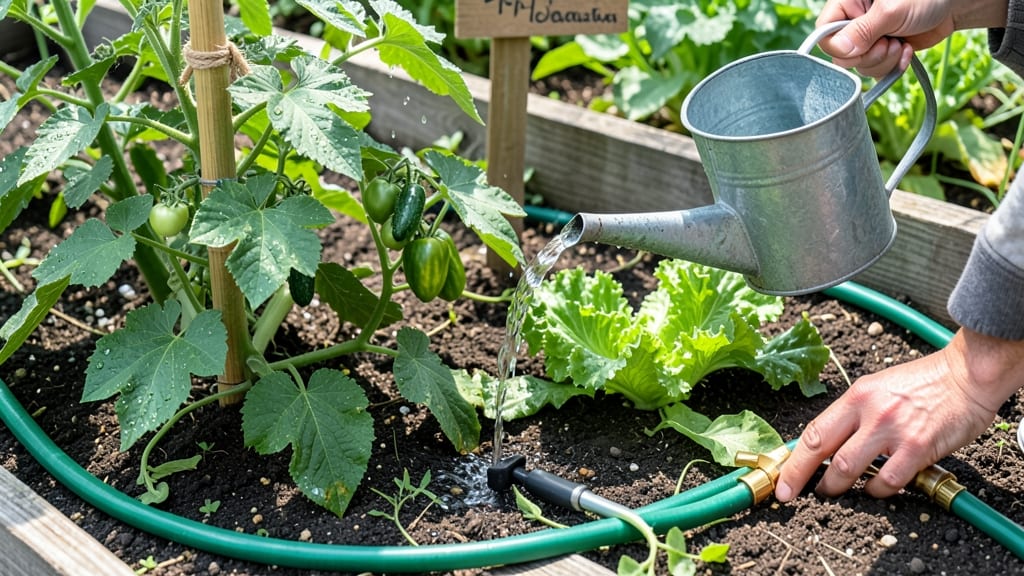
Watering your veggie garden the right amount keeps 🥬 thriving and your harvests plentiful—but most gardeners either drown their plants or leave them parched.
Guessing how often to water leads to wasted time and lost crops, yet the science behind it is simpler than you think. With the right schedule, you’ll save water, boost flavor, and avoid common mistakes that ruin yields.
Below, I break down exact watering frequencies by plant type, soil, and season—plus the 5 signs you’re over- or underwatering. No more guesswork, just data-backed results.
Ready to transform your garden? Start with these 3 key rules that work for any vegetable, then dive into the full schedule tailored to your climate and soil.
Science-backed watering frequency by vegetable type (with soil & climate adjustments)
Watering your vegetable garden isn't a one-size-fits-all task—each plant has unique needs based on its growth stage, soil type, and climate zone. For example, leafy greens like lettuce need frequent shallow watering, while root vegetables such as carrots prefer deep, infrequent soaks.
Even the same plant (like tomatoes) will drink differently when young versus fruiting. Let’s break down the science-backed schedules for 15+ common vegetables, plus how to adjust for sandy vs. clay soil and heat zones.
Soil type dramatically alters watering needs. Sandy soil drains quickly, requiring watering every 1-2 days in summer, while clay soil holds moisture longer, often needing water every 3-5 days.
In USDA Zone 8+, extreme heat can double watering needs, while cooler zones may stretch intervals to 5-7 days. Always check soil moisture 1 inch below the surface—if it’s dry, it’s time to water. Use a moisture meter or the finger test for precision.
Here’s a quick reference for 15 essential vegetables, including their ideal watering frequency, soil adjustments, and climate considerations: