
Light Requirements
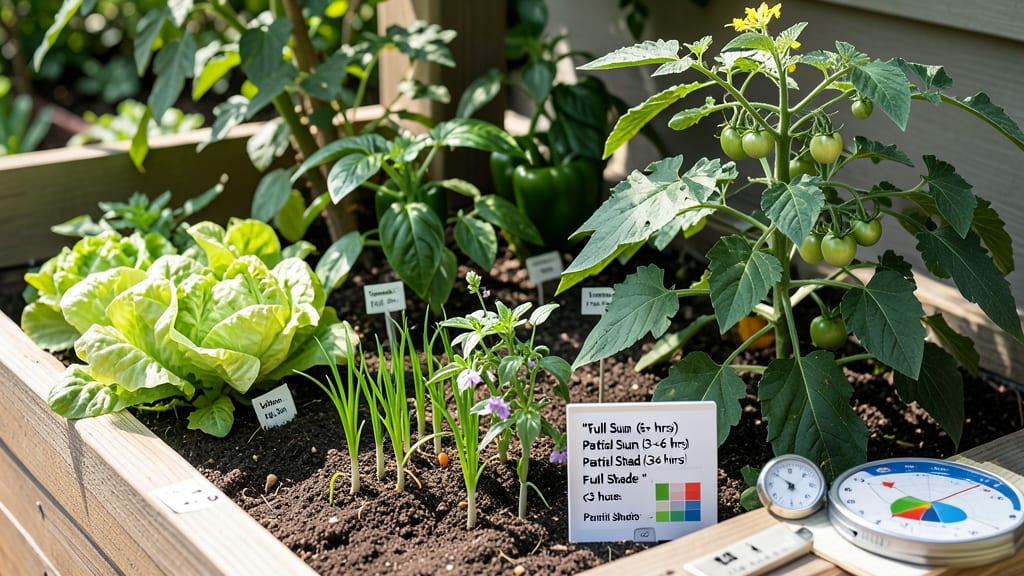
A vegetable garden needs how many hours of sun does a vegetable garden need to thrive—6 to 8 hours daily—but not every plant demands the same amount. Getting this wrong can mean the difference between a bountiful harvest and wasted space.
Picture this: your tomatoes are sprawling toward the sky, their leaves crisping in the midday heat, while your lettuce bolts to seed before you can even pick it. That’s the classic sign of sunlight mismanagement, and it’s easier to fix than you think.
Most vegetables fall into one of three categories: full-sun lovers (like peppers and cucumbers), partial-shade tolerators (such as leafy greens), and shade-friendly crops (like radishes). Knowing which is which saves you from overcrowding or underperforming beds.
In this guide, I’ll break down exactly how many hours of sun your 🥕 vegetable garden needs—plant by plant—plus how to measure sunlight in your space and adjust your layout for maximum yield.


Sunlight requirements by vegetable type: full sun vs. partial shade explained
Getting your vegetable garden's sunlight right is the difference between a bountiful harvest and wasted effort. Most gardeners assume "full sun" means any sunny spot, but tomatoes and peppers actually need 6-8 hours of direct sunlight to thrive, while leafy greens can bolt in too much heat.
Understanding these nuances lets you design a garden that works with your space—not against it.
Sunlight isn't just about hours; it's about intensity and duration. High-altitude gardens (like those in Colorado) get more UV rays, so plants may need less time in direct sun to avoid scorching.
Meanwhile, tropical climates might require afternoon shade to prevent wilting. Let's break down the exact needs for 15+ common vegetables so you can place every plant perfectly.
Note: These guidelines assume average conditions. Adjust for microclimates (e.g., near fences or buildings) by observing how sunlight shifts throughout the day.