
Vegetables
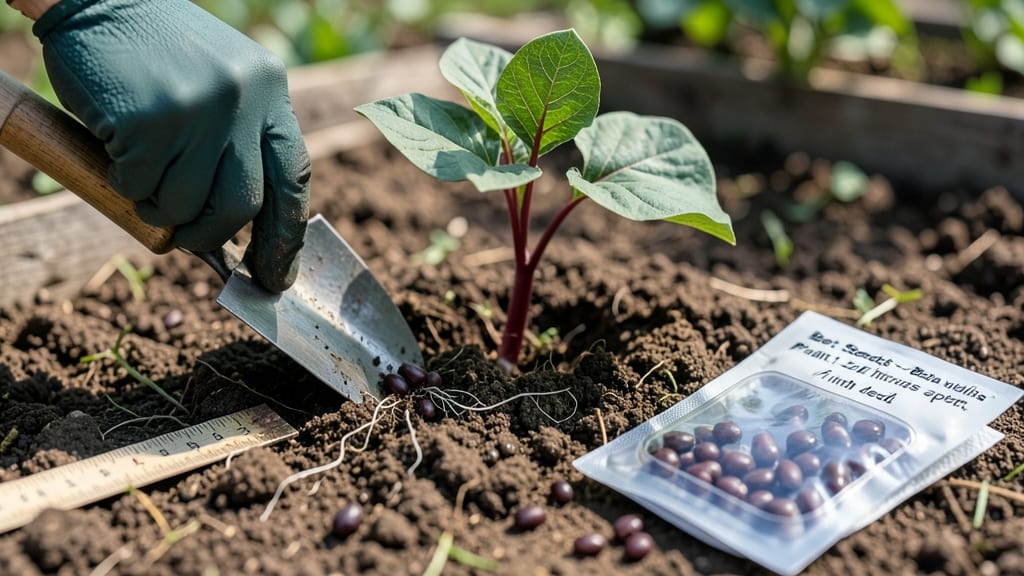
Planting 2-3 beet seeds per hole 🍠 is the trick to avoiding thin, scraggly harvests and ensuring a lush patch of uniform roots.
Struggling to grow perfectly spaced beets that produce vibrant harvests? The secret often lies in how you plant those tiny seeds—getting the spacing wrong can mean sparse yields or overcrowded greens.
Beets thrive when given just enough room to spread their leaves without competing for nutrients. Too close, and you’ll end up thinning seedlings or fighting for every inch of soil. Too far apart, and you waste garden space on patchy growth.
Below, I’ll break down the exact spacing, depth, and thinning techniques that turn a handful of seeds into a bumper crop of sweet, plump beets—no guesswork required.
Optimal beet seed spacing: how many seeds per hole for perfect growth
Getting your beet seed spacing right is the foundation of a thriving harvest. Unlike some vegetables, beets thrive when planted in small clusters—2-3 seeds per hole—because their germination rate is famously low (often 50% success).
This clustering ensures you get at least 1-2 strong seedlings per spot without thinning later.
But here's the catch: baby beets (like 'Babybeat' or 'Little Ball') need tighter spacing than full-size varieties (like 'Detroit Dark Red'). The wrong spacing leads to either overcrowded greens or sparse yields. Let’s break down the science behind perfect planting.
| Beet Type | Seeds Per Hole | Spacing Between Holes | Planting Depth | Thinning To |
|---|---|---|---|---|
| Baby Beets (e.g., 'Babybeat') | 2-3 seeds | 1-2 inches apart | ½ inch deep | 1 plant per hole |
| Full-Size Beets (e.g., 'Detroit Dark Red') | 2-3 seeds | 3-4 inches apart | ½ inch deep | 1-2 plants per hole |
| Giant Beets (e.g., 'Chioggia') | 1-2 seeds | 6-8 inches apart | ½ inch deep | 1 plant per hole |
*All varieties require well-drained soil and consistent moisture for optimal germination.
For baby beets, the goal is to harvest the tiny roots before they mature, so 1-2 inches between holes keeps them compact and easy to pull. Plant 2-3 seeds per hole—this ensures at least one strong seedling emerges, even if germination is spotty.
Once they sprout, thin to the strongest seedling per hole to avoid competition.
Full-size beets, however, need more room to develop their signature thick roots. Space holes 3-4 inches apart and plant 2-3 seeds per hole again. Thin later to 1-2 plants per hole, leaving the largest seedlings. This spacing prevents root deformities caused by overcrowding.
Giant beet varieties (like 'Chioggia') are the exceptions—they need 6-8 inches between holes and only 1-2 seeds per hole. Their massive roots demand space to grow straight and avoid forking. Plant them deeper (½ inch) and in loose, well-amended soil to prevent cracking.
Soil conditions play a huge role in germination. Beets prefer loose, well-draining soil with a pH of 6.0-7.0. If your soil is heavy clay, mix in compost or sand before planting.
Compacted soil forces roots to grow unevenly, leading to misshapen beets. A quick soil test can save you from wasted effort!
Depth matters too. Plant seeds ½ inch deep—any deeper and they may fail to sprout. Use your finger to create small furrows, place seeds, then cover lightly with soil.
Press gently to ensure good seed-to-soil contact. After planting, water lightly but consistently to keep the soil moist (not soggy) until germination, which typically takes 7-14 days.
One common mistake? Assuming you can plant beets too close and "thin later." While this works for some veggies, beets hate being disturbed after sprouting. Their delicate roots can fork or split if moved. Always aim for the right spacing from the start to avoid stressing your plants.
Pro tip: Use a seed spacing template or mark rows with a stick and string to maintain even distances. For container gardening, plant 2-3 seeds per 6-inch pot, thinning to one. This works surprisingly well for patio gardens!
Common mistakes that ruin beet seed spacing (and how to fix them)
Even experienced gardeners accidentally sabotage their beet harvests by making seed spacing mistakes. Overcrowding leads to stunted roots, while uneven germination creates gaps in your patch. The key is understanding how many beet seeds per hole actually work best—and when to adjust for your soil type.
Most gardeners assume one seed per hole is standard, but beet seeds often contain 2-3 actual seeds in one shell. Planting just one seed per hole risks uneven germination, while planting too many seeds per hole guarantees competition for nutrients and sunlight.
The solution? 2-3 seeds per hole is ideal for most varieties, but spacing after germination is where many go wrong.
⚠️ The Critical Mistake: Wrong Seed Count Per Hole
Planting only 1 seed per hole leads to patchy germination—most beet seed packets contain 2-3 seeds per shell. Planting 2-3 seeds per hole increases your chances of uniform germination, but you'll need to thin later. The #1 fix is to plant 2-3 seeds per hole spaced 1-2 inches apart, then thin to the strongest seedling.
Soil compaction is another silent killer of proper beet spacing. Heavy or clay soils prevent roots from expanding naturally, forcing them to compete aggressively. If your soil feels hard or dense, mix in compost or sand before planting.
Loose soil lets roots spread 3-4 inches apart naturally, reducing the need for aggressive thinning later.
Uneven watering creates another spacing problem. Inconsistent moisture causes some seeds to germinate faster than others, creating a mixed-age patch. Stronger seedlings outcompete weaker ones, leaving gaps where you expected uniform growth.
The fix? Water consistently at the soil level (not overhead) to ensure all seeds germinate within 7-10 days of each other.
Even after germination, many gardeners forget to thin at the right stage. Waiting too long to thin means roots become tangled, while thinning too early stresses young plants.
The perfect window is when seedlings have 2-3 true leaves—use sharp scissors to snip at soil level to avoid disturbing roots of remaining plants.
For salvageable patches, try succession planting in gaps. Scatter a few extra seeds in thin areas and watch for germination. If your soil is still workable, loosen it gently with a hand fork to encourage root expansion.
With proper spacing and care, you can still achieve a bountiful harvest even from a poorly spaced start.