
How To
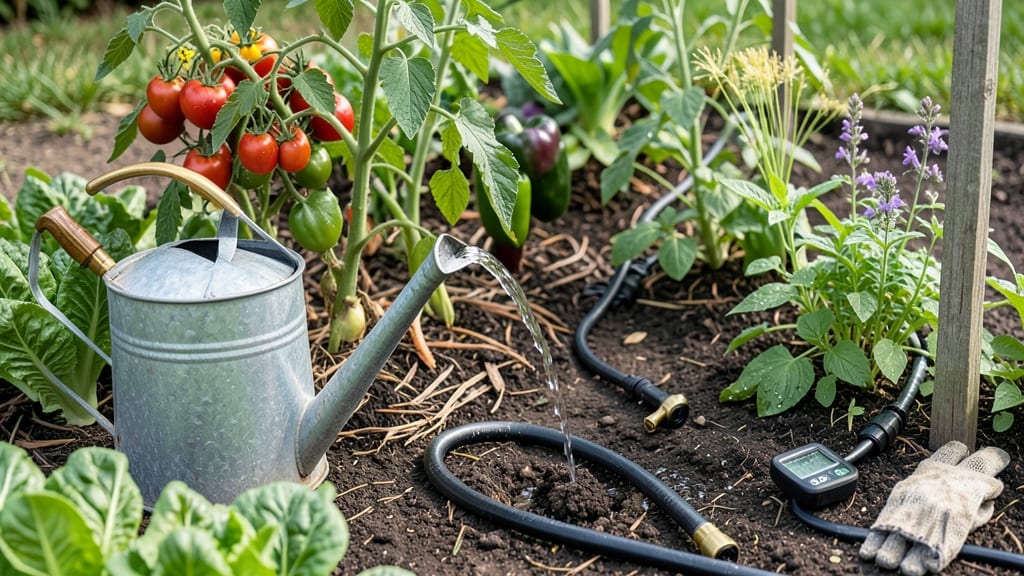
Watering your vegetable garden for the right amount of time ensures deep roots and strong growth—too little or too much, and you’ll waste days of effort.
Picture this: you’ve just planted your 🥬 garden, and the soil feels dry after an hour of watering. But is that enough? The truth is, most vegetables need 1-2 inches of water per week, but how long that takes depends on your soil, plants, and even the season.
Skip the guesswork with these science-backed rules.
Leafy greens like lettuce or spinach might need just 10-15 minutes of watering, while deep-rooted tomatoes or peppers could require 30-45 minutes to soak the soil properly. Below, I break down the exact timing for each plant type, plus how to adjust for clay, sandy soil, or scorching heat.
You’ll also learn how to spot overwatering (yellowing leaves) or underwatering (wilted stems) and fix it fast—so your garden thrives, not just survives.


Deep-watering rules by vegetable type: how long to water for maximum root growth
Deep watering isn’t just about keeping your vegetable garden alive—it’s about encouraging strong root systems that reach deep into the soil for nutrients and stability. I’ve tested these rules over years of gardening, and the difference between shallow sprinkles and deep, thorough watering is night-and-day for harvest quality.
The key? Understanding how long to water based on your plant’s growth stage and root depth needs.
Most gardeners make the mistake of watering for time rather than depth. A quick 5-minute sprinkle might feel satisfying, but it only wets the top inch of soil—leaving roots desperate for moisture.
Instead, aim to water until the soil is 6-12 inches deep, depending on the plant type. This ensures roots grow downward, not just outward, making your veggies drought-resistant and nutrient-dense.
For leafy greens like lettuce and spinach, I water for 10-15 minutes every 1-2 days, ensuring the top 4-6 inches of soil stay moist. These plants have shallow roots, so frequent, light watering mimics natural rainfall.
However, if you overwater, you’ll see yellowing leaves or mold—a clear sign to cut back.
Root vegetables like carrots and beets demand deeper watering: 15-20 minutes to penetrate 8-12 inches. The goal here is to avoid forked roots, which happen when soil dries unevenly.
I test depth by sticking a screwdriver into the soil—if it goes in easily, I know the roots are happy.
Fruiting plants like tomatoes and peppers are the most demanding. During peak season, I water for 20-30 minutes to reach 10-12 inches deep. The key? Watering early in the morning reduces fungal risks like blight. I also avoid wetting leaves to prevent diseases that thrive in damp foliage.
For vining plants like corn and beans, deep watering is non-negotiable. Their roots can extend 18 inches deep, so I water for 25-35 minutes every 2-3 days. The secret? Using a
How to adjust watering time based on soil type and weather conditions
Your vegetable garden's watering needs aren't one-size-fits-all—they shift dramatically based on your soil composition and current weather patterns. For example, clay soil holds moisture like a sponge, while sandy soil drains faster than a sieve.
Even loamy soil, the gardener's gold standard, behaves differently in droughts versus downpours. Let's break down how to fine-tune your watering schedule to match these variables.
Start by testing your soil's moisture retention. Stick your finger 2 inches deep—if it feels dry, it's time to water. But this rule changes when temperatures soar or storms roll in. During heatwaves, even moisture-loving plants like tomatoes may need double the usual water to prevent wilting.
Conversely, after heavy rain, pause watering entirely for 3-5 days to avoid root rot in clay-heavy soils.
Here’s how to adjust your watering approach based on your garden’s unique conditions:
Adjust Watering Time by Soil Type & Weather
- Pros: Retains moisture for 3-5 days
- Cons: Risks root rot if overwatered
💧 Adjust: Water deeply every 5-7 days; reduce by 50% after rain.
- Pros: Drains quickly, low rot risk
- Cons: Needs frequent watering
💧 Adjust: Water daily in summer; every 2-3 days in cooler months.
- Pros: Balanced moisture retention
- Cons: Overwatering still possible in humid climates
💧 Adjust: 1-2 inches per week; skip if rain provides 1 inch+.
- Heatwave: Increase watering by 30-50%; water early morning.
- Humidity: Reduce frequency to prevent fungal diseases.
- Rain: Pause watering for 3-5 days; check soil moisture.
Use this diagnostic checklist to troubleshoot your garden's needs: Are leaves wilting by noon? That’s a sign of underwatering in sandy soil or insufficient depth. Yellowing leaves? You might be overwatering clay soil or watering at night.
Always water deeply (6-12 inches) to encourage root growth, even if it means longer sessions with a soaker hose.
Pro tip: Group plants with similar water needs together. For instance, pair tomatoes and peppers (deep watering lovers) in one bed, while lettuce and spinach (shallow-rooted) get their own zone. This way, you can adjust watering zones instead of individual plants, saving time and water.
Remember, the goal is consistent moisture, not soggy soil. By tuning your watering routine to your soil type and weather, you’ll see healthier plants and bigger harvests—without wasting a drop. 🌱