
Vegetables
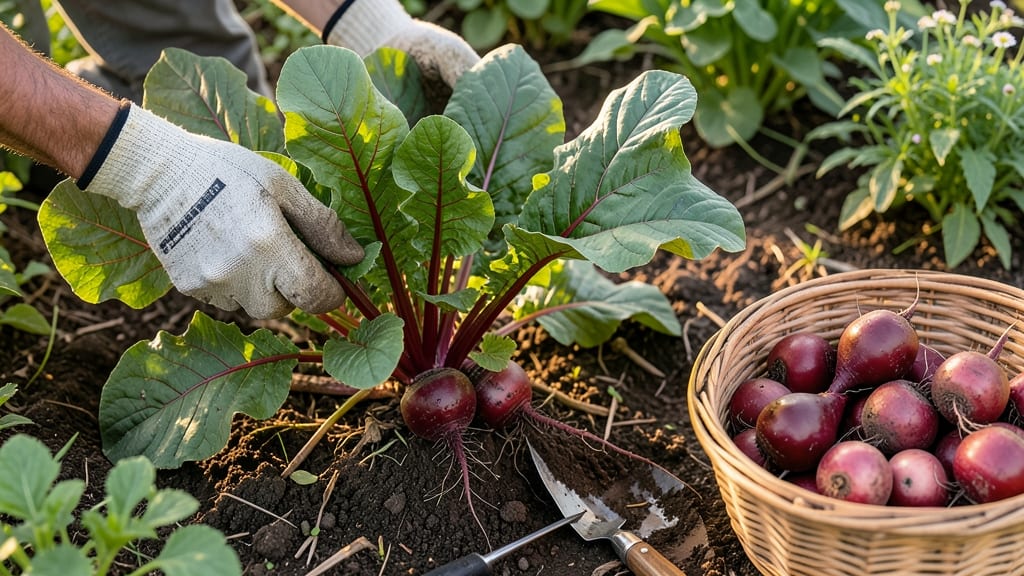
Harvesting beetroot at the right time means 50-70 days of patience and perfect timing 🍠—but those numbers shift depending on whether you’re growing baby beets or full-sized roots.
Picture this: you’ve nurtured your beet patch for weeks, only to pull a root that’s still tough or underwhelming in size. Or worse, you wait too long and end up with woody, bitter beets that taste like disappointment.
The key to peak flavor lies in knowing exactly when to dig—and how to adjust for your specific variety.
In this guide, I’ll break down the exact harvest timeline for common beetroot types, from Detroit Dark Red to Chioggia’s striped gems, plus the soil and climate tweaks that can shave days off your wait.
You’ll also learn the telltale signs of readiness (hint: it’s not just about size) and how to store your harvest so it stays crisp for weeks.
Ready to go from seed to table with beets that are sweet, tender, and perfectly timed? Let’s get into the details so you never guess again.

Beetroot harvest timeline by variety: days to maturity guide
Timing your beetroot harvest perfectly ensures you enjoy sweet, tender roots at their peak. Different varieties mature at distinct speeds, with some ready in as few as 45 days while others take up to 70 days.
Understanding these timelines helps you plan succession plantings and avoid bitter, woody beets. Let’s break down the exact days to harvest for popular varieties and how to adjust for your climate.
Climate plays a crucial role in beetroot maturity. Cooler regions may extend harvest times by 10-15 days, while warm climates can speed up growth. Soil fertility and moisture levels also impact timing—rich, well-drained soil with consistent watering helps beets reach maturity faster.
Always start counting days from when the true leaves (not seed leaves) emerge, not from sowing.
| Variety | Days to Harvest | Root Size | Best For | Climate Notes |
|---|---|---|---|---|
| Detroit Dark Red | 55-65 days | 2-3 inches | Storage, roasting | Thrives in cool seasons; extend by 10 days in heat |
| Chioggia (Striped) | 60-70 days | 1.5-2.5 inches | Salads, pickling | Needs consistent moisture; slower in dry climates |
| Golden Beets | 50-60 days | 1-2 inches | Baby beets, fresh eating | Fastest in warm soil; harvest early to avoid bitterness |
| Boltardy | 45-55 days | 1-1.5 inches | Baby beets, succession planting | Heat-tolerant; ideal for late summer plantings |
| Detroit Mercy | 60-70 days | 3-4 inches | Long storage, canning | Cold-hardy; extend season in frost-prone areas |
For baby beets, harvest when roots reach 1 inch in diameter—typically 30-40 days after sowing. These tender varieties like Boltardy or Golden Beets are perfect for quick salads or stir-fries. Use a serrated knife or garden fork to lift them gently to avoid damaging nearby roots.
Soil temperature affects beetroot growth more than air temperature. Ideal soil temps for germination are 60-70°F, while roots grow best in 55-65°F soil. If your spring starts cool, consider using black plastic mulch to warm the soil faster.
In hot climates, provide afternoon shade to prevent bolting (flowering too early).
Adjust your harvest timeline by 1-2 weeks if you’re growing beets in containers. Potted beets often mature 5-10 days faster due to warmer root zones and better moisture control. Choose compact varieties like Little Ball (45-50 days) for container gardening, as they stay small even when overcrowded.
Overcrowding slows maturity by 7-14 days as plants compete for nutrients. Thin seedlings to 3-4 inches apart when they’re 2 inches tall to encourage faster growth. If you miss this window, harvest smaller beets for baby food or risk waiting weeks for full-sized roots.
Extreme weather can derail your harvest timeline. A sudden heatwave may cause beets to bolt in 10-14 days, while prolonged rain can lead to rot or poor flavor.
Monitor your plants weekly and adjust watering to keep soil consistently moist but not soggy. Mulching with straw helps maintain even soil temps and moisture levels.
Plan for a 10-day buffer when calculating harvest dates, especially for heirloom varieties like Chioggia. These take longer to mature but reward you with stunning striped roots. If you’re new to beetroot growing, start with Detroit Dark Red—it’s the most forgiving for beginners and stores well after harvest.
Once you’ve mastered these timelines, experiment with succession planting every 2 weeks for a continuous harvest. Pair fast varieties like Golden Beets (50 days) with slower ones like Detroit Mercy (70 days) to keep your kitchen stocked all season.
How to tell when beetroot is ready to harvest: visual and tactile cues
Harvesting beetroot at the perfect moment ensures sweetness and tenderness. Unlike many vegetables, beets give clear visual and tactile signals when they're ready. Ignoring these cues can lead to underripe beets that are bland or overmature ones that become tough and woody.
Start by checking the root size—most varieties reach harvest readiness when they're 1–3 inches in diameter.
Baby beets, like 'Babybeat' or 'Little Ball,' can be harvested as small as 1 inch across, while larger varieties like 'Detroit Dark Red' need closer to 3 inches for full flavor development.
🌱 Beetroot Harvest Readiness Checklist
- Root Size: 1–3 inches (varies by variety)
- Leaf Color: Outer leaves yellowing slightly
- Skin Texture: Firm, glossy, no soft spots
- Leaf Height: 4–6 inches tall (top leaves)
💡 Pro Tip: Dig up one beet to check—if it’s small, wait 3–5 more days.
Pay attention to the foliage—healthy beet greens should be vibrant, but the outer leaves will start yellowing as the root matures. This is a natural sign the beet is nearing harvest time.
If you see wilted or crispy leaves, it’s a red flag that the beet may be overripe or struggling.
The skin texture is another critical clue. Ready-to-harvest beets have firm, glossy skin with no soft spots or wrinkles.
Gently press the soil near the beet—if it feels dry and the beet pulls out easily, it’s likely ready. Soft or shriveled skin means the beet has been in the ground too long and may be past its prime.
Adjust your timing based on growing conditions. Beets in cool weather (55–75°F) mature faster than those in hot, dry climates, where they may need extra time.
If your soil is sandy, beets often mature 5–7 days earlier than in clay-heavy soil. Always prioritize consistent moisture—drought stress slows growth and can make beets tough.
For the best flavor, harvest on a cool, cloudy day to reduce stress on the plant. Use a garden fork to loosen the soil around the beet, then grip the greens and pull gently.
If the beet resists, let it mature another 2–3 days—but never wait past the 70-day mark for most varieties, or you risk woodiness.