
Plants
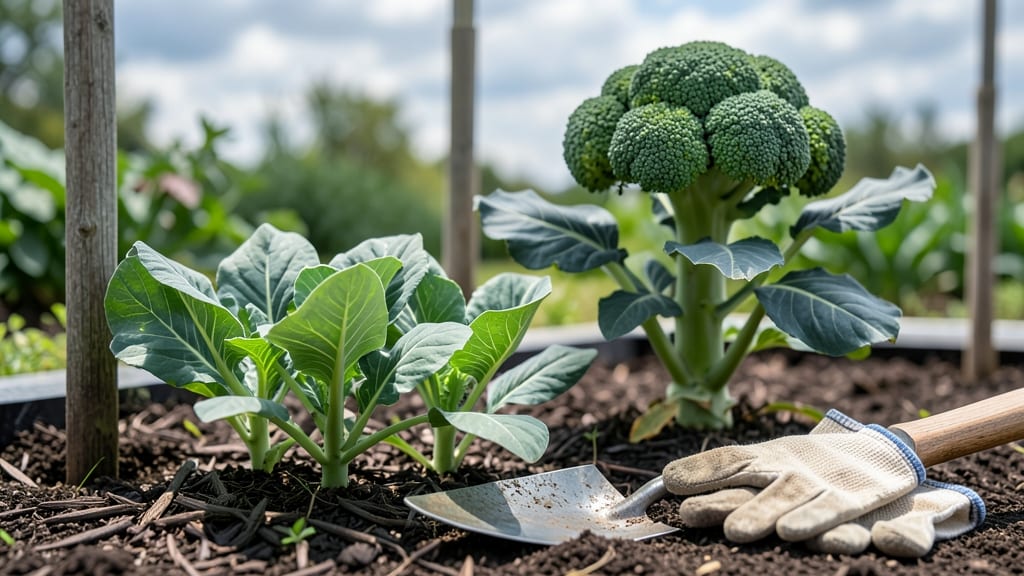
To plant broccoli in Kentucky, aim for 4-6 weeks before your last frost date—typically late March to early April for spring crops or late July for fall plantings.
Kentucky’s unpredictable frost dates can turn a thriving broccoli harvest into a risky gamble—but timing it right means juicy, disease-resistant heads straight from your garden.
In USDA zones 6a-7a, broccoli thrives when soil temps hit 40°F, and a well-timed spring planting rewards you with harvests by late May or early June.
Here’s how to sync your schedule with Kentucky’s climate, choose the best varieties, and avoid common pitfalls for a bountiful 🥦 yield.
Kentucky broccoli planting calendar: frost dates and optimal windows
Kentucky’s USDA zones 6a-7a create a unique challenge for broccoli growers—cool springs and warm summers demand precise timing to avoid frost damage or bolting.
The average last frost date hovers around April 15, but microclimates in the Bluegrass Region can push this back by 1-2 weeks compared to Appalachian areas. Understanding these windows ensures your broccoli thrives, not just survives.
For spring planting, broccoli seeds or seedlings should hit the soil 4-6 weeks before your last frost. In Kentucky, that means starting in early March for most gardeners.
Fall planting offers a second chance—seeds go in late July to early August to mature before first frost (typically mid-October). Miss these windows, and you risk stunted growth or bitter, woody heads.
Here’s the frost-free probability breakdown that guides my planting schedule: Northern Kentucky (Zone 6a) has a 90% frost-free probability by April 20, while Southern Kentucky (Zone 7a) hits this milestone by April 5.
These dates aren’t just numbers—they’re your planting insurance policy against late frosts that can turn tender seedlings into crispy snacks overnight.
🌱
My go-to strategy for Kentucky gardeners is to plant broccoli in two waves: a main crop in early spring (March) and a succession crop in late summer (July). This double approach guarantees a harvest in May-June and again in September-October, even if one season underperforms.
For example, if your Zone 6a garden faces a late frost in April, the July planting acts as your safety net.
Soil temperature is just as critical as air temperature. Broccoli seeds won’t germinate well below 40°F, so I always check my soil thermometer before planting. In Zone
How to adjust planting for Kentucky’s microclimates and soil conditions
Kentucky’s diverse microclimates—from the warmer Bluegrass region to the cooler Appalachian highlands—mean your broccoli’s success hinges on local adjustments. The Bluegrass area (USDA Zone 6b-7a) enjoys earlier last frost dates (mid-April), while Appalachian elevations (Zone 5b-6a) often face late frosts until late April or May.
These differences can shift your planting window by 3-4 weeks, so knowing your specific zone is critical.
Soil conditions add another layer of complexity. Kentucky’s clay-heavy soils in western regions drain poorly, while loamy soils in central Kentucky offer better aeration. Most broccoli thrives in slightly acidic to neutral soil (pH 6.0-7.0), but Appalachian soils often test acidic (pH 5.0-6.0) due to pine forests.
Amending with lime or compost can help balance pH and improve drainage, especially in heavy clay areas.
Bluegrass Region (Zone 6b-7a) vs. Appalachian Highlands (Zone 5b-6a)
- ✅ Earlier planting: Start seeds indoors by late February or direct sow mid-March.
- ✅ Warmer microclimate: 10-14 days earlier frost-free than Appalachia.
- ✅ Soil type: Loamy, well-draining; amend with compost only if needed.
- ✅ Season extension: Use lightweight row covers to protect from late spring frosts.
- ❌ Later planting: Start seeds indoors by late March or direct sow late April.
- ❌ Cooler temps: 2-3 weeks later frost risk; wait for soil temps above 40°F.
- ❌ Heavy clay soil: Amend with sand + compost to improve drainage.
- ❌ Cold frames needed: Use heavy-duty cold frames for fall/winter harvests.
Bluegrass
Test pH: 6.0-7.0
Amend: Compost if needed
Appalachian
Test pH: 5.0-6.0
Amend: Lime + compost
To extend your harvest season, consider row covers or cold frames. In the Bluegrass region, lightweight floating row covers can push spring harvests 2-3 weeks earlier by trapping heat.
For Appalachian gardeners, unheated cold frames (with clear plastic lids) can protect broccoli through light frosts (28-30°F), allowing fall plantings to mature before winter.
For soil preparation, focus on organic matter. Work in 2-3 inches of compost or well-rotted manure before planting to improve water retention and nutrient availability. In clay-heavy areas, mix in coarse sand or perlite to prevent root rot.
A mulch layer (straw or shredded leaves) helps maintain even soil moisture and suppresses weeds—critical in Kentucky’s humid summers.
If your local frost dates are unpredictable, use heat-loving varieties like ‘Calabrese’ for spring and ‘De Cicco’ for fall. These tolerate warmer temperatures better than ‘Waltham 29’, which bolts quickly in heat. For Appalachian elevations, opt for ‘Packman’, a disease-resistant variety that handles cooler soils.
Remember: Kentucky’s humidity increases disease pressure, so avoid overhead watering. Use drip irrigation or soaker hoses to keep foliage dry, reducing fungal risks like downy mildew. With these adjustments, you’ll turn Kentucky’s challenging conditions into abundant, homegrown broccoli—just in time for your favorite meals! 🥦