
Vegetables
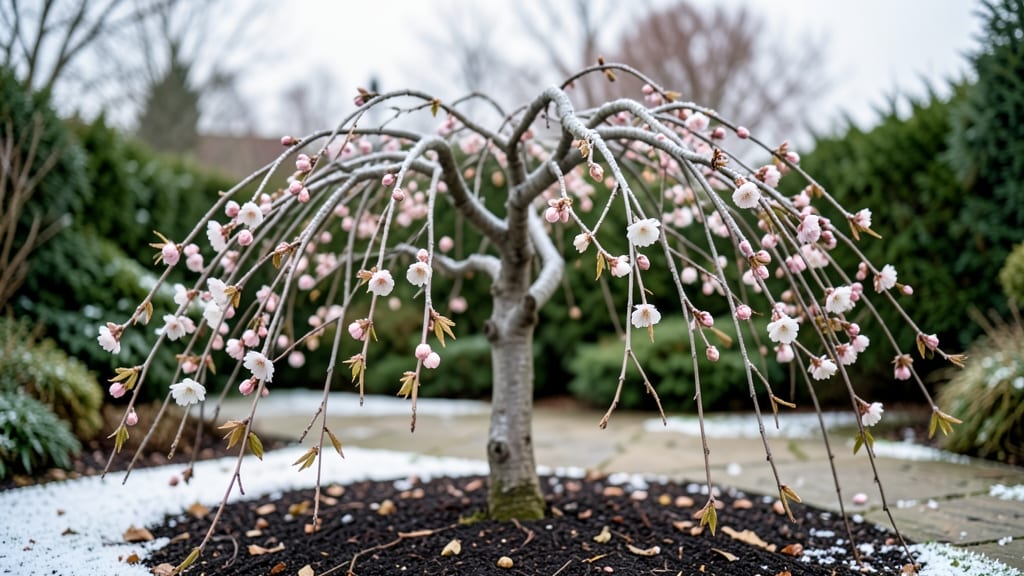
Your winter garden just got a stunning upgrade with the snow fountain weeping cherry—a tree that looks magical even when everything else is bare. 🌿 Unlike most trees that fade into dormancy, this cultivar keeps its charm with delicate branches that hold snow like a frosted chandelier, creating a breathtaking display against winter's stark backdrop.
The secret lies in its frost-resistant blooms and exfoliating bark that adds texture year-round. While others struggle in cold snaps, this tree thrives, offering subtle pink buds even in late winter.
Its weeping habit creates a graceful cascade, perfect for highlighting in snow-covered landscapes or as a focal point near walkways. Winter care is simple: mulch heavily to protect roots, and prune lightly in late winter before new growth appears. Avoid heavy pruning, as it can disrupt the tree's natural shape.
With minimal effort, you'll have a tree that becomes the star of your winter garden, offering beauty when most plants are dormant. This tree isn't just hardy—it's a winter garden statement piece.
Whether you're enhancing curb appeal or creating a serene winter retreat, the snow fountain weeping cherry delivers year-round interest with almost no extra work. Plant it now, and enjoy its magic through every season.
📚 In This Guide
- What you need
- Instructions
- Tips and common mistakes
- Wrapping up and next steps
What you need
- ● Weeping Cherry Tree (Prunus subhirtella 'Snow Fountain') – 1 mature tree (15-20 ft tall, 10-15 ft wide) or 3-5 smaller dwarf varieties (6-10 ft) for a clustered effect.
- ● Well-draining soil mix – 3 parts loamy soil, 1 part compost, and 1 part perlite or sand (for aeration).
- ● Organic mulch – 2-3 inches of shredded bark or pine needles to insulate roots.
- ● Slow-release fertilizer – 10-10-10 NPK ratio, 1 lb per tree (apply in early spring).
- ● Winter protection – Burlap wraps (for young trees) or frost cloth (for extreme cold zones).
- ● Garden shovel & trowel – For digging and transplanting.
- ● Wheelbarrow – To mix soil and transport materials.
- ● Pruning shears – Sharp, sterilized shears for shaping and deadheading.
- ● Measuring tape & stakes – To mark planting depth and spacing.
- ● Watering can or hose with nozzle – For deep, gentle watering.
- ● Reflective mulch – Helps deter pests and retain heat.
- ● Tree guard – Protects young trunks from critters.
- ● String lights or solar-powered accents – Enhances the winter magic at night!
- ● Soil pH test kit – Ensures optimal acidity (6.0-7.0 for cherries).
How to create a stunning winter display with snow fountain weeping cherry trees
Here's how to make these graceful trees the star of your winter garden.
🪴 Step 1: Select the Right Planting Location
Choose a spot that gets 6 hours of sunlight daily—even in winter, cherry trees need light to maintain their health. I always look for areas with good air circulation to prevent fungal diseases that can plague these delicate trees in damp winter conditions. Avoid low spots where cold air settles, as prolonged frost can damage the branches.
Test the soil drainage by digging a 12-inch deep hole. If water pools after 2 hours, amend with 2 inches of compost to improve drainage. The roots of Snow Fountain cherries hate soggy feet, and winter waterlogging can lead to root rot that kills the tree slowly over time.
☀️ Step 2: Prepare the Soil for Winter Resilience
Mix 3 cubic feet of organic matter (like compost or well-rotted manure) into the planting hole to improve soil structure. This helps the tree establish strong roots before winter sets in. I like to add a handful of bone meal for phosphorus—it encourages root growth and helps the tree store energy for spring blooms.
Spread a 2-inch layer of mulch (like wood chips or shredded bark) around the base, keeping it 6 inches away from the trunk. This insulates the roots from temperature swings and retains moisture during winter thaws. Just avoid piling mulch against the trunk—it can trap moisture and cause rot.
🌱 Step 3: Plant at the Correct Depth and Stake for Stability
Place the tree so the graft union (the bump near the base) sits 2-3 inches above soil level. This prevents the union from being buried, which can cause the tree to produce suckers or weaken its structure. Backfill with native soil, tamping gently to remove air pockets but not compacting too tightly.
Stake the tree if needed—weeping cherries have a wide, spreading canopy that can make them top-heavy in winter winds. Use 2 stakes on opposite sides, tied loosely with soft fabric strips to avoid damaging the bark. Remove the stakes after 1 year to let the roots strengthen naturally.
⏰ Step 4: Winter Watering and Protection Strategies
Water deeply once a month during winter if there’s no snow cover—just enough to keep the soil from drying out completely. You’ll know it’s time when the top 2 inches of soil feel dry. Overwatering in winter can suffocate roots, so always check before adding more moisture.
Wrap the trunk with tree guard or burlap to protect it from winter sun scald, which happens when cold bark is exposed to sudden warmth. I also tie the branches together loosely to prevent them from breaking under heavy snow or ice. This keeps the tree’s elegant shape intact for spring.
🌿 Step 5: Prune and Fertilize for Next Season’s Blooms
Prune in late winter (just before buds swell) to remove dead, crossing, or weak branches. Cut just outside the branch collar to encourage fast healing. I never prune more than 25% of the canopy at once—this ensures the tree has enough energy to support its signature weeping habit and abundant spring flowers.
Apply a balanced fertilizer (like 10-10-10) in early spring to replenish nutrients lost over winter. A light application—just ½ cup per tree—gives the tree a gentle boost without overstimulating new growth too early. This sets the stage for the stunning white spring blooms that make Snow Fountain cherries so special.
Tips & tricks for perfect winter weeping cherry displays
Here's what nobody tells you about keeping these delicate beauties thriving through winter's toughest challenges.
Sunlight Secret: The 6 hours of daily sunlight in Step 1 is non-negotiable—these trees need winter light to maintain their health. I've seen trees in shadier spots struggle with weak growth and sparse blooms. If your yard doesn't get full sun, consider placing the tree where it gets morning sun and afternoon shade, which still provides that crucial light exposure.
Drainage Test: That 2-hour water test in Step 1 reveals everything about your soil. If water disappears quickly, your soil drains too fast and needs more organic matter. If it pools, you're dealing with compacted soil that needs immediate compost amendment. I've fixed many winter waterlogging problems by adding 2 inches of compost and mixing it into the top 6 inches of soil—not just the planting hole.
Mulching Strategy: The 2-inch mulch layer in Step 2 works wonders, but placement matters. I've seen people pile mulch right against the trunk, which actually causes rot. Always keep that 6-inch gap—it prevents moisture buildup while still insulating roots. For extra protection in harsh winters, add a thick layer of straw mulch on top of your regular mulch in late fall.
Pruning Precision: When you prune in Step 5, focus on removing branches that cross or grow inward—they create weak spots that freeze damage can exploit. I like to make cuts just outside the branch collar, then seal the wounds with pruning sealant. This prevents sap loss and reduces the risk of disease entering through fresh cuts in winter's damp conditions.
Pro Tips for Snow Fountain Weeping Cherry In Winter
- Here's what nobody tells you about keeping these delicate beauties thriving through winter's toughest challenges.
- Sunlight Secret: The 6 hours of daily sunlight in Step 1 is non-negotiable—these trees need winter light to maintain their health.
- Drainage Test: That 2-hour water test in Step 1 reveals everything about your soil.
Frequently asked questions
Can snow fountain weeping cherry trees survive harsh winters?
These trees are bred for cold hardiness, typically thriving in USDA Zones 5-8. Their Prunus serrulata lineage means they handle frost and snow beautifully—just ensure they’re planted in well-draining soil and avoid heavy mulch near the trunk to prevent rot.
When is the best time to plant them for winter blooms?
Fall planting (October-November) is ideal! The roots establish before winter, while the tree remains dormant. For spring planting, aim for early March—just before buds swell—to give the tree time to root before blooming season. Pro tip: Water deeply after planting to reduce transplant shock.
How do I keep the branches from breaking under snow?
Weeping branches are delicate but resilient. To prevent damage:
- Gently shake off snow after storms (use a soft broom or hands).
- Prune in late winter to remove weak growth and improve structure.
- Consider a lightweight burlap wrap for young trees in heavy-snow regions.
Will they bloom in winter, or do I need to wait for spring?
Some varieties (like ‘Kanzan’ or ‘Shirofugen’) can bloom late winter/early spring if planted in a sheltered, sunny spot. For guaranteed winter interest, pair them with Hellebores or Winter Jasmine—their pink buds add color even before blooms open!
What’s a low-maintenance alternative if I don’t want to deal with pruning?
Try dwarf weeping cherries like ‘Snowgoose’ (only 10–15 ft tall) or ‘Pink Perfume’. They require minimal pruning and still offer dramatic winter silhouettes. For zero-fuss options, consider ornamental grasses (like Miscanthus) or evergreen shrubs like Boxwood.
Why are my leaves turning brown—is it frost damage or disease?
Brown leaves are often normal in winter (dormancy), but check for:
- Crispy edges = Frost or windburn (harmless if new growth appears in spring).
- Black spots or slime = Bacterial canker (prune infected branches sterilized shears and disinfect cuts with copper fungicide).
- Yellowing = Overwatering (let soil dry slightly between waterings in winter).
Wrapping up and next steps
Transforming your winter garden into a breathtaking snow fountain of weeping cherry blooms is simpler than you think—and the rewards are magical! 🌸❄️ These frost-resilient trees bring color, texture, and life to chilly months, proving that winter gardens can be just as stunning as their spring counterparts.
Whether you’re a seasoned gardener or a beginner, the key is patience, proper care, and a little creativity.
Ready to take the next step? Start by sketching your design or visiting a local nursery to pick the perfect weeping cherry variety for your climate. Then, roll up your sleeves—your winter masterpiece awaits! 🌿