
Watering
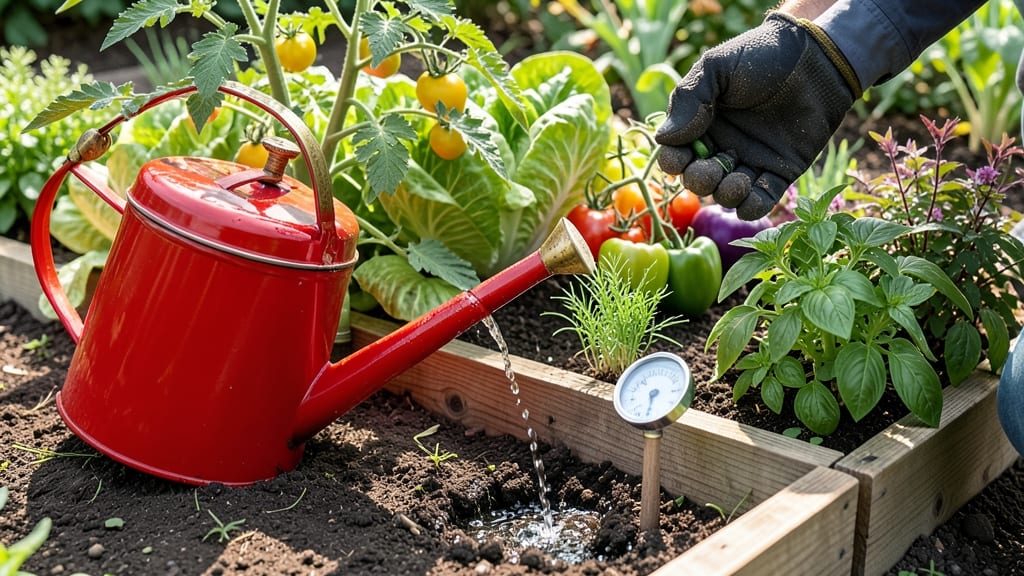
Watering your vegetable garden the right way keeps 🥬 thriving and your harvest bountiful—but figuring out how often is trickier than you’d think.
Watering your vegetable garden too much or too little can mean the difference between a thriving harvest and wilted disappointment—so how do you find that perfect balance?
Most gardeners guess, but the truth is, your soil type, climate, and even the plants themselves dictate the ideal schedule. A sandy plot drains fast, while clay holds moisture for days, and tomatoes need deep soaks while lettuce prefers frequent shallow drinks.
In this guide, I’ll break down the science of soil moisture, share my foolproof finger-poke test, and give you a tailored watering plan for every common vegetable—so you never over- or under-water again.
How often to water vegetables based on soil type and climate
Finding the right watering schedule for your vegetable garden isn’t just about guessing—it’s about understanding your soil type and climate zone. Sandy soil drains too quickly, while clay holds moisture like a sponge, and your local humidity or heat changes everything.
Without the right approach, you risk root rot from overwatering or drought stress from underwatering, both of which can ruin your harvest.
Most gardeners make the mistake of sticking to a rigid schedule (like "water every other day") without adjusting for these factors. Instead, think of watering as a dynamic process that changes with the seasons and your garden’s unique conditions.
For example, tomatoes in sandy soil during a 90°F heatwave need daily deep watering, while lettuce in clay soil might only need watering every 5 days in cool, damp weather.
To simplify, I’ve broken down the science-backed watering frequencies for the three main soil types—sandy, loamy, and clay—plus how to adjust for hot/dry vs. cool/moist climates. This ensures your vegetables get the consistent moisture they need without wasting water or risking disease.
Here’s the key rule: Water deeply and infrequently rather than shallowly every day. Deep watering encourages roots to grow downward, making plants more resilient. Aim for 1-2 inches of water per week, but always check your soil first—because that “rule” changes based on what’s happening in your garden.
Watering Frequency by Soil Type & Climate
| Soil Type | Climate | Watering Frequency | Depth per Watering | Adjustments |
|---|---|---|---|---|
| Sandy | Hot/Dry | Every 1-2 days | 6-8 inches | Mulch heavily; water early morning |
| Sandy | Cool/Moist | Every 3-4 days | 4-6 inches | Reduce if rain exceeds 1 inch/week |
| Loamy | Hot/Dry | Every 2-3 days | 4-6 inches | Use drip irrigation for consistency |
| Loamy | Cool/Moist | Every 5-7 days | 3-5 inches | Skip if rain is frequent |
| Clay | Hot/Dry | Every 3-5 days | 3-4 inches | Avoid waterlogging; test soil moisture |
| Clay | Cool/Moist | Every 7-10 days | 2-3 inches | Monitor for fungal diseases |
*Adjust based on plant type (e.g., leafy greens need more frequent watering than root veggies).
Let’s start with sandy soil, which drains water faster than a sieve. In hot/dry climates, you’ll need to water your vegetables every 1-2 days to keep the top 6-8 inches of soil moist. The key here is to mulch heavily with straw or wood chips to slow evaporation.
I’ve seen peppers and eggplants thrive in sandy soil when given this treatment, but they wilt dramatically if skipped during heatwaves.
On the opposite end, clay soil holds onto moisture like a sponge, which can lead to root rot if you’re not careful. In cool/moist climates, clay soil might only need watering every 7-10 days, but you’ll need to test soil moisture before watering.
Stick your finger 2 inches deep—if it’s damp, wait. If it’s dry, water deeply but avoid puddles. Carrots and beets do well in clay as long as you don’t overwater.
Now, let’s talk loamy soil, the gardener’s goldilocks—it drains well but retains moisture. In hot/dry climates, loamy soil can handle watering every 2-3 days, while cool/moist conditions might only require watering every 5-7 days.
This is where drip irrigation shines, as it delivers water directly to the roots without wasting it on evaporation. I’ve had tomatoes and cucumbers flour
The perfect soil-moisture test: when to water without guessing
Guessing when to water your vegetable garden can lead to soggy roots or parched plants—neither of which will give you that bountiful harvest you're dreaming of.
Instead of relying on a rigid schedule, I’ve learned to trust the soil-moisture test, which gives me real-time data about what my plants actually need. This method works for every vegetable type, from leafy greens to fruiting plants, and adapts to your local climate.
The best part? You don’t need fancy tools to start. A simple finger-poke test or a few visual cues from your plants can tell you exactly when to reach for the hose.
I’ve perfected this technique over years of gardening, and it’s saved me from both overwatering and underwatering disasters. Let’s dive into the steps so you can master it too.
How to Test Soil Moisture in 5 Simple Steps
-
Step 1: Choose the Right Time
Test soil in the morning (after dew has evaporated) or evening (before nightfall). Avoid midday when soil may appear drier due to heat. -
Step 2: Stick Your Finger In
Insert your index finger 1-2 inches deep into the soil near your plant’s base. This mimics the depth where most vegetable roots absorb water. -
Step 3: Check Moisture Level
- Dry: Soil crumbles easily (water immediately).
- Moist: Soil sticks slightly to your finger (wait 1-2 days).
- Wet: Soil feels damp and clumps (hold off on watering).
-
Step 4: Use Visual Cues
Pair the test with plant signals:- Wilting leaves (especially in afternoon) = needs water.
- Yellowing leaves (not from pests) = often overwatered.
- Dull, limp foliage = thirsty roots.
-
Step 5: Adjust for Your Plants
Leafy greens (lettuce, spinach) like consistent moisture—test daily in heat. Root veggies (carrots, beets) prefer drier soil—test every 3 days. Fruiting plants (tomatoes, peppers) need deep, infrequent watering—test 2 inches deep.
For a more precise approach, invest in a moisture meter—they’re game-changers for container gardens or sandy soils where moisture evaporates quickly. I use one for my tomato plants in raised beds, and it’s cut my watering time in half while keeping my harvest thriving.
The meter reads moisture levels in real-time, so you’re never left guessing whether your peppers or cucumbers are getting just the right amount.
Don’t overlook the visual cues your plants give you. For example, tomato leaves that curl upward in the afternoon often signal thirst, while lettuce turning bitter or bolting means it’s either too hot or too dry.
Pairing these signs with your soil test ensures you’re addressing the root cause—not just reacting to symptoms. Over time, you’ll develop an intuition for what your garden needs.
Remember, watering depth matters more than frequency. Aim to water 1-2 inches deep per session, especially for deep-rooted veggies like carrots or potatoes. Shallow watering encourages roots to stay near the surface, making plants more vulnerable to drought.
I’ve seen firsthand how deep watering leads to sturdier plants that bounce back from heatwaves. Combine this with mulch, and you’ll retain moisture while suppressing weeds—it’s a win-win.
Start testing your soil moisture today, and you’ll soon notice the difference in your garden’s health. Your zucchini will vine stronger, your green beans will snap taller, and your herbs will stay fragrant and perky.
The key is consistency: check regularly, adjust as seasons change, and trust your plants to tell you what they need. Happy gardening!