
Vegetables
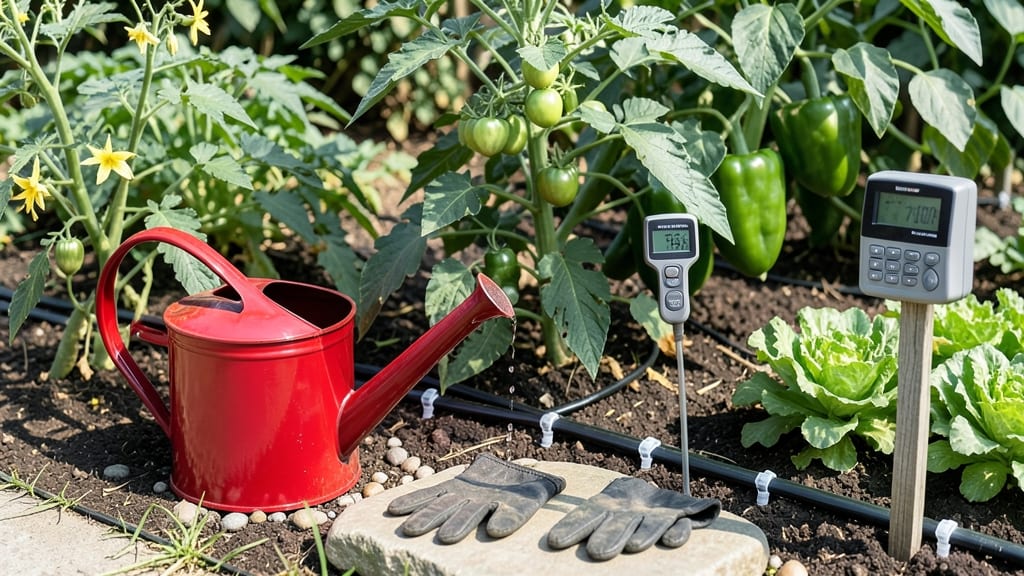
This watering guide for vegetables thrives when watered with precision—not guesswork. 💧 My first garden failed because I drowned the lettuce and starved the tomatoes, but now I’ve cracked the code for consistent moisture that produces bold, flavorful harvests every season.
The secret lies in understanding how deep roots need water, when surface soil dries, and how each plant drinks differently.
Start with a simple tool: your finger. Stick it 1-2 inches into the soil—if it feels dry, it’s time to water. Most vegetables need 1-1.5 inches of water per week, but tomatoes and peppers crave deep, infrequent drinks (think drip irrigation), while leafy greens prefer shallow, frequent sips.
Seasonal shifts matter too: summer heat demands morning watering to prevent evaporation, while spring showers mean you can skip a day.
You’ll spot overwatering when leaves yellow or wilt despite wet soil, and underwatering when edges curl or plants sag by noon. The goal is steady moisture, not soggy soil or dusty roots.
A mulch layer keeps moisture locked in, cutting water use by up to 30% while protecting tender stems from temperature swings.
This schedule works for raised beds, in-ground plots, and containers—just adjust for your soil type (sandy drains faster, clay holds moisture longer). Master this, and you’ll grow vegetables that taste like summer, not store-bought blandness. Let’s get those roots drinking right.
📚 In This Guide
- What you need
- Instructions
- Tips and common mistakes
- Wrapping up and next steps
What you need
- ● Watering can (5-gallon capacity) – Ideal for targeted watering without over-saturation.
- ● Hose with adjustable nozzle – For larger gardens; opt for a gentle spray setting.
- ○ Drip irrigation kit (optional but recommended) – Saves time and delivers water directly to roots. Look for low-flow emitters (0.5–2 GPH).
- ● Soaker hoses (10–20 ft lengths) – Perfect for row crops like tomatoes or peppers.
- ○ Moisture meter (optional) – Ensures you’re watering at the right depth (aim for 1–2 inches of soil moisture).
- ● Timer for irrigation system (if using drip/hose) – Automate watering cycles (e.g., 10–30 minutes per session).
- ● Well-draining soil – Amend with compost if needed (aim for loamy texture).
- ● Mulch (straw, wood chips, or grass clippings) – Retains moisture and reduces evaporation (apply 2–3 inches).
- ● Morning watering schedule – Best time to minimize evaporation and fungal risks.
- ● Know your veggies’ needs – Leafy greens (e.g., lettuce) need 1 inch/week; root crops (e.g., carrots) prefer deep, infrequent watering.
Step-by-Step instructions for watering vegetables like a pro
Mastering vegetable watering means healthy plants and bigger harvests—here's how to get it right.
💧 Step 1: Understand Your Vegetable's Unique Needs
Not all vegetables have the same thirst. Leafy greens like spinach and lettuce need consistent moisture, while root crops like carrots and potatoes prefer deeper, less frequent watering. I always group plants with similar needs together—this makes irrigation efficient and prevents over- or underwatering. For example, tomatoes and peppers need about 1-1.5 inches of water per week, while basil thrives with 1 inch daily during hot weather.
Check soil moisture by sticking your finger 1-2 inches deep. If it feels dry, it's time to water. Sandy soil drains faster, so you'll need to water more frequently, while clay holds moisture longer. I keep a small notebook by my garden to track which plants need water and when—it's a game-changer for consistency.
☀️ Step 2: Water at the Right Times for Maximum Efficiency
Timing matters just as much as amount. Water in the early morning (6-9 AM) to reduce evaporation and fungal diseases. Avoid evening watering—wet leaves overnight create the perfect conditions for blight. I set a timer on my phone for my morning routine, which includes watering the garden before the sun gets too intense. This also helps prevent water stress during the hottest part of the day.
Use a rain gauge or tuna can to measure rainfall. If you've had ½ inch or more of rain in the past 24 hours, skip watering entirely. Overwatering is just as harmful as underwatering—it leads to root rot and weak plants. I keep a simple rain gauge near my garden to track precipitation, and it's saved me from overwatering more times than I can count.
🌱 Step 3: Use the Right Technique for Deep, Effective Watering
Shallow watering encourages shallow roots, which makes plants more vulnerable to drought and heat stress. Instead, water deeply and infrequently to encourage roots to grow downward. For most vegetables, aim to water until the soil is moist 6-8 inches deep. You can test this by inserting a long screwdriver or soil probe—if it comes out clean, you've watered enough.
Use a soaker hose or drip irrigation system for the most efficient watering. These deliver water directly to the soil, reducing evaporation and preventing foliar diseases. I invested in a simple drip system last season, and it cut my watering time in half while keeping my plants healthier. If you don't have a system, water at the base of plants rather than overhead to minimize waste and disease risk.
⏰ Step 4: Adjust for Weather, Season, and Growth Stage
Your watering schedule isn't set in stone—it changes with the seasons and weather. During hot, dry periods, you may need to water daily, while cooler months might only require watering every 3-5 days. Young seedlings need more frequent watering to keep soil moist but not soggy, while established plants can handle longer dry spells. I always increase watering during flowering and fruiting stages, as plants need extra moisture to support these energy-intensive processes.
Mulch heavily around your vegetable plants to retain moisture and regulate soil temperature. Organic mulch like straw or wood chips breaks down over time, adding nutrients to the soil. I apply a 2-3 inch layer of mulch around all my vegetables, and it's made a noticeable difference in how often I need to water. Mulch also suppresses weeds, which compete with your vegetables for water and nutrients.
🌿 Step 5: Watch for Signs of Overwatering and Underwatering
Yellowing leaves, wilting despite moist soil, and mushrooms growing in your garden are all signs of overwatering. If you see these, cut back on watering and improve drainage by amending the soil with compost or sand. Underwatering shows up as crispy leaf edges, wilting that doesn't recover after watering, and stunted growth. I always check the soil moisture before watering—if the top inch is dry, it's usually time to water.
Adjust your approach based on what you observe. If your tomatoes are cracking, they're getting too much water too quickly. If your peppers are dropping flowers, they might need more consistent moisture. Pay attention to the specific needs of each vegetable, and don't be afraid to experiment with your watering schedule. Keeping a garden journal helps track patterns and refine your technique over time.
Tips & tricks for precision vegetable watering
These game-changing insights will help you transform your garden from struggling to thriving—without wasting a drop.
Soil Type Matters: The 1-2 inch soil moisture check in Step 1 works for most gardens, but sandy soils need special attention. If your soil drains like a sieve, water twice as often but only apply half the recommended amount each time. For clay-heavy soil, you can stretch watering intervals by 25-30% since moisture lingers longer. I've seen gardens with identical water schedules fail completely because of unaddressed soil differences—don't let this be yours.
Timing is Everything: That 6-9 AM window in Step 2 isn't arbitrary—it's when evaporation rates are lowest and plants can absorb moisture most efficiently. If you must water later, aim for mid-morning (before 11 AM) rather than afternoon. I once watched a neighbor water at 4 PM during a heatwave, and their tomatoes wilted by noon the next day. The plant simply couldn't keep up with the demand after that late watering.
Deep Watering Hack: For the 6-8 inch deep watering in Step 3, I've found the "screwdriver test" works best with a clean, dry screwdriver. Push it in at a 45-degree angle—if it slides in easily, you've hit the moisture mark. Pro tip: Water in stages if needed. Apply half the water, wait 10 minutes for it to soak in, then add the rest. This prevents runoff and ensures maximum absorption.
Mulch Layer Strategy: That 2-3 inch mulch layer in Step 4 does more than retain moisture—it regulates temperature. In summer, mulch can keep soil 5-10°F cooler than bare soil, which is crucial for root health. I've noticed my carrots and beets stay crisp longer when properly mulched. For best results, apply mulch after watering so it doesn't wick moisture away from the soil during initial application.
Pro Tips for Watering Guide For Vegetables
- These game-changing insights will help you transform your garden from struggling to thriving—without wasting a drop.
- Soil Type Matters: The 1-2 inch soil moisture check in Step 1 works for most gardens, but sandy soils need special attention.
- Timing is Everything: That 6-9 AM window in Step 2 isn't arbitrary—it's when evaporation rates are lowest and plants can absorb moisture most efficiently.
Frequently asked questions
Got questions about keeping your veggies hydrated just right? You’re not alone!
Here are answers to the most common watering woes—plus pro tips to avoid over- or under-watering.
How often should I water my vegetables?
Most vegetables need 1–1.5 inches of water per week, including rainfall. Check soil moisture daily—stick your finger 1–2 inches deep. Leafy greens (like lettuce) need frequent, shallow watering, while root crops (carrots, potatoes) prefer deep, infrequent soaks. Adjust for heat: water early morning in summer to reduce evaporation.
What’s the best time of day to water vegetables?
Water in the early morning (5–9 AM) to minimize evaporation and fungal risks. Avoid evening watering, as damp foliage overnight can lead to blight. If you must water later, aim for the soil (not leaves) and let it dry by nightfall. Pro tip: Drip irrigation or soaker hoses deliver water directly to roots, saving time and effort!
My vegetable plants look wilted—what should I do?
Wilting can mean overwatering (yellow leaves, mushy stems) or underwatering (crispy edges, dry soil). First, check the soil: If it’s soggy, pause watering and improve drainage. If dry, water deeply and mulch to retain moisture. For heat stress, provide shade cloth and water at the base. Morning wilting (that recovers by afternoon) is normal in hot weather!
Can I use rainwater or tap water for vegetables?
Both work, but rainwater is ideal—it’s naturally soft and free of chlorine/fluoride. If using tap water, let it sit out for 24 hours to dissipate chlorine. Avoid well water with high salt or mineral content (test it first). For container gardens, rainwater reduces salt buildup. Just ensure your water source is clean and free of contaminants!
What’s the difference between overhead watering and drip irrigation?
| Overhead Watering | Drip Irrigation |
|---|---|
|
|
Best for most veggies: Drip irrigation or soaker hoses. Use overhead only for seedlings or cooling plants in extreme heat.
How do I adjust watering for extreme heat or cold?
In heatwaves, water 2–3 times per week (deep soaks) and mulch to retain moisture. In cold snaps, reduce frequency—soil stays damp longer. For frost-sensitive plants (like tomatoes), water before the freeze to protect roots. Group heat-lovers (peppers, cucumbers) together to create a microclimate. Always monitor soil, not just weather forecasts!
Wrapping up and next steps
Mastering the art of watering your vegetables is all about consistency, observation, and timing—and you’ve got the tools to make it happen! 🌱 Whether you’re a seasoned gardener or just starting out, these precision schedules will help your plants thrive while saving you time and effort.
Remember, healthy soil and the right watering habits are your secret weapons for a bountiful harvest.
Ready to put your newfound knowledge into action? Grab your watering can, check your garden’s needs, and start watering with confidence! 💦 For extra inspiration, explore seasonal planting guides or join gardening communities to share your progress. Happy growing!