
Vegetables
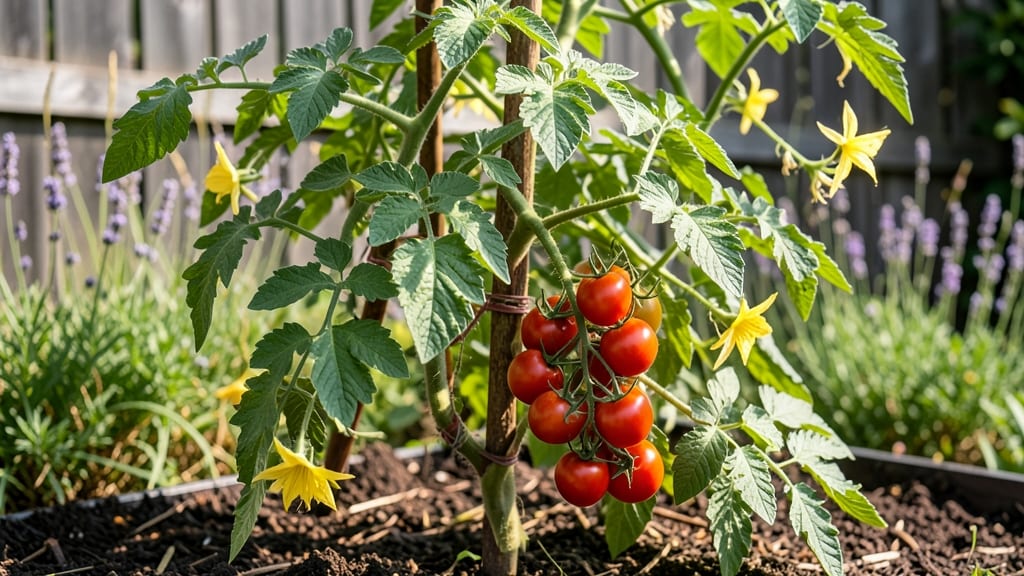
Growing German Johnson tomatoes transforms your garden into a showstopper with their striking pink-and-green stripes and cold-hardy resilience. 🌱 I planted mine last spring and watched them outperform every other variety in my zone 4 garden—bold flavor and all.
These heirlooms aren't just pretty; they thrive where other tomatoes bolt, producing heavy yields even when summer lingers cool.
The secret starts with timing: sow seeds indoors 6-8 weeks before your last frost, then transplant after soil warms to 50°F. German Johnsons need full sun (6+ hours daily) and rich, well-draining soil—think compost mixed into the top 12 inches.
Stake them early (they grow 4-5 feet tall) to prevent sprawling, and water at the base 1 inch per week, never wetting leaves to avoid disease.
By midsummer, you'll harvest 2-3 pound fruits with a sweet-tart balance that rivals heirloom favorites. The plants keep producing until frost, and saved seeds stay true. Prune suckers regularly to focus energy on fruit, and watch for hornworms—handpick them before they strip the leaves.
With proper care, one plant feeds a family for weeks.
Perfect for northern gardens, containers, or early-season planting. These tomatoes prove cold climates can grow showstopping produce without compromise. Ready to grow yours?
📚 In This Guide
- What you need
- Instructions
- Tips and common mistakes
- Wrapping up and next steps
What you need
- ● Seeds or Seedlings: 3–5 German Johnson tomato seeds (or 3–5 healthy seedlings from a reputable nursery).
- ● Growing Containers or Garden Space: For containers: 5-gallon pots or larger (at least 18" deep) with drainage holes.
- ● For in-ground: Full sun (6–8+ hours/day) and well-draining soil.
- ● Potting Mix: High-quality, organic potting mix (avoid garden soil—it compacts too easily).
- ● Fertilizer: Balanced organic fertilizer (e.g., 5-5-5 or 3-4-6 ratio) at planting.
- ● Tomato-specific fertilizer (high in potassium and phosphorus) mid-season.
- ● Support System: Cages (5–6 ft tall) or sturdy stakes (German Johnson can grow 5–7 ft tall!).
- ● Basic Gardening Tools: Trowel, pruners, gloves, and a watering can or hose with a gentle spray nozzle.
- ● Mulch: Straw or shredded leaves (2–3 inches) to retain moisture and suppress weeds.
- ○ Cold Frame or Row Cover: Optional but helpful for extending the growing season in chilly climates.
- ○ pH Test Kit: Optional but recommended—German Johnson prefers slightly acidic soil (pH 6.0–6.8).
Step-by-step instructions for growing Tomato German Johnson
This heirloom beauty handles cool weather better than most—here's how to coax its dramatic stripes to full glory.
🌱 Step 1: Start Seeds Indoors 8-10 Weeks Before Last Frost
German Johnson thrives with an early start. Fill 2-3 inch deep seed trays with sterile seed-starting mix and plant 1-2 seeds per cell at ¼ inch depth. The key is warmth—keep soil at 75-85°F using a seedling heat mat. You'll see sprouts in 7-14 days, though cooler homes may take longer.
Once seedlings emerge, remove the heat mat but maintain 14-16 hours of light daily with a grow light. Without enough light, stems grow leggy and weak. Watch for first true leaves (the second set after the initial cotyledons) before transplanting.
☀️ Step 2: Harden Off and Transplant After Frost
German Johnson tolerates cooler soil better than most varieties, but still needs hardening. Begin 2 weeks before transplanting by placing seedlings outside for 1-2 hours daily, gradually increasing exposure. By the time you plant, they should handle 50°F nights without wilting.
Choose a site with full sun (6-8 hours daily) and well-draining soil. Bury seedlings deeper than usual—up to the first true leaves—to encourage strong root systems. Space plants 24-36 inches apart; they need room to sprawl.
💧 Step 3: Water Deeply and Mulch to Retain Coolth
German Johnson performs best with consistent moisture. Water deeply 1-2 times weekly, ensuring 1-2 inches of soil stays damp. The striped fruits develop best when water isn't fluctuating wildly—soak the root zone thoroughly each time instead of light surface watering.
Apply 3-4 inches of mulch (straw or shredded leaves work well) to keep soil cool and retain moisture. This variety dislikes heat stress, so mulch helps maintain even temperatures. You'll know you're doing it right when leaves stay deep green and crisp, not wilting by midday.
✂️ Step 4: Prune and Support for Heavy Fruit
German Johnson produces 1-2 pound fruits that need support. Install cages or stakes at planting—their indeterminate growth means vines will sprawl. Prune suckers (the shoots in the leaf axils) to direct energy to fruit production, but leave 2-3 main stems for maximum yield.
Remove lower leaves as the plant grows to improve airflow and prevent disease. The striped pattern develops best with good circulation. Harvest when fruits are fully colored and slightly soft to the touch—usually 70-80 days after transplanting.
🌿 Step 5: Extend Season with Row Covers or Cold Frames
This variety's cold tolerance lets you grow later into fall. Use floating row covers to protect from light frosts (28°F) or build cold frames for extended harvests. Remove covers during the day to prevent overheating, but keep them on at night.
German Johnson's stripes fade slightly with heat, so cooler conditions preserve their vibrant pattern. With proper care, you'll enjoy harvests well past when most tomatoes quit producing.
Tips & tricks for growing stunning German Johnson tomatoes
These practical insights will help you coax the most dramatic stripes and robust harvests from this cold-hardy heirloom.
Seedling Heat Secret: The 75-85°F soil temperature range during germination is non-negotiable for German Johnson. I've found that placing seed trays on a heating pad set to "warm" (around 80°F) creates more consistent results than heat mats alone. If your home runs cooler, consider using a small greenhouse propagator—it creates a more stable microclimate than a simple heat mat. Watch for condensation on the tray lid as a sign your seedlings are getting enough humidity.
Lighting Technique: Those critical 14-16 hours of light aren't just about duration—they're about intensity. I use a full-spectrum LED grow light placed just 4-6 inches above seedlings. If you notice stems stretching toward the light (a sign of etiolation), lower the light or increase the wattage. The first true leaves should appear compact and dark green, not elongated and pale. This is when you'll know your light setup is working properly.
Transplanting Depth Hack: Burying seedlings up to their first true leaves might seem counterintuitive, but it works wonders for German Johnson. The buried stem will develop additional roots along its length, creating a stronger plant that can handle cooler soils. Make a small trench around each plant after transplanting to encourage root growth outward into the surrounding soil. This technique is especially valuable in cooler climates where root development is slower.
Mulching Strategy: The 3-4 inches of mulch isn't just about moisture retention—it's about temperature regulation. In hot afternoons, mulch can keep soil temperatures 10°F cooler than bare soil. For German Johnson, which dislikes heat stress, this makes all the difference in preserving those vibrant stripes. I recommend applying mulch immediately after transplanting and replenishing it as it breaks down throughout the season. The goal is to maintain that cool, damp environment the plant thrives in.
Pro Tips for Tomato German Johnson
- These practical insights will help you coax the most dramatic stripes and robust harvests from this cold-hardy heirloom.
- Seedling Heat Secret: The 75-85°F soil temperature range during germination is non-negotiable for German Johnson.
- Lighting Technique: Those critical 14-16 hours of light aren't just about duration—they're about intensity.
Frequently asked questions
Got questions about growing the stunning Tomato German Johnson? You’re not alone! Here are answers to the most common queries—from planting to harvest—so you can grow this cold-hardy striped beauty with confidence.
How cold can German Johnson tomatoes tolerate?
This variety is famous for its cold resistance! German Johnson can handle light frosts (down to 28°F/-2°C) and thrives in cooler climates. Start seeds indoors 6–8 weeks before the last frost, then transplant after soil warms to 50°F/10°C. For extra protection, use row covers early in the season.
How long does it take to harvest German Johnson tomatoes?
Expect a 70–85 day harvest window from transplanting. Early blooms may set fruit quickly, but full ripening takes patience—especially in cooler weather. Prune suckers and provide cage support to speed up ripening and improve airflow. Harvest when fully colored and slightly soft to the touch!
Can I grow German Johnson in containers?
This variety adapts well to containers if you choose the right setup. Use a 5-gallon pot or larger (at least 18” deep) with well-draining soil. Place pots in full sun and water consistently—containers dry out faster. Dwarf or bush varieties (like ‘German Johnson Cherry’) are ideal for small spaces!
What pests should I watch for with German Johnson tomatoes?
Like all tomatoes, German Johnson can attract hornworms, aphids, and blight. Start with neem oil or insecticidal soap for early pest control. Improve airflow by pruning, and rotate crops yearly to prevent soil-borne diseases. If blight appears, remove affected leaves immediately and avoid overhead watering.
What’s a good alternative if German Johnson doesn’t thrive in my climate?
If your area is too hot or humid, try these cold-tolerant alternatives:
- ‘Stupice’ – Another striped heirloom with similar cold hardiness.
- ‘Glacier’ – A reliable early producer for short seasons.
- ‘Siberian’ – A Russian variety that handles frost and poor soil.
Wrapping up and next steps
Growing the Tomato German Johnson is a rewarding experience, especially for gardeners in cooler climates who crave bold, striped tomatoes that defy the heat.
With its cold-hardy nature and stunning appearance, this heirloom variety proves that great tomatoes don’t need scorching summers—just patience, the right soil, and a little love.
Whether you're a seasoned gardener or a curious beginner, your effort will be richly rewarded with juicy, flavorful slices that stand out at every picnic or salad bowl!
🌱 Ready to take the next step? Start by marking your calendar for early spring planting—your German Johnson tomatoes are waiting to thrive! Share your progress with fellow gardeners or experiment with sauces, salsas, or preserves to make the most of your harvest. Happy growing! 🍅✨