
Vegetables
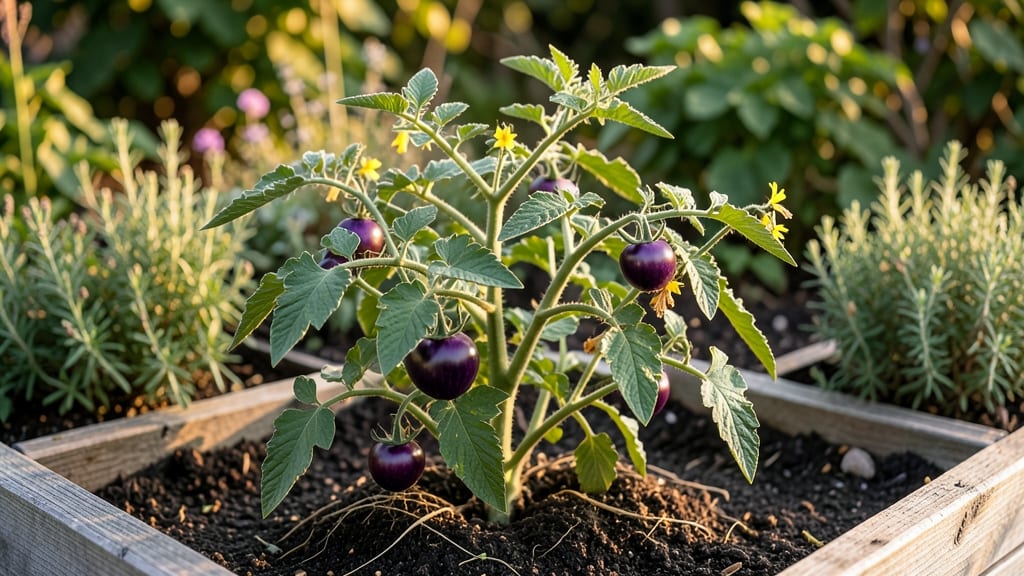
Growing purple tomatoes like Black Krim or Indigo Rose feels like uncovering a secret garden treasure—deep violet fruits that taste sweeter than red varieties. 🌿 These cold-hardy perennials thrive in pots, making them perfect for small spaces or unpredictable climates where annual tomatoes struggle.
Unlike their summer-loving cousins, these varieties handle cooler temperatures and even light frosts, giving you a longer harvest window.
The secret to their success lies in rich, well-draining soil mixed with compost—think of it as giving them a nutrient boost to handle their vibrant color and unique flavor. They need 6-8 hours of sunlight daily, but unlike typical tomatoes, they tolerate partial shade better, especially in hot climates.
A 5-gallon container per plant works well, and spacing them 18-24 inches apart prevents crowding while keeping the foliage airy.
Once established, these tomatoes reward you with deep purple fruits that stay firm longer than red varieties. Prune regularly to encourage bushier growth and remove suckers, but don’t overdo it—they’re more forgiving than heirlooms.
Water consistently at the base (not the leaves) to prevent disease, and you’ll harvest sweet, smoky-flavored tomatoes from early summer through fall. The color fades slightly when ripe, so pick them when they’re a rich plum hue.
Perfect for balcony gardens, fire escapes, or even indoor grow lights—these tomatoes prove you don’t need a traditional garden to grow something extraordinary. The key is patience: they take a little longer to mature than red varieties, but the payoff is worth it.
Try one this season and taste the difference!
📚 In This Guide
- What you need
- Instructions
- Tips and common mistakes
- Wrapping up and next steps
What you need
- ● Purple tomato seeds – Choose a cold-hardy variety like 'Indigo Rose' or 'Purple Cherokee' (5–10 seeds per pot).
- ● Large containers – 5-gallon pots (minimum 12" deep) with drainage holes (2–3 pots per plant).
- ● High-quality potting mix – Lightweight, well-draining blend (avoid garden soil).
- ● Slow-release fertilizer – Balanced (10-10-10) or tomato-specific (1 tbsp per pot).
- ● Compost or worm castings – 1 cup per pot for nutrients.
- ○ Mulch (optional but helpful) – Straw or shredded leaves to retain moisture.
- ● Trowel or small shovel – For planting and transplanting.
- ● Watering can or hose with gentle spray – Avoid overwatering!
- ○ Grow lights (optional) – If starting indoors before last frost (LED or fluorescent, 12+ hours/day).
- ● Plant supports – Cage or stakes (3–4 ft tall) as vines grow.
- ● Pruning shears – For trimming suckers and shaping plants.
- ○ pH test kit (optional) – Ideal soil pH: 6.0–6.8.
- ● 🌡️ Warmth matters: Purple tomatoes thrive in 60–85°F soil temps. Use black pots to absorb heat if needed!
- ● ✨ Sunlight: Place pots in full sun (6+ hours/day)—partial shade can reduce yield.
- ● 💧 Watering: Keep soil consistently moist but not soggy (drip irrigation works best).
Step-by-step guide to growing purple tomatoes in containers
Here's how I've learned to cultivate these stunning, cold-tolerant perennials successfully.
🌱 Step 1: Select the Right Variety and Container
Choose a purple tomato variety like 'Indigo Rose' or 'Black Krim'—these cold-hardy types thrive in pots and produce striking fruit. The container must be at least 12 inches deep with drainage holes to prevent root rot. I prefer fabric grow bags because they allow excess moisture to evaporate while still holding roots securely.
Place a 2-inch layer of gravel at the bottom for drainage, then add a 3-inch layer of lightweight potting mix enriched with compost. This ensures roots have both aeration and nutrients from the start. The reason for the gravel isn't just drainage—it also prevents soil from clogging the drainage holes over time.
☀️ Step 2: Plant and Position for Optimal Growth
Transplant your purple tomato plant when it has 4-5 true leaves and the soil is 60-70°F. Dig a hole twice as wide as the root ball but only as deep—burying too deeply can suffocate the stem. Gently loosen the roots if they're circling and place the plant so the top of the root ball sits ½ inch below the rim of the container.
Position the pot in a location that gets full sun (6-8 hours daily) but with afternoon shade in hot climates. Purple tomatoes need warmth to ripen fruit but can scorch in intense afternoon heat. I always place mine on a drip irrigation tray to keep soil consistently moist without overwatering.
💧 Step 3: Water and Fertilize for Maximum Yield
Water deeply every 2-3 days until the top 2 inches of soil feel dry—this encourages deep root growth. Purple tomatoes are drought-tolerant once established, but young plants need consistent moisture. I use a soaker hose to water at the base, avoiding wetting the leaves to prevent fungal diseases like early blight.
Fertilize with a balanced organic fertilizer (10-10-10) every 4-6 weeks during the growing season. Purple tomatoes are heavy feeders, so I also add a handful of compost to the soil surface monthly. Stop fertilizing after mid-summer to allow the plant to harden off for winter.
✂️ Step 4: Prune and Support for Healthy Growth
Prune suckers (the small shoots that grow between the main stem and branches) weekly to direct energy into fruit production. Purple tomatoes benefit from indeterminate pruning—remove any leaves touching the soil to prevent disease. I also tie the main stem to a 6-foot bamboo stake as it grows to support the heavy fruit.
When fruit appears, reduce pruning to avoid stressing the plant. Purple tomatoes need strong stems to hold their weight—if you see branches sagging, add a soft tie to the stake immediately. Harvest when fruit is fully colored but still slightly firm for best flavor.
⏰ Step 5: Overwinter and Prepare for Next Season
In fall, reduce watering as temperatures drop below 50°F. Purple tomatoes are perennial in USDA Zones 8-11, but in colder areas, mulch heavily with straw or leaves to protect roots. I wrap the pot in burlap and move it to a sheltered location like a garage or under eaves.
Prune back ⅓ of the plant in early spring before new growth begins. This encourages bushier growth and prevents overcrowding. Replenish the soil with fresh compost and fertilize lightly to kickstart the season. With proper care, your purple tomato plant will produce fruit for years to come.
Tips & tricks for perfect purple tomato growth in containers
These hard-won insights will help your cold-hardy purple tomatoes thrive year after year in pots.
Container Depth Matters: While the instructions specify a 12-inch minimum depth, I've found that 15-inch containers give roots more room to establish, especially for vigorous varieties like 'Black Krim'. The extra depth prevents roots from circling and becoming root-bound, which directly impacts fruit production. Use the extra space to add an additional 2 inches of compost-rich mix at planting time.
Soil Temperature Secret: The 60-70°F soil temperature range mentioned is critical for transplanting, but I've learned to check this by pressing my finger into the soil—it should feel warm like bathwater, not cool like a refrigerator. If your spring soil runs cooler, delay transplanting until nighttime temperatures consistently stay above 55°F. Cold soil stresses young plants and slows root establishment.
Pruning Precision: When pruning suckers weekly, I use a sharp pair of pruning shears to make clean cuts just above the leaf joint. This prevents tearing and reduces stress on the plant. For the main stem, I only tie to the stake when it reaches 3 feet tall—earlier support can restrict growth. The key is to balance airflow (remove crowded leaves) while maintaining the plant's structural integrity.
Overwintering Strategy: In colder zones, I go beyond the 50°F threshold by adding an extra layer of insulated bubble wrap around the pot before wrapping in burlap. This creates a thermal buffer that can protect roots down to 25°F for short periods. I also reduce watering to every 10-14 days once temperatures drop below 40°F to prevent root rot in dormant plants.
Pro Tips for The Purple Tomato
- These hard-won insights will help your cold-hardy purple tomatoes thrive year after year in pots.
- Container Depth Matters: While the instructions specify a 12-inch minimum depth, I've found that 15-inch containers give roots more room to establish, especially for vigorous varieties like 'Black Krim'.
- If your spring soil runs cooler, delay transplanting until nighttime temperatures consistently stay above 55°F.
Frequently asked questions
Got questions about growing and enjoying purple tomatoes? You’re not alone! Here are answers to the most common queries—whether you’re a first-time gardener or a seasoned green thumb.
Can purple tomatoes really grow in pots?
Purple tomatoes thrive in containers as long as the pot is at least 12–15 inches deep and has good drainage. Use a high-quality potting mix with added compost to support their vigorous growth. Just ensure the pot gets 6–8 hours of sunlight daily—they’re sun-worshippers!
Are purple tomatoes truly cold-hardy?
Yes, but with limits! While they’re more frost-tolerant than traditional tomatoes, they still prefer USDA Zones 5–10. In colder climates, grow them in pots and move them indoors or to a greenhouse when temps drop below 30°F. Mulch heavily in winter to protect roots.
How do I know when purple tomatoes are ripe?
Unlike red tomatoes, purple varieties ripen to a deep, rich purple color—sometimes with hints of pink or blue. They’ll also feel slightly softer and smell sweetly fragrant. If left on the vine too long, they may crack, so harvest when fully colored but still firm!
What can I do if my purple tomato plant gets leggy?
Leggy plants usually mean they’re stretching for light. Prune suckers (the small shoots in the leaf axils) and stake or cage the plant for support. Move it to a sunnier spot if possible, and consider a grow light if indoors. Overcrowded pots can also cause this—thin out lower leaves to improve airflow.
Can I substitute purple tomatoes in recipes?
Yes! Their flavor is sweeter and more complex than red tomatoes, making them perfect for salads, sauces, or salsas. Use them 1:1 in recipes, but note they may stain less visibly. For a unique twist, try roasting them—their color deepens beautifully!
Wrapping up and next steps
The purple tomato isn’t just a stunning addition to your garden—it’s a resilient, low-maintenance superstar that rewards patience with vibrant flavors and eye-catching harvests. Whether you’re growing it in pots or embracing its cold-hardy nature, this perennial gem proves that uncommon can be just as delicious (and easier!) than conventional.
Now that you’re armed with the right tools, tips, and troubleshooting tricks, it’s time to roll up your sleeves and plant that first seed.
🌱 Your next step? Start small—grab a pot, a few seeds, and let curiosity (and maybe a little sunshine) do the rest. Who knows? You might just inspire your neighbors to join the purple tomato revolution. Happy growing! 🍅✨