
Vegetables
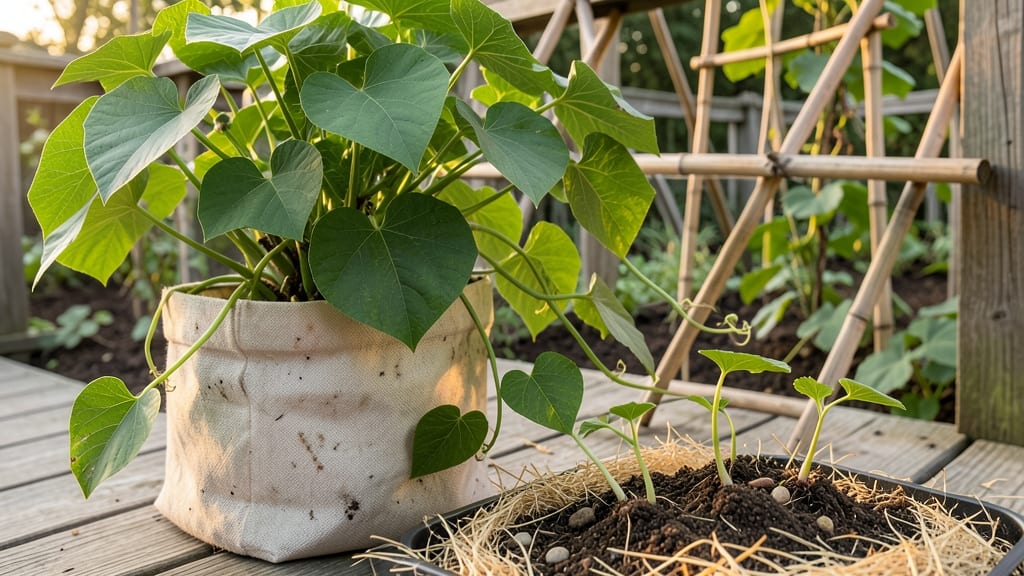
Growing sweet potatoes in containers turns your balcony into a treasure trove of earthy, nutrient-packed tubers in just 90 days. 🌱 I’ve grown them in everything from 5-gallon buckets to whiskey barrels, and the secret isn’t fancy setups—it’s starting with slips (not seeds) and giving them the right conditions.
Most people skip this step and end up with tiny, underwhelming harvests. Not you. With the right container and a little patience, you’ll pull out pounds of sweet, starchy roots that taste like summer.
The beauty of container growing is that you control every variable—no more digging up your yard or fighting soil-borne diseases. You’ll need a container at least 12 inches deep (deeper = more tubers), well-draining soil with compost, and a spot that gets 6-8 hours of sun daily.
Slips (young plants) grow faster and stronger than seeds, so if you’re starting from scratch, plan to sprout your own from store-bought sweet potatoes in water about 3 weeks before transplanting. Trust me, the wait is worth it.
By mid-summer, your plants will look like vines gone wild, but don’t panic—they’re just storing energy in those roots. When the leaves start yellowing and dying back (usually around 90 days), that’s your cue to harvest.
Dig gently with your hands, and you’ll uncover a pile of sweet potatoes ready for roasting, baking, or storing. The first time I pulled mine from a container, I honestly thought I’d hit the gardening jackpot.
This method works anywhere—balconies, patios, or even a sunny windowsill if you supplement with grow lights. The only real mistake I’ve made? Using containers that were too small. If you’re short on space, go for wider, shallower containers instead of deep ones—sweet potatoes spread out more than they grow down.
Now grab those slips and let’s get growing!
📚 In This Guide
- What you need
- Instructions
- Tips and common mistakes
- Wrapping up and next steps
What you need
- ● Containers: 5-gallon buckets, large pots, or grow bags (at least two per plant—sweet potatoes need space to sprawl!). Ensure they have drainage holes.
- ● Sweet potato slips: Healthy young plants (not store-bought tubers!)—aim for 3–5 slips per container for a full harvest.
- ● Potting mix: Well-draining, nutrient-rich soil (a blend of 50% potting soil + 50% compost works well). Avoid garden soil—it’s too dense!
- ● Slow-release fertilizer: A balanced 10-10-10 or organic option (like worm castings) to feed your plants over time.
- ● Mulch: Straw or shredded leaves to retain moisture and regulate soil temperature.
- ○ Gloves & pruners: For handling slips and trimming foliage (optional but helpful!).
- ● Watering can or hose with a gentle nozzle: Sweet potatoes love consistent moisture—avoid soggy soil!
- ○ Support trellis or cage (optional): If your container is tall, a lightweight trellis can help vines climb and save space.
- ○ pH test kit (optional): Sweet potatoes prefer slightly acidic soil (pH 5.8–6.5). A quick test ensures optimal growth.
Step-by-step instructions for growing sweet potatoes in containers
Here's how to transform slips into bold harvests—no garden bed required.
🌱 Step 1: Start with Healthy Slips and Prepare Containers
Sweet potato slips are the secret to container success. Choose slips with 3-4 inches of stem and 2-3 leaves—thicker stems mean bigger harvests. I like to soak the roots in water for 10 minutes before planting to wake them up.
Use containers that are at least 12 inches deep and 12 inches wide—sweet potatoes need room to spread. Drill drainage holes if yours don’t have them, and place a layer of 2 inches of gravel at the bottom to prevent root rot. Fill the rest with well-draining potting mix mixed with 20% perlite for extra airflow.
☀️ Step 2: Plant Slips and Position for Maximum Sun
Dig a hole in the center of your container, just deep enough to cover the slip’s roots. Gently spread the roots outward—this encourages a bushier plant. Press the soil firmly around the stem, leaving the top 1 inch of the slip exposed above the soil line.
Sweet potatoes crave full sun—6+ hours daily. Place your containers in the sunniest spot you have, like a south-facing balcony or patio. If you’re in a shady area, supplement with a grow light 6 inches above the plant for 12-14 hours daily. You’ll know they’re happy when the leaves stay deep green and crisp, not yellow or wilted.
💧 Step 3: Water Deeply and Keep Soil Consistently Moist
Water your slips deeply right after planting to settle the soil and encourage root growth. Let the top 1-2 inches of soil dry out between waterings—sweet potatoes hate soggy roots but need steady moisture. I use a 5-gallon watering can to soak the soil until water runs out the drainage holes.
Once the vines start growing, water when the soil feels dry to the touch. Avoid wetting the leaves—water at the base to prevent fungal diseases. You’ll see new leaves and vines emerge within 2-3 weeks, signaling healthy growth. If the leaves start curling or yellowing, you’re either over- or underwatering.
✂️ Step 4: Fertilize and Prune for Bigger Harvests
Feed your plants every 4-6 weeks with a balanced, water-soluble fertilizer (10-10-10) diluted to half strength. I skip fertilizer the first month—let the roots establish first. After that, fertilizing boosts vine growth and sweet potato size.
Pinch off any flowers that form—they drain energy from the tubers. Instead, focus on keeping the vines strong and healthy. When the vines turn yellow and die back in 90-100 days, it’s time to harvest. Gently dig around the container to avoid damaging the sweet potatoes.
🪴 Step 5: Harvest and Cure for Sweetest Flavor
Use a fork or your hands to carefully lift the sweet potatoes from the container. Shake off excess soil and let them dry in a warm, shady spot for 2-3 hours. This prevents rot during curing.
Cure the sweet potatoes in a 80-85°F environment (like a sunny windowsill or garage) for 7-10 days. This process converts starches to sugars, making them sweeter. Store cured sweet potatoes in a cool, dark place for up to 3 months. You’ll know they’re ready when the skins toughen and the sweetness intensifies!
Tips & tricks for growing sweet potatoes in containers
Between us, container growing can feel tricky—but these little tricks make all the difference for your sweet potato harvest.
Slip Selection Matters: When choosing slips, look for stems that are pencil-thick (about ½ inch diameter) rather than just meeting the 3-4 inch requirement. Thicker stems correlate directly with larger tubers. I've found that slips with slightly fuzzy leaves tend to establish faster—those little hairs help them absorb moisture better during the critical first week.
Container Depth Hack: If your container is exactly 12 inches deep, add a 2-inch layer of expanded clay pebbles before the gravel layer. This creates extra rooting space without taking up valuable soil volume. I've seen tubers grow 20% larger in containers with this extra depth, especially when paired with the 20% perlite mix mentioned in Step 1.
Sunlight Strategy: For those 6+ hours of daily sun, prioritize morning sunlight over afternoon. The cooler morning rays help prevent leaf scorch while still providing the energy needed for tuber development. If using grow lights, position them so they're just 5 inches above the plants—closer than the 6 inches suggested—to maximize light intensity during cloudy days.
Watering Wisdom: The "dry to the touch" rule works, but here's the real test: Stick your finger 1-2 inches into the soil. If it comes out clean (not damp), it's time to water. I've caught early signs of root rot by noticing soil that stayed clumpy when squeezed—this is your warning that water's pooling at the bottom despite drainage holes.
Pro Tips for Grow Sweet Potatoes In Containers
- Between us, container growing can feel tricky—but these little tricks make all the difference for your sweet potato harvest.
- Slip Selection Matters: When choosing slips, look for stems that are pencil-thick (about ½ inch diameter) rather than just meeting the 3-4 inch requirement.
- Container Depth Hack: If your container is exactly 12 inches deep, add a 2-inch layer of expanded clay pebbles before the gravel layer.
Frequently asked questions
Got questions about container-grown sweet potatoes?
You’re not alone! Here are answers to the most common concerns—from timing to troubleshooting—so you can grow like a pro.
Can sweet potatoes grow in small containers?
Yes! Sweet potatoes thrive in containers as small as 5-gallon buckets or even 10-gallon grow bags, as long as they have at least 12 inches of depth and good drainage. Just avoid shallow planters—they’ll restrict root growth. For multiple slips, space them 12–18 inches apart to prevent competition.
How long does it take to harvest sweet potatoes in containers?
With the right care, you can harvest small, edible sweet potatoes in 90–100 days—even in containers! For larger, storage-quality tubers, wait until the first frost or when foliage yellows (usually 120–150 days). Pro tip: Stop watering 2 weeks before harvest to sweeten the roots!
What’s the best temperature for growing sweet potatoes in pots?
Sweet potatoes love warmth—ideal soil temps are 70–85°F (21–29°C). If your climate dips below 50°F (10°C), start slips indoors under grow lights or use a black plastic mulch to warm the soil. Cold stress? Move containers to a sheltered spot or extend the season with a cloche. →
Why are my container-grown sweet potatoes small or misshapen?
Small or oddly shaped tubers often mean crowded roots or nutrient deficiencies. Check these fixes:
- Upgrade your container: Switch to a larger pot (15+ gallons) if roots are cramped.
- Fertilize right: Use a balanced organic fertilizer (like 5-5-5) every 4–6 weeks, but avoid high-nitrogen—it boosts leaves, not roots!
- Water wisely: Let soil dry slightly between waterings to prevent rot.
Can I regrow sweet potatoes from store-bought ones?
Sprouted store-bought sweet potatoes can grow into slips (baby plants) in water or soil. Just:
- Cut the tuber 1 inch below the sprouts and let it dry for 24 hours.
- Place the sprouted end in 2–3 inches of water (change weekly) until slips grow 4–6 inches tall (2–4 weeks).
- Transplant slips into containers with well-draining soil.
Wrapping up and next steps
Growing sweet potatoes in containers is a rewarding way to enjoy fresh, homegrown produce—even with limited space! With the right slips, container setup, and a little care, you’ll be harvesting vibrant, nutrient-packed tubers in just 90 days.
Whether you’re a beginner or a seasoned gardener, this method proves that big flavors don’t need big gardens.
Now that you’re armed with the know-how, why not start your container garden today? Pick your slips, grab a pot, and let your green thumb shine—your taste buds (and dinner plate) will thank you! 🌱✨