
Vegetables
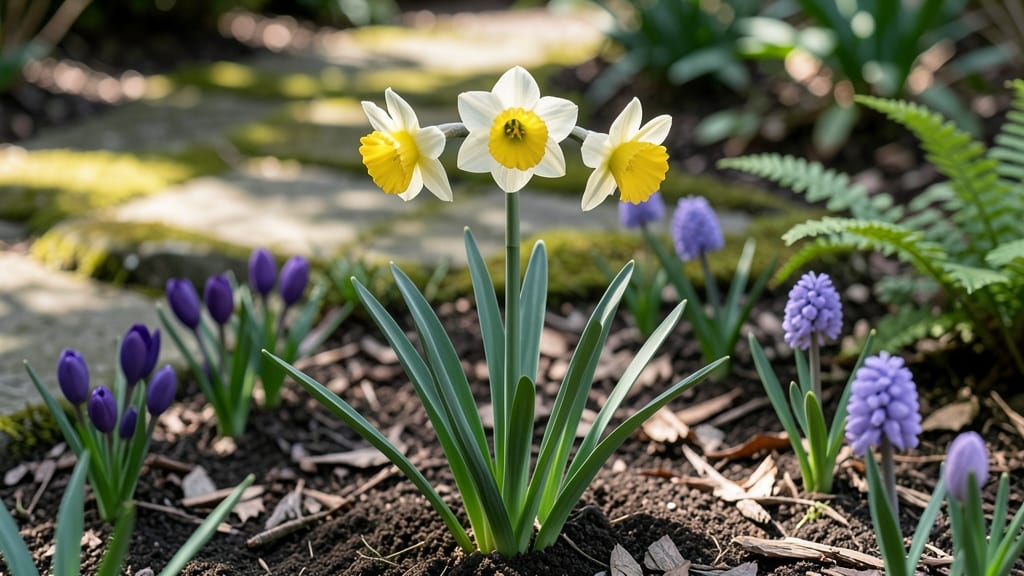
Daffodils defy winter with their cheerful yellow faces peeking through snow. 🌱 I've designed gardens where these hardy blooms anchor the whole look, creating spring color that feels like a promise after the gray months.
They're the unsung heroes of early-season gardens—tough as nails, easy to grow, and impossible to ignore when they burst into bloom.
The secret to stunning daffodil displays isn't complicated—it's about layering. Plant them in drifts of 5-7 bulbs for natural-looking clusters, then tuck in early-blooming perennials like hellebores or winter pansies to bridge the gap until daffodils take over.
For a cottage garden vibe, mix in crocus and grape hyacinths; for modern minimalism, pair them with ornamental grasses or boxwood edges. The key is keeping the colors coordinated but the textures varied.
By late spring, your daffodils will have done their job—announcing the season's arrival—while their foliage fades gracefully into the background. The real magic happens when you let them naturalize; within a few years, they'll multiply into a self-sustaining carpet of color that needs almost no maintenance.
Imagine walking past a border where daffodils, tulips, and peonies all share space without competing for attention—that's the kind of harmony we're creating here.
Works for any yard size, from a small front border to a sprawling cottage garden. The best part? These designs adapt to your existing landscape, whether you're starting fresh or just adding a few strategic bulbs to brighten up a dull corner. Let's get planting those early-season stars!
📚 In This Guide
- What you need
- Instructions
- Tips and common mistakes
- Wrapping up and next steps
What you need
- ● Daffodil bulbs: Choose Narcissus varieties (e.g., 'Tête-à-Tête,' 'Ice Follies,' or 'Minnow'). Buy 10–20 bulbs per 10 sq. ft. for a lush look.
- ● Well-draining soil: Amend heavy clay with 3–4 inches of compost or sand per sq. ft. to prevent bulb rot.
- ● Organic fertilizer: A 5-10-10 NPK blend (e.g., 1 lb per 10 sq. ft.) or bone meal (1 cup per 10 sq. ft.) for phosphorus.
- ● Mulch: 2–3 inches of shredded bark or straw to insulate bulbs in winter.
- ● Garden fork or tiller: For loosening soil to 8–12 inches deep.
- ○ Hand trowel or bulb planter: For precise planting (optional but helpful!).
- ● Measuring tape or string: To mark planting rows 4–6 inches apart.
- ● Watering can or hose with gentle spray: Daffodils hate soggy soil!
- ● Gloves and knee pads: Because gardening is hard work (but worth it!).
- ● Sunlight: Full sun (6+ hours/day) for best blooms. Partial shade (3–6 hours) works for woodland varieties.
- ● Timing: Plant bulbs in fall (Oct–Nov) in USDA Zones 3–10 for spring blooms.
- ○ Optional but fabulous: Decorative stones or edging to define borders.
- ● Slow-release fertilizer spikes for low-maintenance feeding.
- ● Companion plants like grape hyacinths or heuchera for layered color.
How to design a stunning daffodil garden that thrives all year
Here's how to create a bold, low-maintenance display that blooms early and keeps your garden lively even when everything else sleeps.
🌱 Step 1: Choose the Right Daffodil Varieties for Your Climate
Start by selecting daffodils that match your hardiness zone—some varieties handle Zone 3 winters while others need Zone 5+ protection. I always mix early bloomers like 'Tête-à-Tête' with mid-season 'Ice Follies' and late bloomers like 'Thalia' to stretch the show from late winter through spring. Check the bloom time on each bulb—you want a 6-8 week succession of color.
For year-round interest, pair daffodils with evergreen shrubs like boxwood or hellebores that fill gaps after blooms fade. The key is contrast: dark foliage makes pale daffodils pop, while silver foliage (like lamb's ear) makes deep yellows stand out. I like to sketch a rough layout first to visualize how colors will transition through the season.
☀️ Step 2: Select the Perfect Planting Location
Daffodils need 6+ hours of sunlight daily for strong blooms, but they tolerate partial shade in hot climates. The sweet spot is morning sun with afternoon shade—this prevents premature fading. Avoid low spots where cold air settles, as daffodils can rot if their roots stay too wet. I always plant mine on a slight slope or mound to improve drainage.
Consider nearby plants too. Bulbs like alliums and tulips make great neighbors, but avoid planting daffodils where spring-blooming bulbs have grown before—their diseases can linger. For a natural look, group 15-20 bulbs together in odd-numbered clusters. You'll see the most dramatic impact when they're massed rather than scattered.
🪴 Step 3: Prepare the Soil and Plant Correctly
Work in 2-3 inches of compost to improve drainage and fertility—daffodils hate soggy soil. Their roots need oxygen, so avoid heavy clay by amending with coarse sand or perlite if needed. Plant bulbs 6-8 inches deep (about twice their height) and 6 inches apart for a dense look. I use a bulb planter or trowel to make clean holes—messy planting leads to crooked stems later.
Plant with the pointed end up (the roots should face downward). If you're unsure, just plant them horizontally—they'll figure it out. After planting, water deeply to settle the soil. You'll know you've done it right when the soil surface looks firm but not compacted, and the bulbs sit at the correct depth without shifting when pressed.
✂️ Step 4: Maintain for Year-Round Beauty
Leave the foliage until it yellows completely—this feeds the bulb for next year's blooms. I mark daffodil spots with small flags or pebbles so I don't accidentally cut back too soon. After blooms fade, remove spent flowers but leave the stems. Mulch lightly with 2-3 inches of shredded bark in fall to protect roots from freeze-thaw cycles.
Fertilize in early fall with a low-nitrogen bulb food—this encourages strong root growth before winter. I avoid spring fertilization because daffodils don't need it. Watch for squirrels digging up bulbs—plant in wire mesh cages or use repellent if needed. With proper care, your daffodils will multiply and spread, creating natural drifts over time.
💧 Step 5: Extend the Season with Companion Plants
For continuous color, plant spring bloomers like bleeding heart or columbine near daffodils—they'll take over after daffodils fade. I also add late-summer bloomers like coneflowers or black-eyed Susans to fill the gap. The trick is layering heights: taller plants behind, medium-height daffodils in the middle, and low-growing perennials in front.
Consider adding ornamental grasses for texture—they sway beautifully in winter winds and provide contrast when daffodils aren't blooming. You'll create a garden that stays interesting from January through October with minimal effort. The best part? Daffodils come back year after year, getting stronger with each season.
Tips & tricks for perfect daffodil garden design
Creating a showstopping daffodil garden takes more than just dropping bulbs in the ground—here's what I've learned from years of trial and error to make your design truly thrive.
Variety Selection: The 6-8 week succession of blooms mentioned in Step 1 is your secret weapon for year-round color. I recommend buying bulbs from a reputable supplier that specifies bloom times—this ensures you'll have continuous interest from late winter through spring. Look for varieties labeled with their hardiness zones too; mixing Zone 3 and Zone 5 daffodils creates that perfect staggered bloom effect. For example, 'Tête-à-Tête' (early) paired with 'Ice Follies' (mid) and 'Thalia' (late) creates a natural progression that feels magical.
Planting Precision: When planting those bulbs 6-8 inches deep as mentioned in Step 3, use a bulb planter for perfect depth consistency—it's worth the small investment. I've found that planting on a slight slope (even just a 5-degree angle) dramatically improves drainage, especially in clay soils. For heavy clay gardens, mix in coarse sand or perlite as suggested, but don't overdo it—just enough to create pockets of air around the roots. The goal is to mimic natural woodland conditions where daffodils thrive.
Companion Plant Strategy: The companion plants mentioned in Step 5 deserve special attention. I've discovered that planting bleeding heart (Dicentra spectabilis) just behind your daffodils creates a stunning vertical contrast—their heart-shaped leaves emerge right as daffodils fade. For a dramatic effect, add ornamental grasses like Miscanthus sinensis 'Zebrinus' at the back of your border. These grasses provide winter interest and sway beautifully in spring breezes, framing your daffodils perfectly. The key is to plant grasses 12-18 inches behind your daffodils to avoid shading them.
Maintenance Secrets: That 2-3 inches of shredded bark mulch mentioned in Step 4 is your winter protector, but here's the trick: apply it after the first hard frost when soil temperatures drop below 40°F. This prevents freeze-thaw cycles from heaving bulbs out of the ground. And for those pesky squirrels, I've had success with a homemade repellent made from cayenne pepper and water sprayed around planting areas—it's non-toxic but effective. Remember, the foliage really does need to stay until it yellows completely; this is when the bulb stores energy for next year's blooms.
Pro Tips for Gardens With Daffodils
- Creating a showstopping daffodil garden takes more than just dropping bulbs in the ground—here's what I've learned from years of trial and error to make your design truly thrive.
- Variety Selection: The 6-8 week succession of blooms mentioned in Step 1 is your secret weapon for year-round color.
- Planting Precision: When planting those bulbs 6-8 inches deep as mentioned in Step 3, use a bulb planter for perfect depth consistency—it's worth the small investment.
Frequently asked questions
Got questions about designing your garden with daffodils? Here are some of the most common ones—plus expert answers to help you create a stunning, low-maintenance display that thrives all year!
When is the best time to plant daffodils for spring blooms?
Plant daffodil bulbs in fall, 6–8 weeks before the ground freezes (typically October–November in most U.S. zones). This gives roots time to establish before winter. For early spring color, choose tete-a-tete or Ice Follies varieties—they bloom first! Pro tip: Plant in well-draining soil to prevent rot.
Can daffodils survive harsh winters or extreme heat?
Daffodils are hardy perennials (zones 3–8) and handle winter freezes, but mulch lightly (2–3 inches) after planting to protect bulbs. In hot climates, they thrive with morning sun and afternoon shade. Avoid soggy soil—drought-tolerant once established, but water deeply after planting to encourage root growth.
How do I protect daffodils from squirrels, deer, or pests?
Squirrels and deer love daffodil bulbs! Deter them with:
- Chicken wire over bulbs until sprouts emerge (remove in spring).
- Repellent sprays (like Deer Out) applied to soil.
- Planting near thorny shrubs (e.g., barberry) as a natural barrier.
For slugs/snails, crushed eggshells or beer traps work wonders.
What plants pair well with daffodils for year-round interest?
Daffodils shine in layers! Try these complementary plants:
Season
Plant Pairings
Spring
Crocuses, hyacinths, hellebores (shade-tolerant).
Summer
Ornamental grasses (e.g., Miscanthus), catmint, or daylilies.
Fall/Winter
Evergreens (boxwood, holly), or Helleborus niger (Christmas rose).
Pro tip: Use fertilizer with low phosphorus (like 5-10-10) to avoid promoting weeds.
Why aren’t my daffodils blooming this year?
No blooms? Check these fixes:
- Too much shade? Move to full sun (6+ hours/day).
- Over-fertilizing? Daffodils thrive on low nutrients—skip spring fertilizer.
- Bulbs are too crowded? Divide clumps every 3–5 years in summer.
- Pests/disease? Inspect for squirrel damage or basal rot (remove affected bulbs).
Give it 2–3 years—young bulbs often take time to establish!
Wrapping up and next steps
Transforming your garden with daffodils is a joyful way to bring early spring cheer and year-round beauty—even through winter’s chill! 🌼 These hardy blooms not only defy frost but also add effortless elegance with minimal upkeep.
Whether you’re a seasoned gardener or just starting, their vibrant hues and resilience make them the perfect hero plant for any outdoor space.
Ready to plant your vision? Start small—pick a sunny spot, grab a few bulbs, and let nature do the rest. Soon, you’ll be rewarded with months of color and a garden that feels like a warm hug on cold days. Happy planting! 🌱