
Vegetables
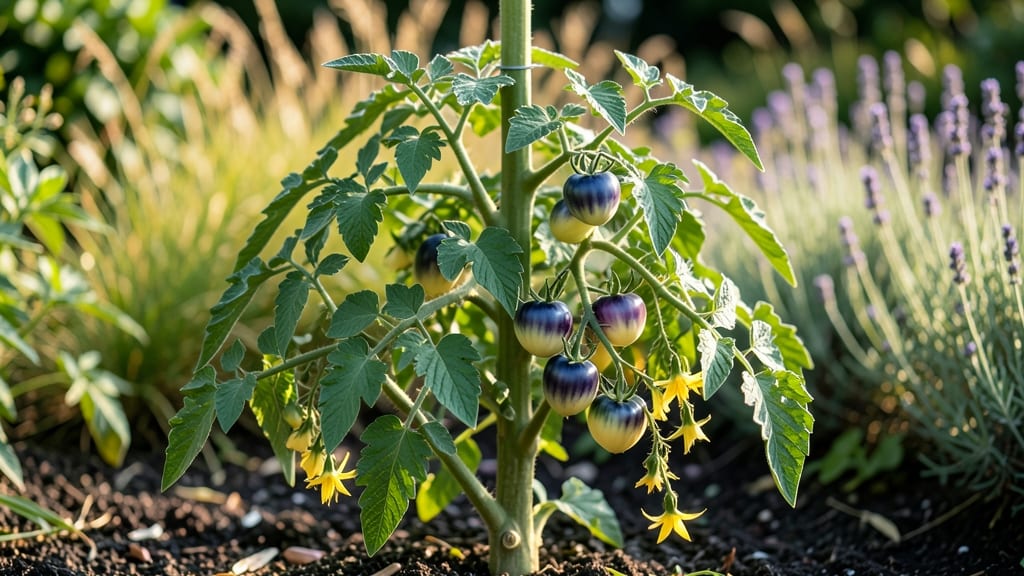
The Blue Cream Berries tomato steals the show with its stunning striped fruit and ability to regrow from roots—something most tomatoes can't do. 🌱 I've grown this variety for three seasons now, and it never fails to impress with its unique flavor and productivity.
The fruits start green, ripen to yellow with deep blue stripes, and taste like a sweeter, tangier heirloom tomato.
This tomato thrives in warm climates but can also grow in cooler regions with proper care. Plant in well-draining soil with plenty of sunlight, and space them about 24-36 inches apart to allow for sprawling vines.
The secret to their regrowth? Cut the stem just above the soil line after harvest, and you'll get a second flush of fruit in late summer.
Water consistently but avoid soggy soil, and fertilize lightly every few weeks with compost or balanced fertilizer. Prune suckers regularly to encourage stronger growth and better airflow, which helps prevent common diseases like blight. The flavor improves as the season progresses, making it worth the wait.
Harvest when the stripes fully develop and the fruit yields slightly to pressure. Store in a cool, dry place for up to a week, or preserve them in sauces, salsas, or fresh salads. The regrowth habit means you'll have tomatoes well into fall, extending your harvest season effortlessly.
📚 In This Guide
- What you need
- Instructions
- Tips and common mistakes
- Wrapping up and next steps
What you need
- ● Seeds or Seedlings: 1–2 packets of Solanum lycopersicum ‘Blue Cream Berries’ seeds (or 2–3 healthy seedlings from a nursery).
- ● Containers or Garden Bed: Containers: 5-gallon pots (2–3 per plant) with drainage holes, or fabric grow bags.
- ● Garden Bed: A sunny spot (6+ hours of sunlight) with well-draining soil (6–8 ft wide per plant).
- ● Potting Mix: 1 bag (1.5–2 cubic feet) of high-quality seed-starting mix or tomato-specific potting soil (sterilized to prevent disease).
- ● Fertilizer: Balanced organic fertilizer (e.g., 5-5-5 or 10-10-10) or compost (1 cup per plant at planting).
- ● Tools: Trowel or small shovel for transplanting.
- ● Watering can or hose with a gentle spray nozzle.
- ● Pruning shears (for trimming suckers and dead leaves).
- ● Stakes or cages (3–4 ft tall) to support vines.
- ● Mulch (straw or shredded leaves) to retain moisture and suppress weeds.
- ● Liquid fertilizer (e.g., fish emulsion or seaweed extract) for mid-season boosts.
- ● Row covers or shade cloth (if growing in hot climates to prevent sunscald).
- ● pH test kit (ideal soil pH: 6.0–6.8 for tomatoes).
- ● Grow lights (if starting seeds indoors before the last frost).
How to grow blue Cream Berries tomatoes from seed
These striped beauties grow like weeds and regenerate from roots—here's how to get them thriving.
🌱 Step 1: Start Seeds Indoors 6-8 Weeks Before Last Frost
Fill 2-3 inch deep seed trays with moistened seed-starting mix (not garden soil). I press it down lightly so the surface is firm but not packed—this prevents air pockets that slow germination. Plant 2 seeds per cell at a depth of about ¼ inch, then cover with a thin layer of additional mix.
Place the tray in a warm spot—75-85°F is ideal for germination. A seedling heat mat works wonders if your home runs cooler. Mist the surface lightly with water, then cover with a clear plastic dome or plastic wrap to retain moisture. You'll see sprouts in 7-14 days—watch for the first true leaves to appear before thinning.
💧 Step 2: Provide Light and Thin Seedlings
As soon as you see the first true leaves (not the initial seed leaves), remove the plastic cover immediately. These tomatoes need 14-16 hours of light daily—a south-facing window rarely gives enough intensity, so I use a grow light positioned 2-4 inches above the seedlings. Raise it as they grow to maintain that distance.
When seedlings have 2-3 sets of true leaves, thin to the strongest plant per cell. Use clean scissors to snip the weaker one at soil level—don't pull, or you'll disturb the roots of the remaining plant. Water gently from the bottom to avoid disturbing the soil around the roots.
☀️ Step 3: Harden Off and Transplant
Two weeks before your last frost date, begin hardening off the seedlings. Place them outside in a sheltered spot for 1-2 hours the first day, gradually increasing time over 10-14 days. You'll know they're ready when they tolerate a full day outside without wilting.
Transplant to the garden after all danger of frost has passed. Choose a location with full sun (at least 6-8 hours daily) and well-draining soil. Space plants 24-36 inches apart—these tomatoes grow large, and proper spacing prevents disease. Water deeply at the base to settle the soil around the roots.
🌿 Step 4: Support and Prune for Maximum Yield
Stake or cage each plant immediately after transplanting. Blue Cream Berries tomatoes grow tall and heavy with fruit, so strong support is a must. I use 6-foot stakes tied with soft plant ties that won't cut into the stems as they grow.
Prune suckers (the shoots that grow in the leaf axils) regularly to direct energy to fruit production. Remove any leaves that touch the soil to prevent disease. You'll see new growth spurt after pruning—this is your signal that the plant is recovering and focusing on producing those beautiful striped fruits.
⏰ Step 5: Harvest and Save Seeds for Next Year
Harvest when fruits reach full size but are still firm—about 2-3 inches in diameter. The striped pattern becomes more pronounced as they ripen. I pick in the morning when temperatures are cooler, which preserves flavor and texture.
For seed saving, let a few fruits fully ripen on the vine. Slice them open, scoop out the seeds and gel, then ferment the mixture in a jar for 3-5 days. Rinse the seeds, dry them thoroughly, and store in a cool, dark place. These tomatoes regrow easily from roots—simply cut a stem with roots attached, plant it in soil, and water well. You'll have a new plant in just a few weeks!
Tips & tricks for growing stunning blue Cream Berries tomatoes
Here's what nobody tells you about growing these heirloom beauties—tricks that'll make all the difference.
Seed Starting Wisdom: The 75-85°F germination temperature range is critical—any cooler and you'll wait weeks for sprouts. I've found that placing the seed tray on top of my refrigerator (which stays around 80°F) works perfectly without needing a heat mat. After germination, keep the soil consistently moist but not soggy—overwatering in this stage causes damping off, a fungal disease that kills seedlings overnight.
Lighting Strategy: Those 14-16 hours of daily light are non-negotiable for strong seedlings. If using a grow light, I set a timer to automatically turn it on at 6am and off at 8pm—this mimics natural daylight cycles. For the first week, keep the light 2-3 inches above seedlings, then raise it as they grow. The goal is to prevent leggy, weak stems that can't support themselves later.
Transplanting Secret: When hardening off, I start with just 1 hour on the first day rather than the suggested 1-2 hours—this gives seedlings a gentler transition. Watch for signs of stress like curled leaves or wilting; if you see these, move them back inside immediately. The 24-36 inch spacing might seem generous, but it's essential for airflow that prevents fungal diseases like early blight.
Pruning Insight: I prune suckers aggressively—anything growing below the first flower cluster gets removed completely. This might seem harsh, but it forces the plant to focus energy on fruit production rather than leaf growth. After pruning, I always water deeply to help the plant recover quickly. The new growth that appears after pruning is your sign that the plant is thriving and ready for more fruit.
Pro Tips for Blue Cream Berries Tomato
- Here's what nobody tells you about growing these heirloom beauties—tricks that'll make all the difference.
- Seed Starting Wisdom: The 75-85°F germination temperature range is critical—any cooler and you'll wait weeks for sprouts.
- Lighting Strategy: Those 14-16 hours of daily light are non-negotiable for strong seedlings.
Frequently asked questions
Got questions about growing Blue Cream Berries tomatoes?
You’re not alone! Here are answers to the most common queries—from troubleshooting to timing—so you can enjoy these striped beauties with confidence.
How long does it take for Blue Cream Berries tomatoes to grow from seed?
If you’re starting from seed, expect 60–85 days to harvest, depending on your climate. These tomatoes thrive in warm weather, so plant after the last frost (typically late spring to early summer). For faster results, opt for transplants from a nursery—just be sure to harden them off first!
Can I regrow Blue Cream Berries tomatoes from scraps like other heirlooms?
This variety is a regrower’s dream—simply save the roots (the base where stems meet) after harvesting, rinse them, and replant in fresh soil. Keep them moist and in bright, indirect light until regrowth appears. Pro tip: Use a small pot first to monitor progress before transplanting outdoors.
Why aren’t my Blue Cream Berries tomatoes ripening? What’s going wrong?
Common culprits include cool temperatures (below 55°F/13°C), lack of sunlight, or overwatering. Try these fixes:
- Move plants to a sunnier spot (6–8 hours of light daily).
- Ensure soil drains well—soggy roots = stress.
- Use a black plastic mulch to warm the soil.
- If flowers drop off, hand-pollinate with a paintbrush.
Are Blue Cream Berries tomatoes good for containers? What size pot do I need?
Yes! These compact plants love containers—just use a pot at least 12–18 inches deep with drainage holes. A 5-gallon bucket works well for one plant. Add potting mix with compost and a cage or trellis to support vines. Bonus: Container-growing makes them easier to protect from pests or late frosts!
How do Blue Cream Berries tomatoes taste? Are they sweet or tangy?
These striped gems are sweet, tangy, and slightly tart—like a cross between a cherry tomato and a sun-ripened heirloom. Their juicy, meaty texture makes them perfect for salads, sandwiches, or snacking fresh. Flavor peaks when fully colored (deep red with blue-green stripes), but they’re still tasty when green!
What are some easy alternatives if Blue Cream Berries are hard to find?
If you’re struggling to locate seeds or plants, try these similar regrowable varieties:
- Indigo Rose – Deep purple stripes, sweet flavor.
- Green Zebra – Classic striped heirloom, tangy-sweet.
- Solar Fire – Bright orange-red, prolific producer.
- Black Cherry – Small, sweet, and easy to regrow.
Wrapping up and next steps
Growing blue cream berries tomatoes is a rewarding journey that brings vibrant, striped fruits to your table—and even lets you regrow them from scraps! 🌱 These unique beauties thrive with the right care, from well-draining soil to consistent watering.
Whether you're a seasoned gardener or just starting, their resilience and flavor make them a must-try.
Ready to dive in? Start by sprouting a seedling from a leftover root or planting seeds this season. Share your harvest with friends or experiment with recipes—your garden’s next adventure is just a seed away! 🍅✨