
Vegetables
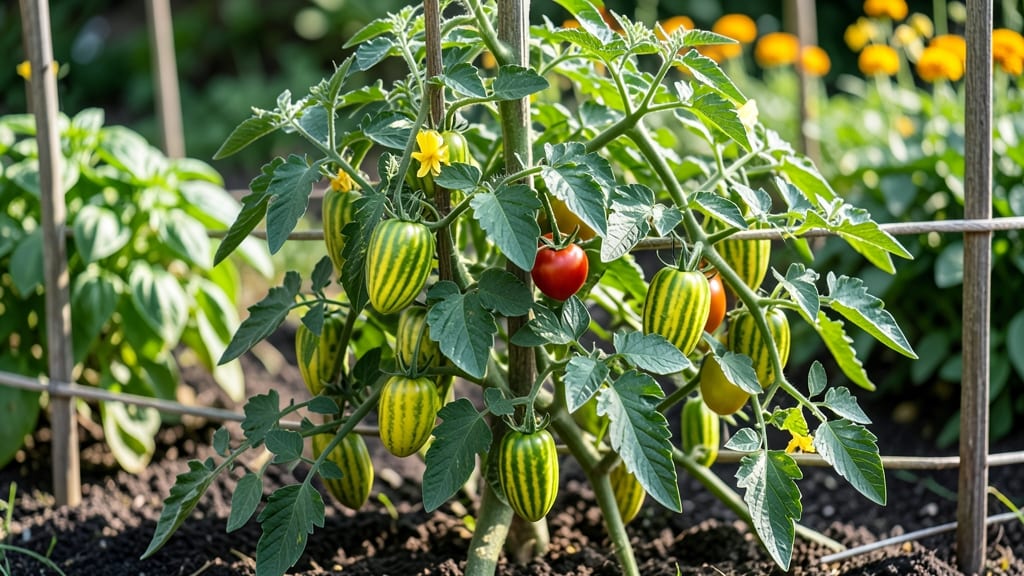
Growing green zebra tomatoes transforms your garden into a showstopper with striped green fruit that tastes like sunshine. 🌱 I learned the hard way that these aren't your average tomatoes—they need just the right balance of sunlight, water, and soil to thrive.
The payoff? A plant that keeps producing all season and even regrows from cuttings if you take care of it.
The key to success starts with well-draining soil rich in compost and a spot that gets 6-8 hours of sunlight daily. These tomatoes love warmth but hate soggy roots, so raised beds or containers work perfectly.
Once planted, keep the soil consistently moist but never waterlogged—this prevents cracking, a common issue with their thick skins.
When you finally harvest those striped beauties, you'll taste why gardeners obsess over them: sweet, tangy, and packed with flavor. The first fruits appear around 70-80 days after transplanting, but the plant keeps surprising you with new clusters all summer. Prune regularly to encourage airflow and more fruit production.
Even better? Snip a healthy stem, root it in water, and you've got a free new plant. These tomatoes grow in zones 4-10, making them versatile for most climates.
With proper care, you'll end up with more tomatoes than you know what to do with—and neighbors asking for cuttings of their own.
📚 In This Guide
- What you need
- Instructions
- Tips and common mistakes
- Wrapping up and next steps
What you need
- ● Green zebra tomato seeds or cuttings – Start with Solanum lycopersicum 'Green Zebra' seeds or healthy cuttings (3-4 inches long) for propagation.
- ● Containers or garden bed – Use 5-gallon pots (for cuttings) or a sunny garden plot with well-draining soil (pH 6.0–6.8).
- ● Potting mix – A high-quality, seed-starting mix (sterile and light) or a blend of peat moss, perlite, and compost (3:1:1 ratio).
- ● Grow lights or sunlight – 6–8 hours of direct sunlight daily (or a full-spectrum grow light for indoor starts).
- ● Watering can or spray bottle – Keep soil consistently moist (not soggy) during germination.
- ● Fertilizer – A balanced, organic fertilizer (e.g., 10-10-10 or compost tea) or fish emulsion for transplanting.
- ● Trellis or stakes – 5–6 foot tall stakes or a tomato cage to support vines as they grow.
- ● Pruning shears – For trimming suckers and shaping plants.
- ● Rooting hormone – Speeds up cutting propagation (e.g., clonex gel).
- ● Mulch – Straw or shredded leaves to retain moisture and suppress weeds.
- ● Soil moisture meter – Ensures optimal hydration without overwatering.
- ● Insect netting – Protects against pests like hornworms or aphids.
- ● Calcium supplement – Prevents blossom-end rot (e.g., crushed eggshells or calcium nitrate).
Step-by-Step instructions for growing green zebra tomatoes
Here's how to grow these striped beauties—plus the secret to propagating them endlessly from cuttings.
🌱 Step 1: Start Seeds Indoors for Early Growth
Green Zebra tomatoes need a long growing season, so I start seeds indoors 8-10 weeks before your last frost date. Fill 2-3 inch deep seedling trays with sterile seed-starting mix (not garden soil—it's too dense). Plant seeds ¼ inch deep, two per cell, since germination rates vary. Cover lightly with mix and mist gently until evenly moist.
Place trays under a grow light (or in a sunniest window) and keep soil at 75-80°F for fastest germination. You'll see sprouts in 7-14 days—watch for the first true leaves (those are the second set, after the initial seed leaves). Once they appear, remove the weaker seedling from each cell to prevent competition.
☀️ Step 2: Harden Off and Transplant Outdoors
Two weeks before your last frost, begin hardening off seedlings by placing them outside in partial shade for 1-2 hours the first day. Gradually increase exposure over 10-14 days, moving them to direct sun by day 7. This toughens stems and prevents shock when transplanted.
Choose a full-sun spot with well-draining soil (Green Zebras hate soggy roots). Transplant after soil warms to 60°F and night temps stay above 50°F. Bury stems deeper than usual—up to the first true leaves—to encourage strong root growth. Space plants 24-36 inches apart (they grow large!).
💧 Step 3: Water and Feed for Maximum Fruit
Water deeply once a week, aiming for 1 inch of water per week (more in extreme heat). Water at the base to keep leaves dry—this prevents fungal diseases like early blight. Mulch with 2-3 inches of organic mulch to retain moisture and suppress weeds. You'll know moisture is right when the top inch of soil feels dry to touch.
Feed every 2-3 weeks with a balanced fertilizer (like 10-10-10) until flowers appear, then switch to a tomato-specific fertilizer (high in phosphorus) to boost fruit production. Prune suckers (those little shoots in leaf axils) regularly to direct energy to fruit instead of foliage.
✂️ Step 4: Propagate Green Zebras From Cuttings
Here's the magic: Green Zebras regrow from cuttings! When plants reach 3-4 feet tall, snip 4-6 inch tip cuttings just below a leaf node. Remove lower leaves and dip the cut end in rooting hormone (optional but helps). Plant in moist potting mix and cover with a plastic bag to retain humidity.
Place in bright, indirect light (no direct sun yet) and keep soil evenly moist. Roots form in 3-4 weeks—you'll see new growth at the top. Transplant rooted cuttings outdoors after hardening off. This lets you double your plants for free and keep the exact same variety year after year.
🌿 Step 5: Harvest and Extend the Season
Green Zebras ripen from green to yellow—harvest when they're fully yellow and firm (they won't turn red like other tomatoes). Pick regularly to encourage more fruit. If frost threatens, harvest unripe fruit and ripen indoors at room temperature. You'll get 2-3 more weeks of harvest this way.
Save seeds from your best tomatoes by scooping out the jelly-like center, fermenting it for 3-5 days, then rinsing and drying seeds. Store in a cool, dry place for next year's crop. The striped pattern will carry through—just like the parent plant!
Tips & tricks for growing stunning green zebra tomatoes
These simple tricks will help you grow the most vibrant, productive Green Zebra tomato plants—and keep them thriving for years.
Timing is Everything: The 8-10 week indoor start time is non-negotiable for these heat-loving tomatoes. If you're in a short-season zone, consider using a heat mat to maintain that 75-80°F soil temperature—it can cut germination time from 14 days to just 7! I've seen seedlings pop up in 5 days when using a heat mat with a grow light. Just be patient if your kitchen is chilly—those little sprouts need warmth to wake up.
Hardening Off Hack: Don't rush the 10-14 day hardening process! I learned this the hard way when my seedlings got shocked after just 3 days in the sun. Start with those 1-2 hours in partial shade, then gradually move them to direct sun. Watch for leaves that look wilted or pale—they're telling you to slow down. A good rule is to increase sun exposure by about 30 minutes each day until they're ready for full sun.
Transplanting Technique: Burying stems deeper than usual creates stronger plants, but don't go overboard—up to the first true leaves is perfect. I like to make a small trench and angle the stem slightly so the buried portion has room to develop roots. After transplanting, give your plants a good drink of water to help settle the soil around those buried stems. This method can add 6-12 extra inches of root growth that you wouldn't get otherwise.
Propagation Success: The 4-6 inch cuttings from Step 4 work best when taken from the top of healthy, mature plants. I've found that cuttings taken from the middle of the plant root faster than those from the bottom. After dipping in rooting hormone (optional but helpful), place your cuttings in bright, indirect light—not direct sun—until roots form in 3-4 weeks. The plastic bag creates a mini greenhouse effect, but remember to remove it for a few hours each day to prevent mold.
Pro Tips for Green Zebra Tomato
- These simple tricks will help you grow the most vibrant, productive Green Zebra tomato plants—and keep them thriving for years.
- Timing is Everything: The 8-10 week indoor start time is non-negotiable for these heat-loving tomatoes.
- Hardening Off Hack: Don't rush the 10-14 day hardening process!
Frequently asked questions
Got questions about growing these eye-catching green zebra tomatoes?
You’re not alone! Here are answers to the most common queries—from curious beginners to seasoned gardeners looking to maximize their harvest.
Can green zebra tomatoes regrow from cuttings like regular tomatoes?
The good news is yes! Green zebra tomatoes are heirloom varieties that regrow from cuttings, just like other heirloom tomatoes. Simply take a 4–6 inch cutting from a healthy stem (below a leaf node), strip the lower leaves, and root it in water or moist soil. With patience (4–6 weeks), you’ll have a new plant ready to thrive! Pro tip: Use a clear container to monitor root growth—it’s oddly satisfying!
How long does it take for green zebra tomatoes to produce fruit?
Patience is key! From seed, expect 60–85 days to harvest, depending on your climate. If starting from cuttings, it may take 8–12 weeks before flowering. In warmer regions, you might see fruit earlier, but cooler areas could delay it. Bonus: These tomatoes often produce all season long if given proper care—think of it as a gift that keeps giving!
Are green zebra tomatoes safe to eat when fully green?
Unlike some varieties, green zebra tomatoes are fully edible and delicious when ripe and green. Their unique striped pattern fades slightly as they ripen, but they’re sweet, tangy, and perfect for slicing in salads, salsas, or even roasting. Warning: Avoid eating unripe, hard tomatoes—they’ll taste bland or mealy. Wait for a slight softness and vibrant color!
What’s the best alternative if my green zebra tomatoes aren’t thriving?
If your plants struggle with blossom end rot, pests, or disease, try these fixes:
- Blossom end rot: Boost calcium with crushed eggshells or a balanced fertilizer.
- Pests (hornworms, aphids): Handpick pests or spray with neem oil.
- Disease (early blight): Improve airflow, remove infected leaves, and rotate crops next season.
If all else fails, swap for ‘Green Zebra’ relatives like ‘Striped Roman’ or ‘Black Krim’—they’re equally stunning and resilient!
Can I save seeds from green zebra tomatoes for next year?
Yes! These tomatoes are open-pollinated, so saving seeds is easy. Scoop out the gel-like pulp, ferment it in water for 2–3 days, rinse the seeds, and dry them on a paper towel. Store in a cool, dark place for up to 3 years. Fun fact: The striped pattern is genetically stable, so your seeds will grow true-to-type!
Wrapping up and next steps
The green zebra tomato isn’t just a stunning addition to your garden—it’s a versatile, rewarding, and sustainable plant that thrives with minimal fuss.
Whether you’re drawn to its striking stripes, its ability to regrow from cuttings, or its burst of tangy-sweet flavor, this tomato is a game-changer for both beginners and seasoned growers. 🌱✨
Ready to turn your green thumb into a green zebra legend? Start by snipping a cutting from a healthy plant (or grab seeds!) and watch your garden transform. Happy growing—your future salads (and Instagram feeds) will thank you!